Healy Mac’s Irish Bar & Restaurant – the friendly gastropub at Straits Quay, Penang

Healy Mac’s Irish Bar & Restaurant has a winning formula with a successful chain of gastropubs in Malaysia (one in Penang, one in Ipoh and four in Kuala Lumpur), Indonesia, Spain and Ireland. Having to do more than the luck of the Irish, it is hard graft, dedication and desire for constant improvement that the owner Liam Healy and his team have managed to establish an authentic Irish identity for his gastropubs since 2009.
Continue Reading
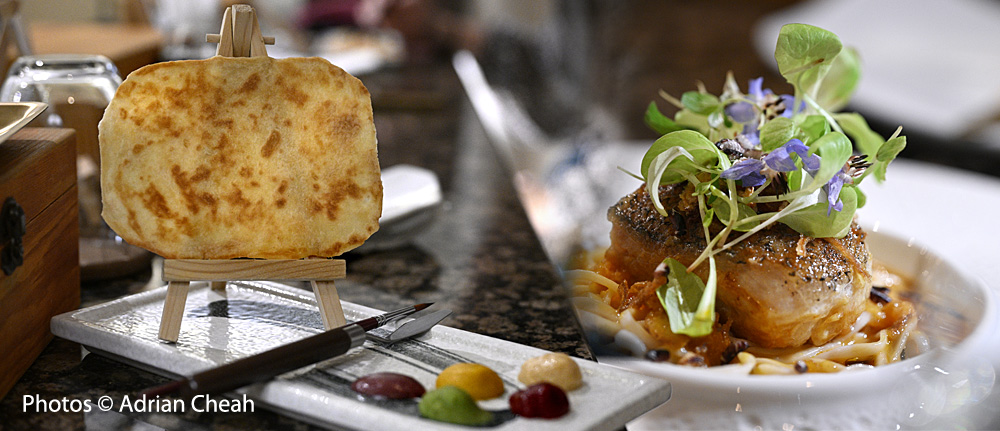
Inventive roti canai sarang burung in Balik Pulau

Being a popular dish among Penangites and Malaysians at large, roti canai or roti paratha is a flaky, moreish flatbread enjoyed any time of the day. Made with flour, water, salt, a little sugar and fat, the mixture is kneaded into a dough and allowed to rest. It is then divided and rolled into palm-size balls. The rested dough ball is stretched; held at a corner, it is then flung in the air onto the oiled work surface twice or thrice, stretching it paper thin before folding to obtain a layered texture.
Continue Reading
Le Petit Four Patisserie serving little wonders of pleasure
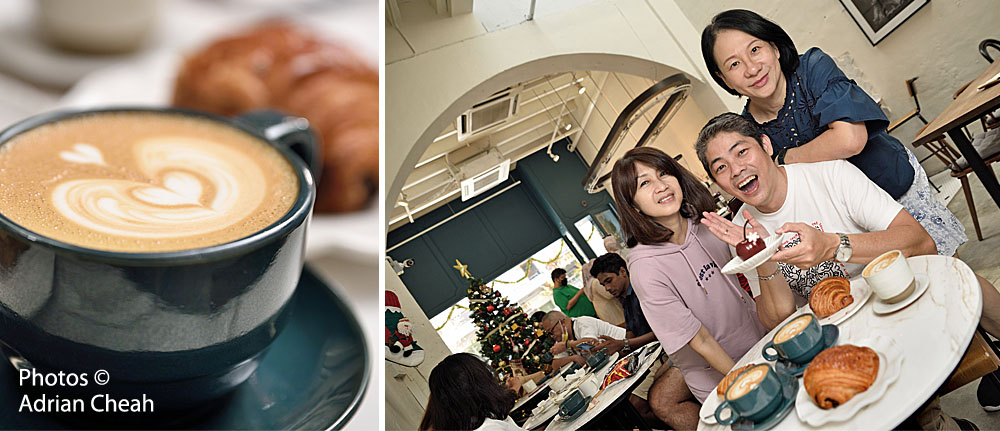
When I was in France, I was bowled over by the pâtisseries, offering delicate beauties that were truly culinary works of art. Sipping a creamy cup of cappuccino while savouring a freshly baked croissant or a slice of the rich, decedent opera cake was indeed a heavenly experience.
Continue Reading
Sutera Restaurant's oriental offerings take flight

When you witness the beginning of a new venture, it is with optimism. Success will follow suit if everything is organised well and executed to the best of one's abilities.
The launch of Sutera Restaurant holds great potential with a winning menu, scrumptious offerings and eye-arresting presentations. The conducive dining deco even has a beautiful mural of a larger-than-life peacock perch on a branch overlooking its diners.
Continue Reading
The good ol' classic taste of Penang's Hokkien mee

In 1989, Mr Lim Chong Beng, the only son in the family, took over the family Hokkien mee business from his parents when they were too old to carry on. A bowl was then selling for a mere 80 cents.
Continue Reading
Penang's famous Kim Leng Loh Mee – a magical, gloopy bowl of wonder

The constant stream of customers to Kim Leng Loh Mee in Perak Road indicates its popularity among locals. Located at Joo Huat Restaurant, this famous lor mee stall is only a stone's throw away from the bustling Perak Road morning market.
Continue Reading