The Bak Chang Festival in Penang

Wrapped in bamboo leaves and steamed, traditional Bak Chang is a glutinous rice dumpling seasoned with dark soy sauce. Its fillings often include pork belly, shiitake mushrooms, dried prawns, salted egg yolk and chestnuts, while simpler versions may contain only white beans and a slice of pork belly.
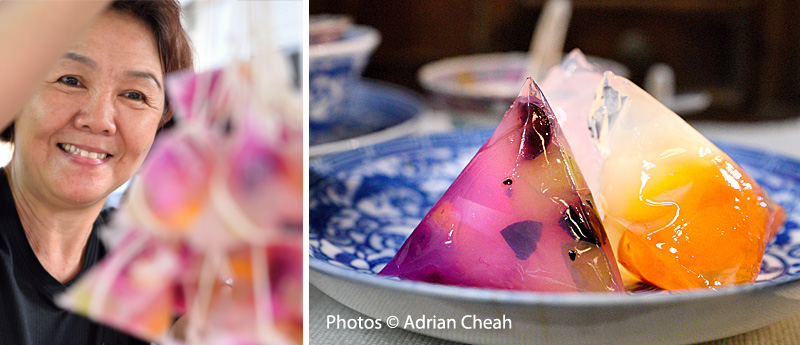
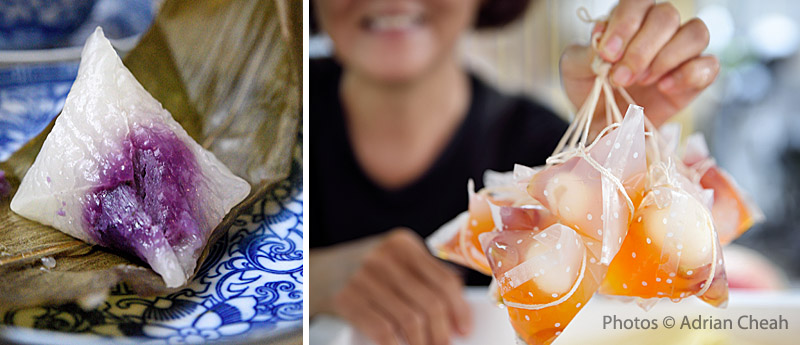
While traditional Bak Chang remains popular, makers have introduced numerous variations over the years. Vegetarian versions filled with different types of beans are common, while sweet options include sago dumplings with sweet potato filling and even jelly versions containing fruit. For those willing to pay more, some Bak Chang feature premium ingredients such as abalone and scallops.
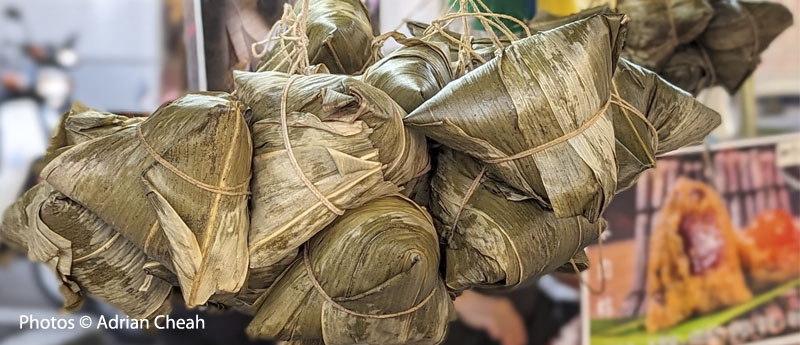
Bak Chang is readily available across Penang, particularly at morning markets in the days leading up to the festival. It remains a popular snack for breakfast and tea throughout the year. One of my regular Bak Chang stalls is located at the curb in front of the Seventh Day Adventist Church, at the junction of Burmah Road and Tavoy Road. The vendor offers a wide selection of Bak Chang, alongside Or Kuih (taro cake) and Ang Tau Th'ng (red bean dessert).
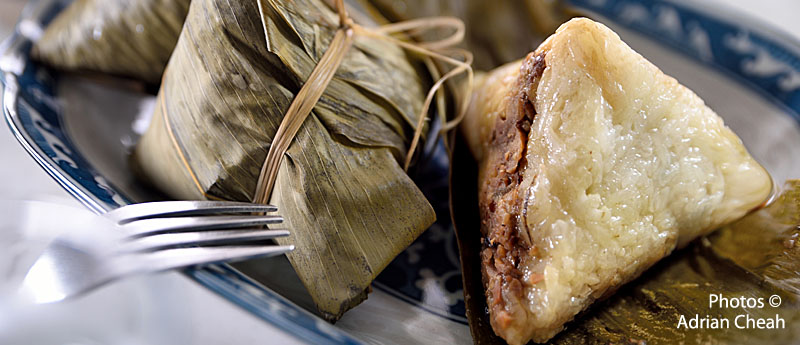
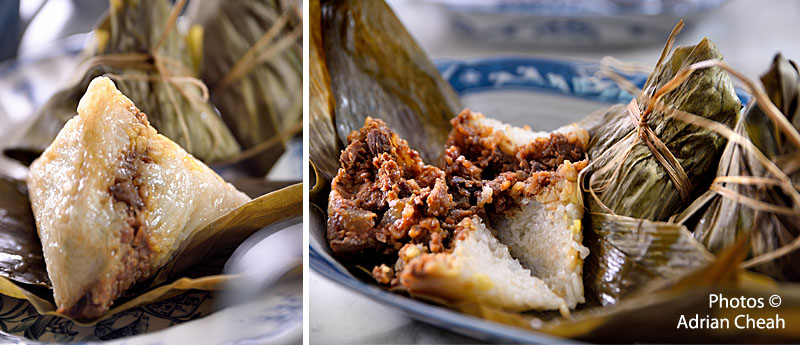
Among the Nyonyas of Penang, a distinctive version known as Pua Kiam Tee is prepared during the Bak Chang season. Although it is also made with glutinous rice, its filling differs from the traditional Bak Chang. Soy sauce is not used, leaving the rice white. In recent years, some makers have added a natural blue tint derived from rehydrated Bunga Telang (butterfly-pea flower), though this was not traditionally done in Penang.
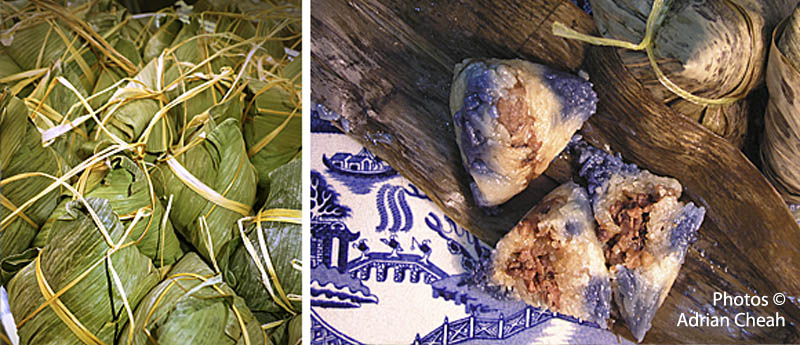
I have to confess that I am a fan of these Nyonya-style dumplings, which balance sweet and savoury elements. The inclusion of candied winter melon, aniseed and coriander gives them a distinct flavour. The pandan (screwpine) leaves also add a noticeable aroma.
The Nyonyas traditionally make them in modest sizes, just enough to satisfy the appetite rather than serve as a heavy meal. For me, one is never enough (cannot even “lapik perut”).
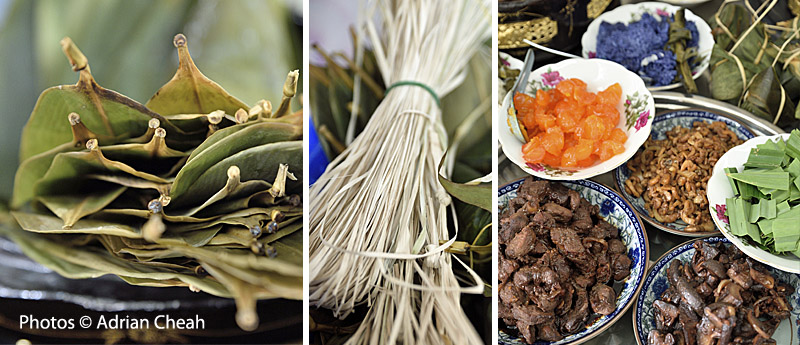
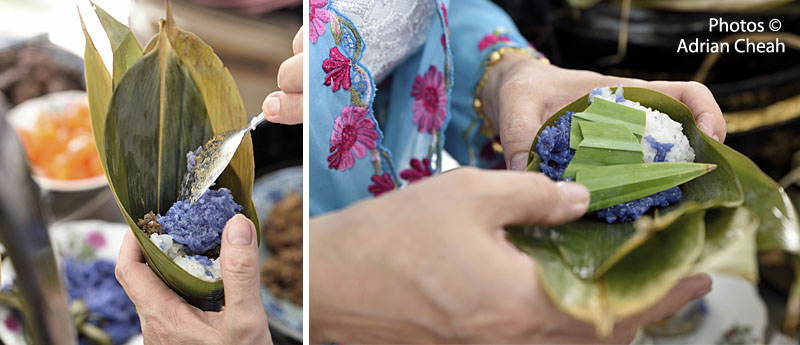
Usually, about a week before the festival, families in the Chinese community begin making Bak Chang. The process takes skill, effort and time. Even after careful preparation and wrapping, the dumplings still need to be boiled for at least two hours before they are ready.
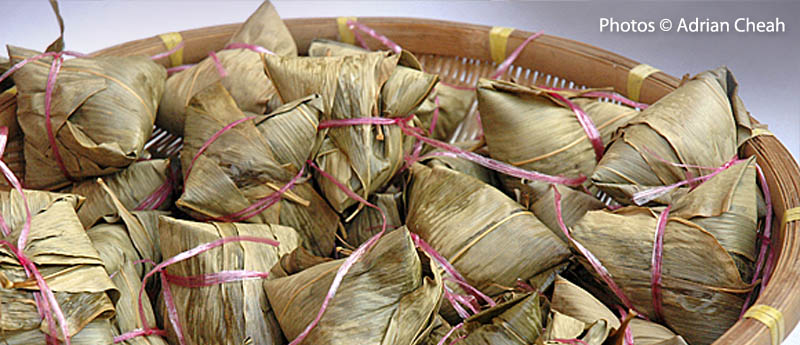
This is often a shared family activity. I can still vividly recall from my youth when my Mum would prepare Bak Chang, and my brothers, sisters and I had an absolute blast stuffing ours with all our favourite ingredients. Once cooked, the dumplings are lifted from the boiling pot, hung to drain excess water, and left to cool to room temperature. Typically, ours would not hold their shape very well, as we often added too many ingredients and left too little room for the glutinous rice that binds them. But that only added to the excitement when we unwrapped them, revealing Bak Chang bursting with everything we loved inside.
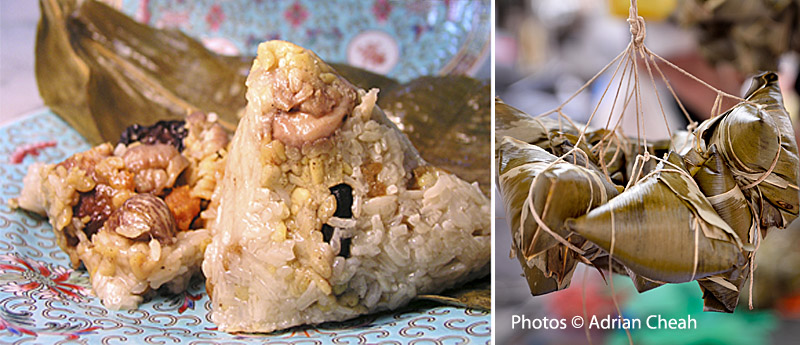
Cooked Bak Chang can be stored in the refrigerator for up to a week, and frozen for several months.
The Tale Behind the Bak Chang Festival
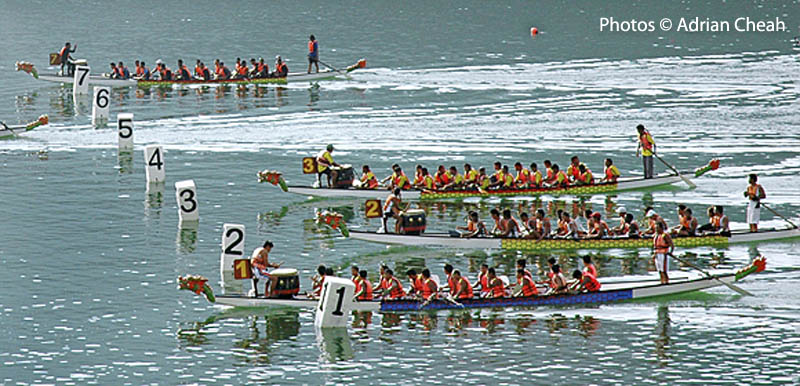
The fifth day of the fifth lunar month marks the Duanwu Festival, also known as the Dragon Boat Festival, celebrated by Chinese communities worldwide, including in Penang. The festivities feature thrilling dragon boat races and the enjoyment of traditional rice dumplings. Like many Chinese festivals, Bak Chang is closely tied to folklore.
The narrative is rooted in the life of Qu Yuan (c. 340–278 BCE), a poet and official of the Chu state during the Warring States period of the Zhou Dynasty. He was exiled after opposing a proposed alliance with the rising Qin state.
During his years in exile, Qu Yuan composed poetry that is now regarded as some of the most important in early Chinese literature, forming part of the Chu Ci (Songs of Chu) tradition. After the fall of the Chu capital to Qin forces, tradition holds that he drowned himself in the Miluo River in present-day Hunan Province.
According to legend, villagers rushed out in boats when they heard of his drowning. They rowed across the river, beating drums and splashing the water with their paddles in an attempt to drive away fish and prevent his body from being consumed. They also threw rice dumplings into the river so the fish would eat them instead. Despite their efforts, Qu Yuan could not be saved, and his body was lost to the river.
Later traditions say that his spirit appeared in a dream to his friends, advising them to offer rice dumplings to the river to ward off harm from river creatures. In response, they prepared dumplings wrapped in silk and cast them into the water.
This legend is commemorated each year during the Duanwu Festival. In Penang today, Bak Chang is no longer cast into rivers, but is shared among family and friends as part of the celebration.
Dragon Boat Racing in Penang
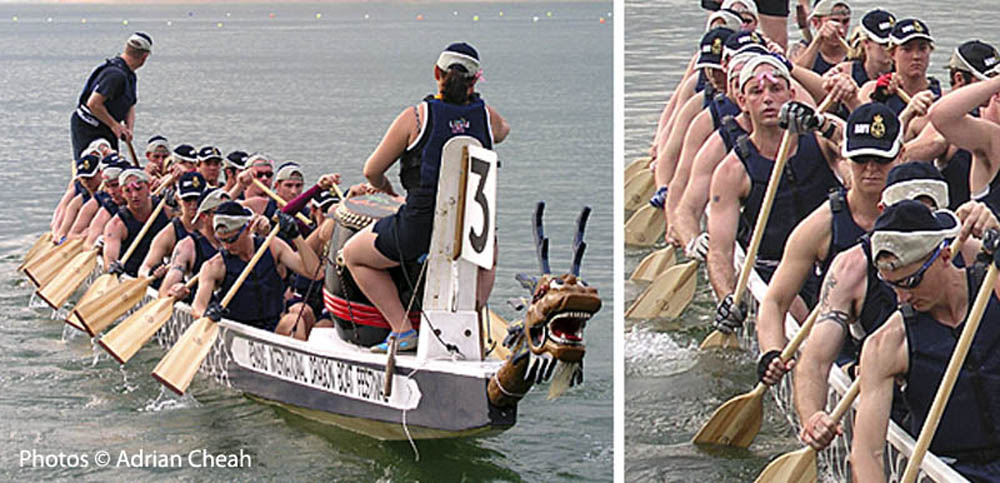
The tradition of racing down the river in search of Qu Yuan's body gave rise to the Dragon Boat Festival, a revered event observed in many parts of China in homage to its ancient roots. Reflecting what is remembered as the heroic spirit of the legendary Qu Yuan, this tradition continues in Penang, marked by the resounding beat of drums and the roaring cheers of spectators celebrating human prowess.
However, the international regatta in Penang is often held at different times of the year as a sporting and cultural event. It remains a familiar part of the State’s calendar of events, bringing together participants and spectators annually.
Appendix: Li Sao (Extract)
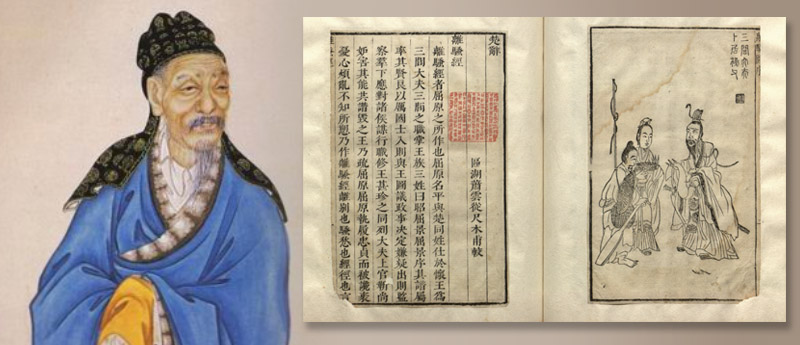
Portrait of Qü Yuan (source: public domain)
Here is a paragraph from "Li Sao" (The Lament), one of Qü Yuan's most remarkable works. It is believed to have been written during the period of the poet's exile by his king.
In sadness plunged and sunk in deepest gloom,
Alone I drove on to my dreary doom.
In exile rather would I meet my end,
Then to the baseness of their ways descend.
Remote the eagle spurns the common range,
Nor designs since time began its way to change;
A circle fits not with a square design;
Their different ways could not be merged with mine.
Yet still in my heart I checked and curbed my pride,
Their blame endured and their reproach beside.
To die for righteousness alone I sought,
For this was what the ancient sages taught.
---------------------------------------------------------
Written and photographed by Adrian Cheah
© All rights reserved
Updated: 6 June 2024