An "Oishii" Treat at Buu Buu Dessert Club
One of the most fascinating things that struck me when I was in Japan in the autumn of 2012 had to be its extraordinary dessert culture. In Nara, my family and I witnessed Nakatanidou showcasing the ancient art of mochi pounding, where skilled artisans rhythmically transformed steaming glutinous rice into soft, delicate confections with astonishing speed and precision. Watching the craftsmen work was mesmerising, a beautiful reminder that in Japan, desserts are often deeply intertwined with tradition, craftsmanship, and theatre.
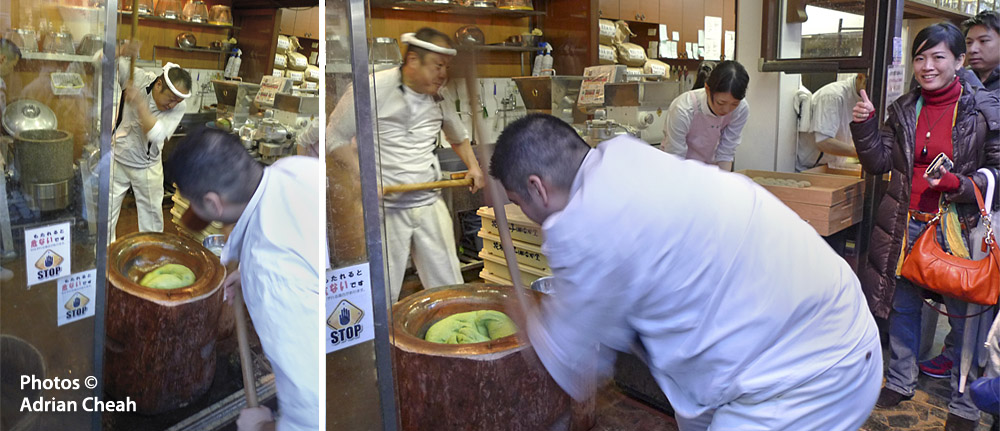
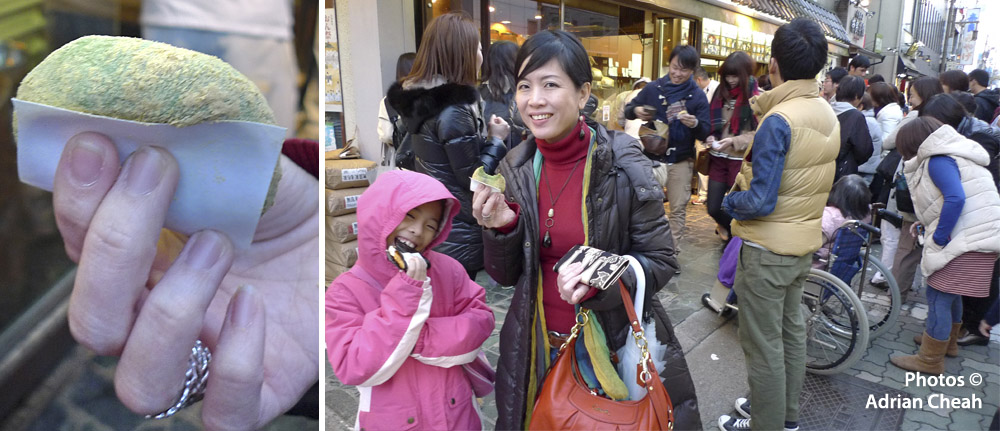
Experts at Nakatanidou performing high-speed mochitsuki (mochi pounding). This shop’s specialty is yomogi mochi, made with Japanese mugwort, which gives it a natural green hue and a distinct, lightly earthy flavour. I loved the softness of the mochi and its subtle herbal fragrance.
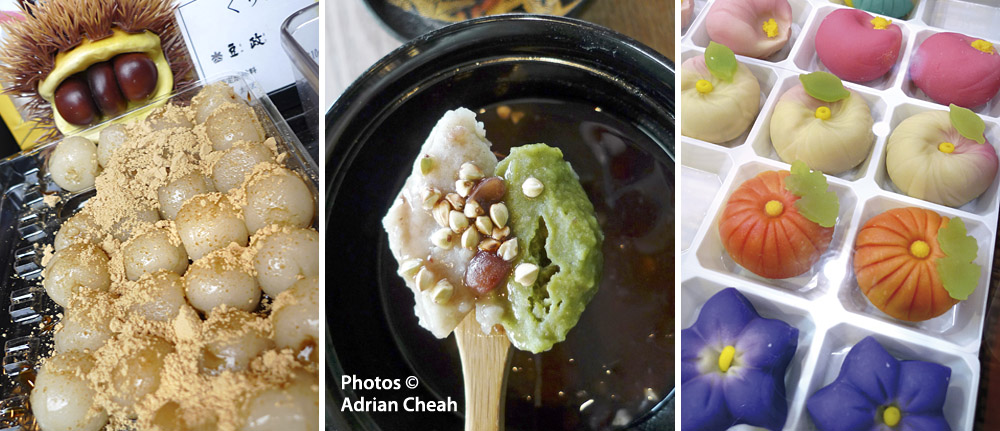
Traditional Japanese artisanal sweets (wagashi), including dango (left) and colourful nerikiri (right), part of the many varieties not to be missed in Japan.
In Kyoto, I discovered an entirely different side of Japanese sweets. Kyoto’s dessert culture felt refined, shaped by centuries of tea ceremony traditions and the artistry of "wagashi". Matcha desserts were everywhere, from velvety parfaits and warabi mochi dusted with kinako to delicate yatsuhashi. Meanwhile, Osaka offered a more playful and contemporary dessert scene. The city’s vibrant café culture introduced me to fluffy soufflé pancakes, beautiful parfaits, and artisanal pastries that combined French techniques with Japanese sensibilities.
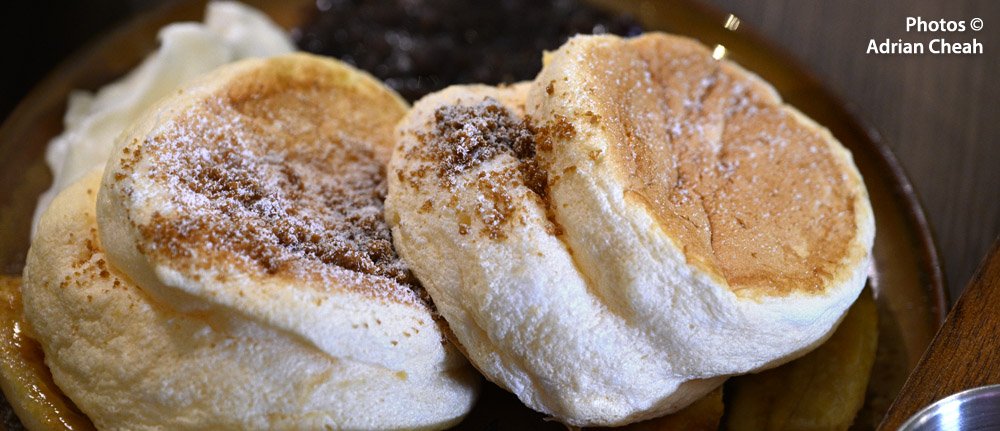
Buu Buu Dessert Club located in the heart of George Town along Beach Street brought back such fond memories of my journey through Japan. One of the items that immediately caught my attention was the soufflé pancakes.
Soufflé traces its origins to French cuisine in the early 18th century. The word soufflé comes from the French verb "souffler", meaning “to blow” or “to puff up”. One of the earliest recorded versions appears in 1742 in Vincent La Chapelle’s Le Cuisinier Moderne, where an omelette soufflée combined whipped egg whites with savoury and sweet elements, marking the foundation of the technique. By the late 18th century, Antoine Beauvilliers helped elevate and popularise soufflés in Parisian fine dining at his restaurant La Grande Taverne de Londres, refining their presentation and serving style. However, it was only in the early 19th century that the word “soufflé” entered English cookbooks. From its early experimental beginnings to its refined modern form, the soufflé has remained rooted in the same essential principle: airy whipped egg whites folded into a flavoured base to create its signature rise and delicate texture.
Despite its name, Japanese soufflé pancakes are reported to have originated outside Japan, with one of the most commonly cited origin stories pointing to Honolulu, Hawaii. According to Fox News, as well as Honolulu-based publications such as Frolic Hawaii and references in Japanese travel writing, the modern version of the dish is often traced to Cream Pot in Waikiki, which opened in 2008. At the time, the café primarily served French-inspired cuisine, and its predominantly Japanese clientele frequently requested pancakes, despite them not being part of the original menu. In response, chef Nathan Tran reportedly created a hybrid dish inspired by French soufflé techniques, reimagining the traditional pancake into something lighter and airier. The idea later spread beyond Hawaii, gaining momentum elsewhere, particularly in Japan. With its long-standing tradition of airy sponge cakes, chiffon cakes, and soufflé cheesecakes, Japan was perhaps the perfect environment for the soufflé pancake to truly take shape and flourish.
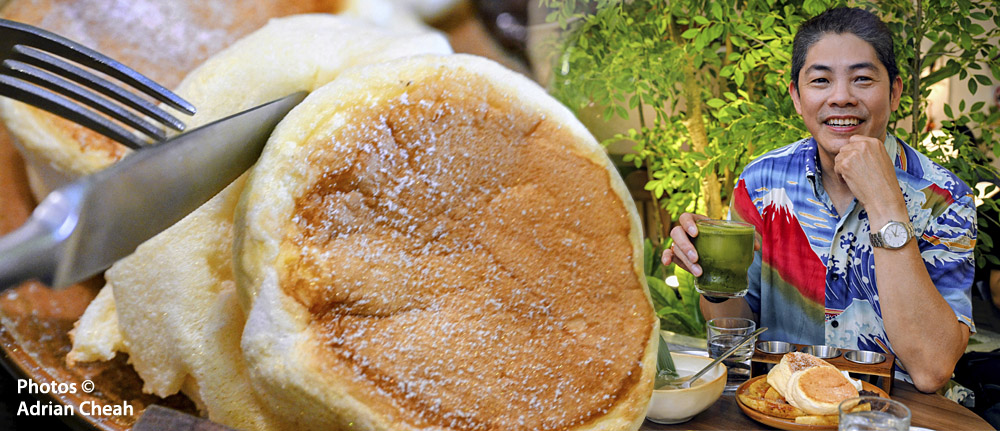
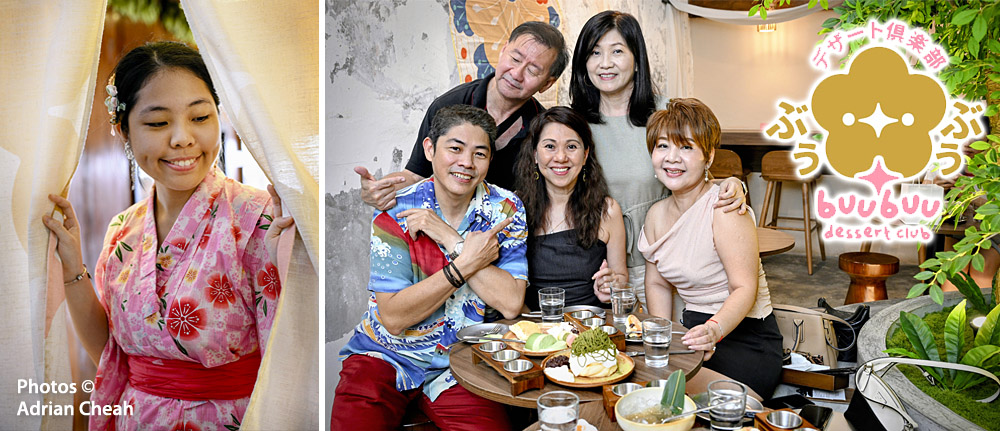
It was with this broader appreciation of soufflé pancakes and their aesthetic of "fuwa fuwa" softness that I first visited Buu Buu Dessert Club. I was intrigued to find soufflé pancakes among its popular menu items. The cosy Japanese dessert café specialises in soufflé pancakes, mochi, and other refined Japanese-inspired sweets. That afternoon, after a lovely pre-birthday luncheon for a dear friend, we decided to continue the celebration at Buu Buu. As a party of six, we ordered a selection of enticing desserts.
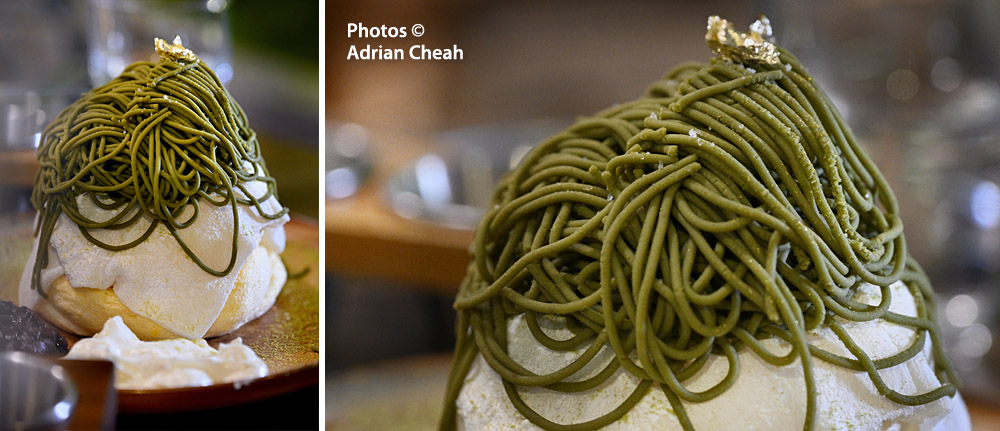
The first to arrive at the table was the Kinshizuku Mont Blanc Soufflé (RM38++), a visually striking creation. A towering stack of two soufflé pancakes was blanketed with a thin, snow-white layer of mochi skin, evoking the appearance of Mont Blanc. Chestnut purée infused with matcha was then piped tableside into delicate vermicelli-like strands, finished with a touch of gold leaf and a dusting of gold powder. The dish was served with a side of red bean paste and a dollop of whipped cream. I particularly appreciated the balance of flavours and the craftsmanship involved in its preparation. Upon ordering, we were informed of a waiting time of around 30 minutes, as the dessert is made fresh to order. It was well worth the wait.
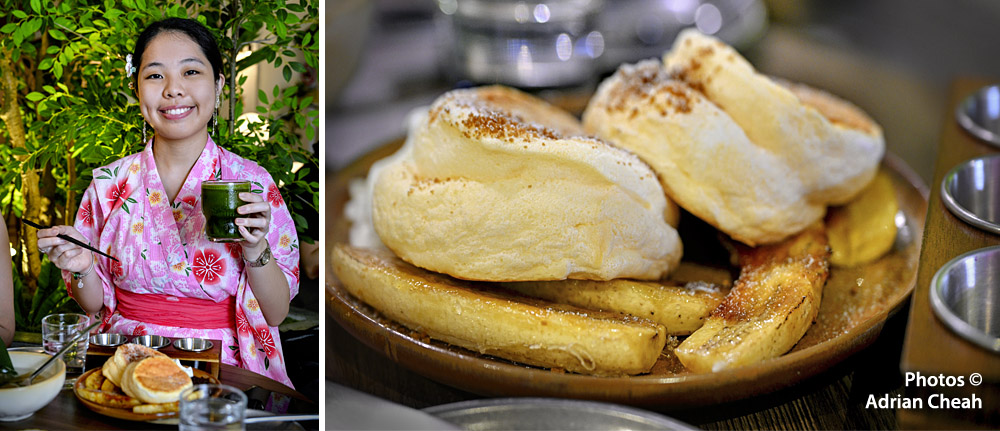
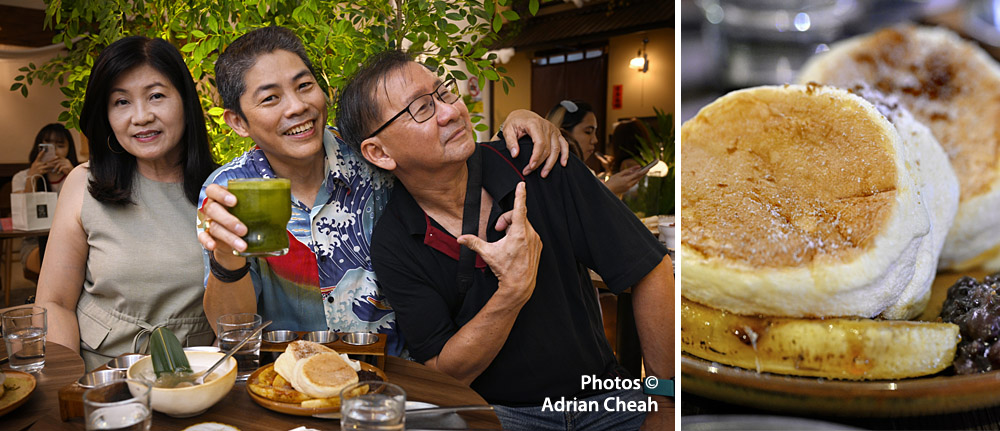
The Golden Banana Crumble Soufflé (RM26++) was a comforting highlight. A Lotus Biscoff crumble provided a textural contrast against the softness of the soufflé pancakes, while the caramelised banana added sweetness and natural perfume. Drizzled with chocolate sauce and served with whipped cream, the dessert came together in a well-balanced combination of flavours and textures. A trio of jams was also available on the side—chocolate, matcha, and mixed berries—allowing each bite to be adjusted to personal preference.
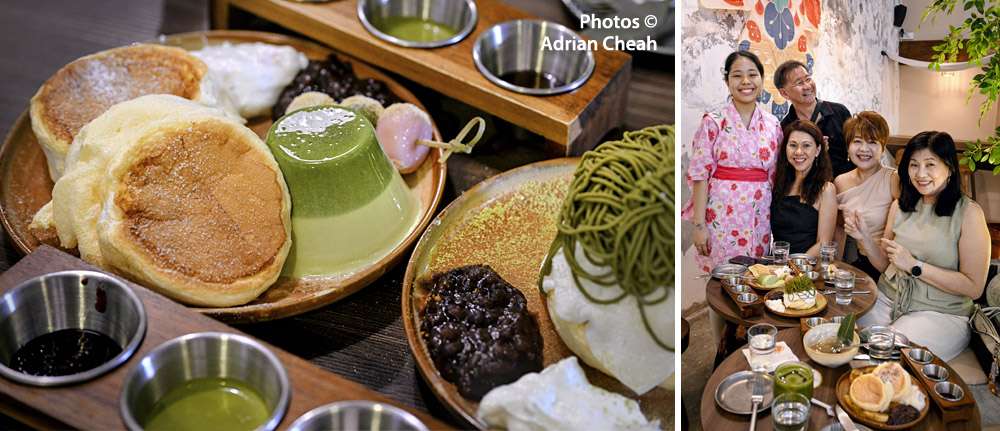
Then came the Kyoto Supersharu Soufflé (RM32++), perhaps the most distinctly Japanese item of the evening. The plate was generous, featuring two soufflé pancakes, a matcha pudding, a skewer of dango, a touch of azuki sweetness, and a spoonful of whipped cream. A trio of accompaniments—honey, matcha, and mixed berry—was also served on the side.
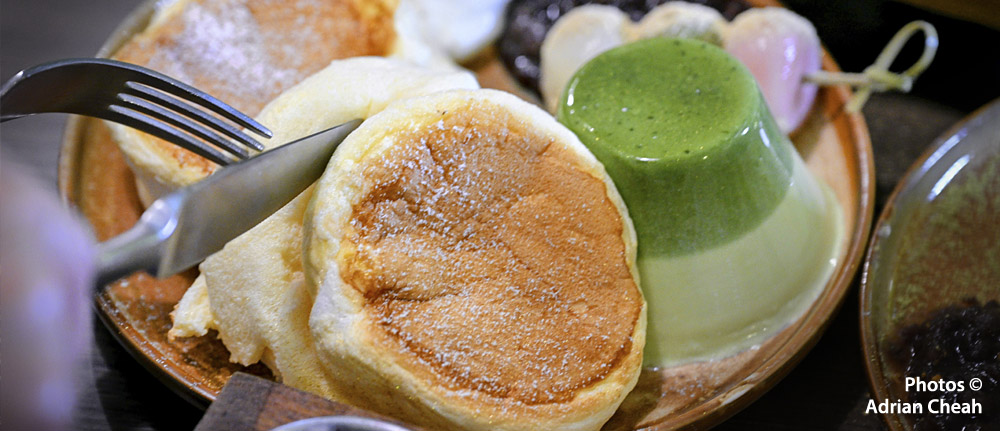
What made the dish particularly interesting was how it echoed Kyoto’s long-standing dessert philosophy. Kyoto has often been regarded as the spiritual heart of traditional Japanese confectionery culture, especially wagashi, where refinement, seasonality, and balance are prioritised over intensity. That same sensibility could be felt in this offering—the gentle bitterness of matcha, the soft creaminess of the soufflé, the floral sweetness of honey, and the earthy depth of azuki all working in harmony. Having said that, I would have preferred to enjoy the pudding and the dango separately, as they were interesting components in their own right and perhaps deserved a little more space to shine.
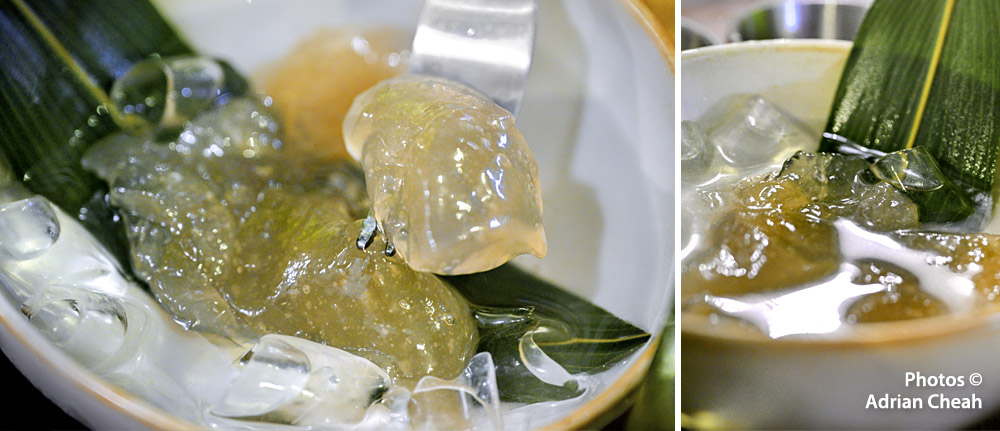
The Koori Warabi Mochi (RM18++) was served in an ice bath. We dished the mochi out onto our plates and dusted it with nutty roasted soybean flour, then drizzled generously with kuromitsu syrup (made with kurozato, an unrefined black sugar). Unlike regular mochi made from glutinous rice, warabi mochi is traditionally made from bracken starch, giving it a translucent, jelly-like texture that seems to melt almost instantly on the tongue.
Warabi mochi is a traditional Japanese sweet with historical roots often associated with the Heian period in culinary tradition. Because authentic warabi starch was once difficult to extract, the dessert was likely a rare delicacy in earlier times. Over the centuries, it evolved into a beloved summer wagashi, particularly in regions such as Kyoto and Nara, where it remains a seasonal favourite.
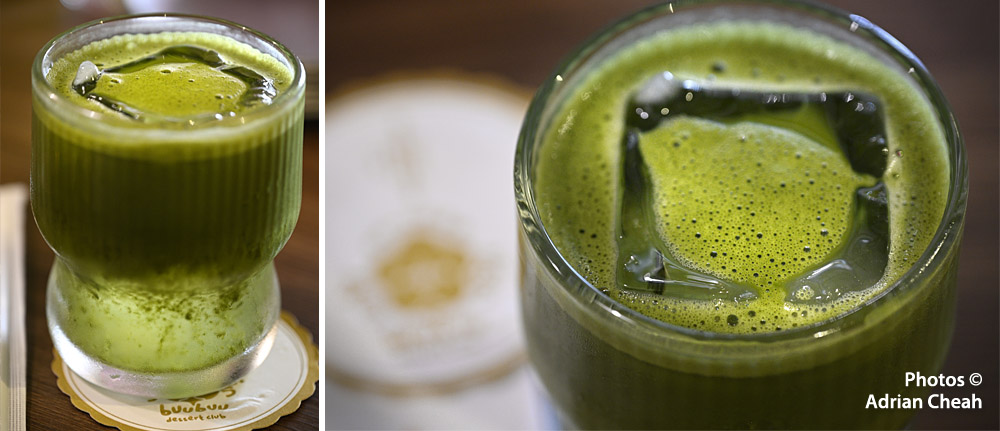
For drinks, I opted for the Matcha Coconut drink (RM16++), an unexpectedly brilliant pairing. The matcha carried a grassy bitterness, while fresh coconut water added a gentle tropical sweetness. It reflected how modern Asian cafés were increasingly blending Japanese and local flavours.
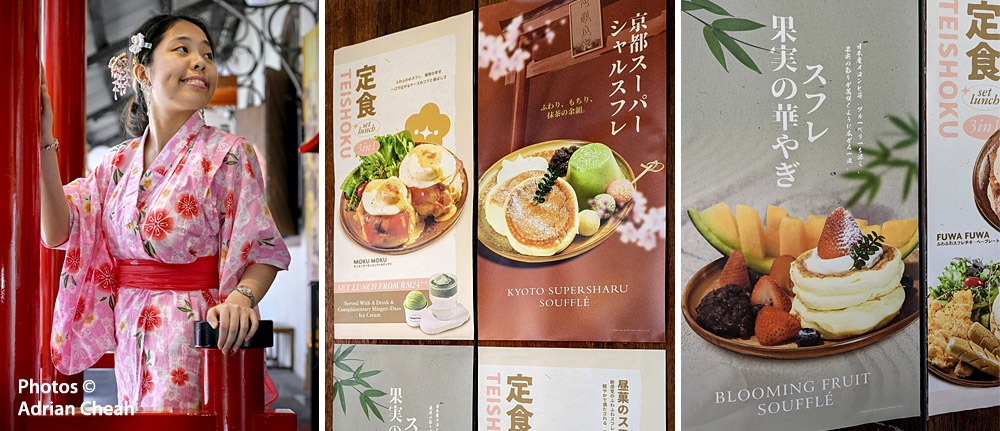
The chef from Kyoto has personally trained the team at Buu Buu Dessert Club in Japanese-style dessert preparation and techniques. As a result, there is a strong emphasis on detail, balance, texture, and presentation—all key principles of Japanese pastry culture. Most of the key ingredients are also sourced directly from Japan, a choice believed to be essential in achieving the intended flavour profile, quality, and consistency in every dessert served.
By the end of the afternoon, there was unanimous agreement around the table that Buu Buu Dessert Club was a café worth returning to time and again.
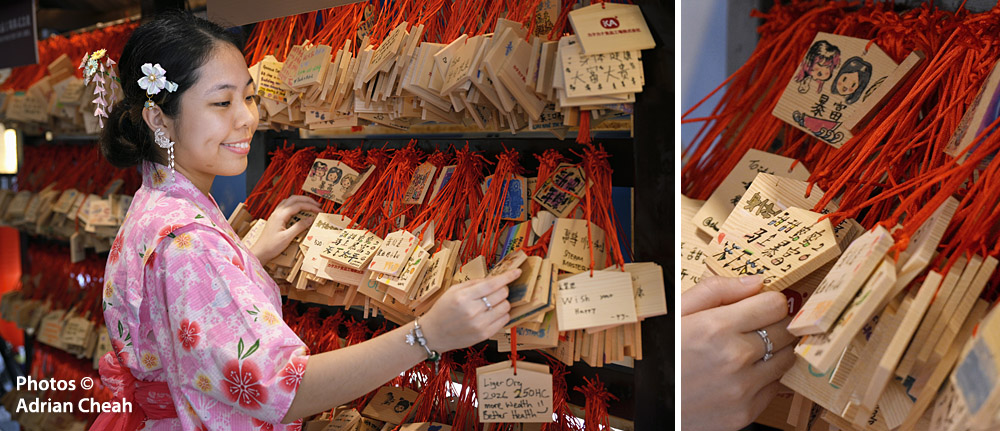
As we settled the bill, I was given two ema (wooden prayer tablets) on which to pen wishes or prayers. In Japan, ema are traditionally left hanging at Shinto shrines, where the "kami" (spirits or deities) are believed to receive them. At the café, they were displayed near the entrance, adding a thoughtful and distinctly Japanese touch to the experience.
On mine, I wrote “Hope springs eternal", while my daughter chose a Japanese phrase that translated to: “If you do not have the courage to lose sight of the shore, you can never cross the sea". Somehow, the two inscriptions seemed to mirror both something within us and the spirit of the café itself—a place shaped by hope, creativity, and the courage to flourish beyond the familiar.
-------------------------------------
Written and photographed by Adrian Cheah
© All rights reserved
23 March 2026
If you enjoyed this story, you may like to bookmark this site or return for future essays.
-------------------------------------
Buu Buu Dessert Club
23-B, Lebuh Pantai, 10300 Penang
T: +6012-356 8727
Open: 12:00 PM – 10:00 PM (Monday to Thursday, and Sunday) | 1:00 PM – 11:00 PM (Friday and Saturday). Closed on Tuesdays
Located at 23-B, Beach Street, in an alley between Bangunan Barkath and the Saw Seng Kew & Co. Ltd. office, it sits just beside Kaka Ramen Club.
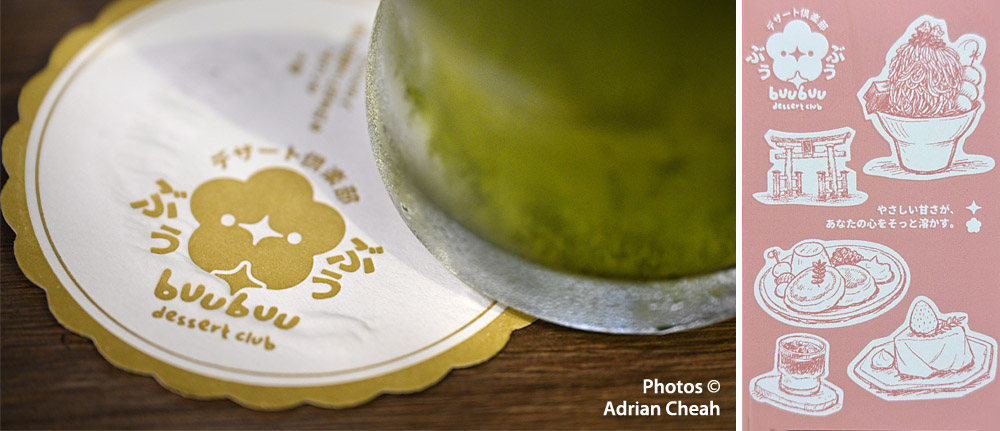
P.S. “Buu Buu” is derived from baby talk, reflecting a soft, comforting sound that carries warmth. It forms the café’s identity—playful, gentle, and filled with small moments of happiness.