Born Free: A Personal Tribute to Oon Suan See
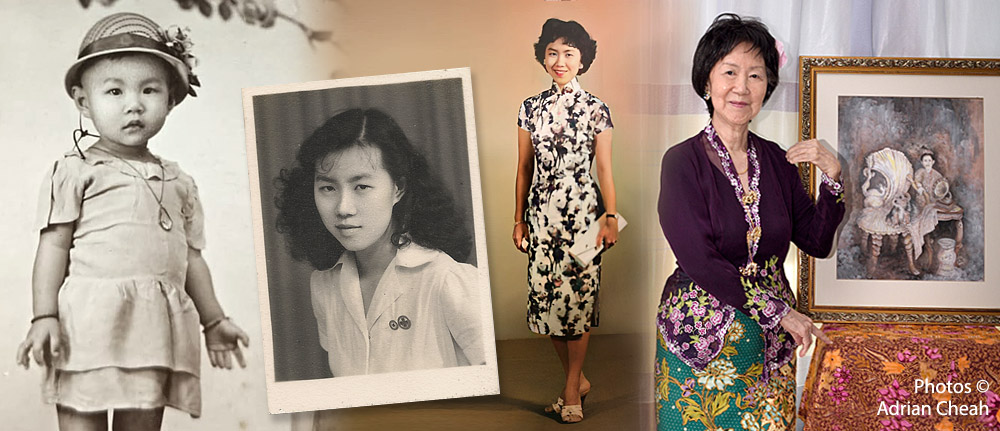
A life lived with grace, generosity, and an irrepressible artistic spirit
A Beam of Sunlight
There are people who pass through our lives quietly, leaving the faintest ripple on the surface of our days. And then there are those whose presence is like a beam of sunlight, lighting a room simply by being in it. For me, Oon Suan See was one of the latter.
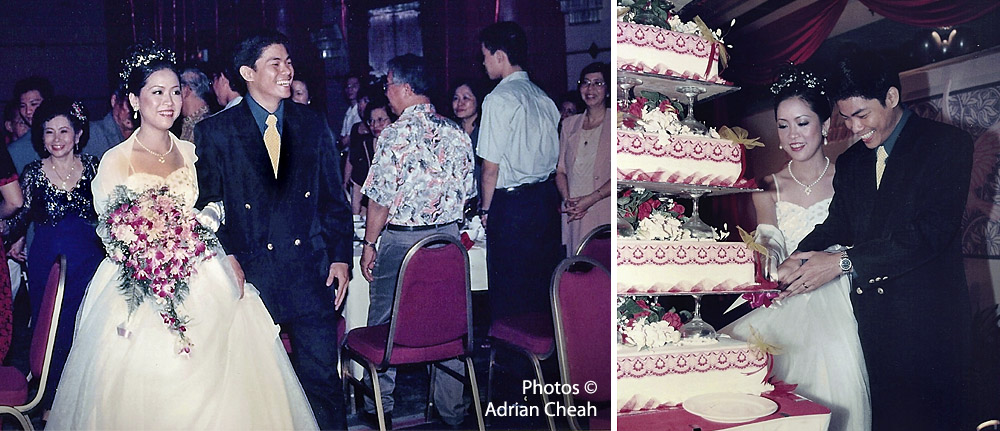
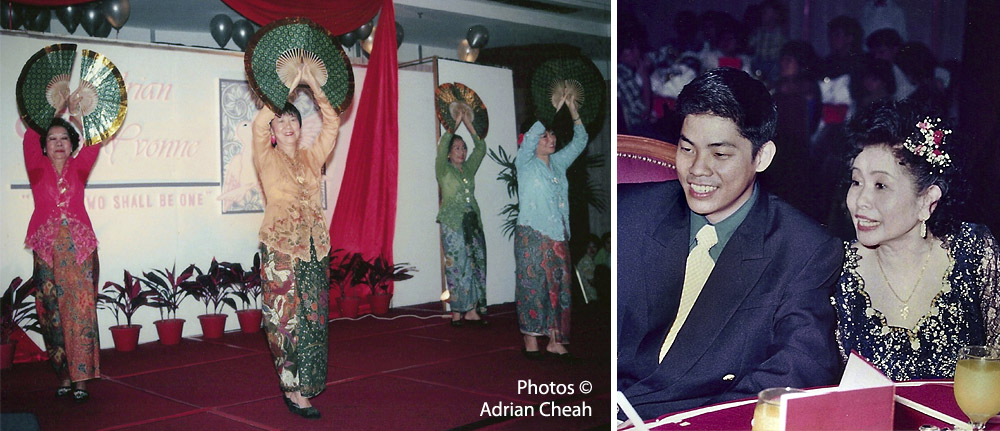
I remember her most vividly in a moment that has stayed with me for more than two decades, a moment whose meaning has only deepened with time. It was my wedding celebration in Penang on 16 January 1999. The Laguna Ballroom at Paradise Sandy Bay Hotel was filled with more than 600 family members, relatives and friends. The air was alive with laughter, spirited conversations, and the boundless joy of celebration.
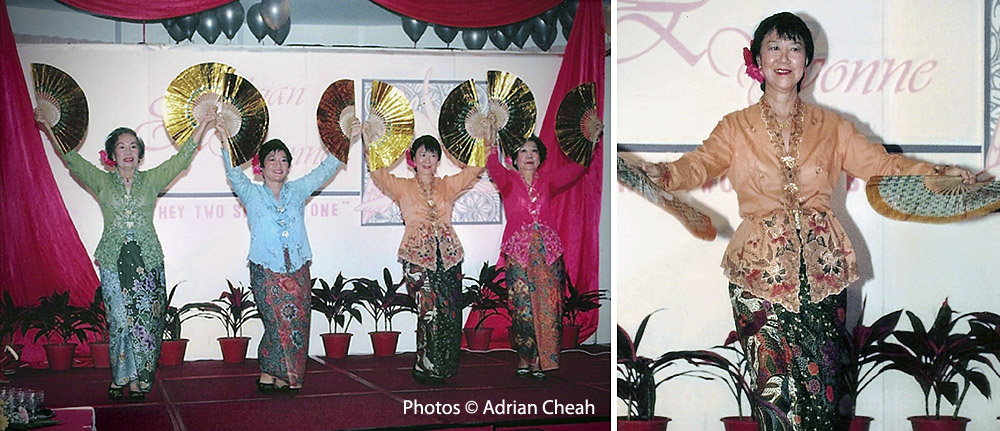
Halfway through the dinner, my sister Audrey, the emcee, beckoned Auntie Suan See and her Nyonya dancers to the stage. They moved forward with grace and confidence, captivating the room with the elegance of Nyonya dance. Each movement was graceful and "lemah-lembut", reflecting the gentle poise and elegance of the Nyonyas that Auntie Suan See so beautifully expressed through her choreography.
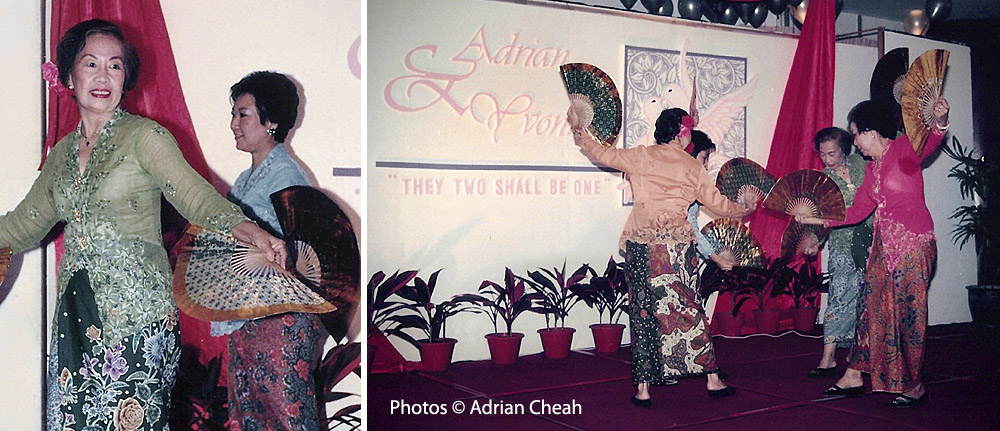
The programme continued, with other performances and celebrations filling the evening. Then, much later in the dinner, Audrey called Auntie Suan See back onto the stage. I wondered what she had planned this time.
She lifted her chin and offered the room a small, luminous smile. Then she began to sing. I was caught entirely off guard; my heart stilled, the world narrowed to her voice, and for a few unforgettable moments, everything else simply fell away.
It was "Born Free."
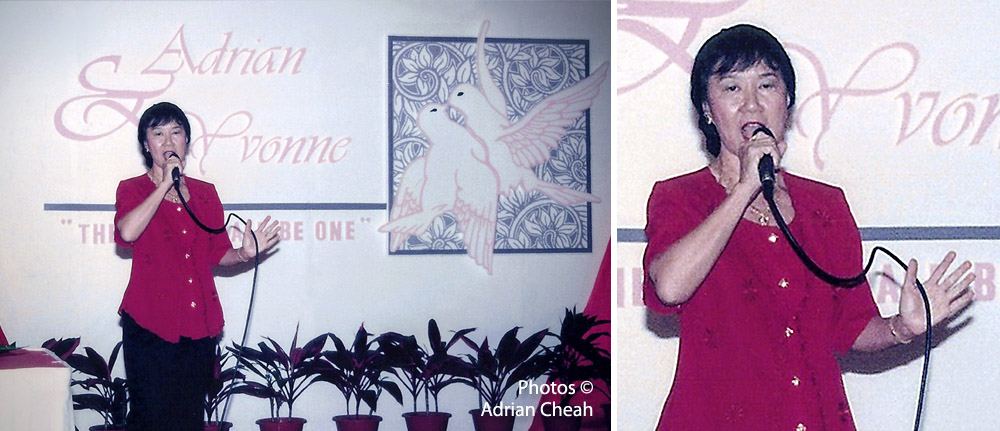
Her voice, rich and clear, rose above the tables, drawing the entire room into a rare, suspended stillness. Guests turned in their seats; conversations dissolved mid-sentence. The ballroom was captivated. She brought the house down, not through theatrics, but through the sheer, effortless power of giving herself completely to the song and the moment.
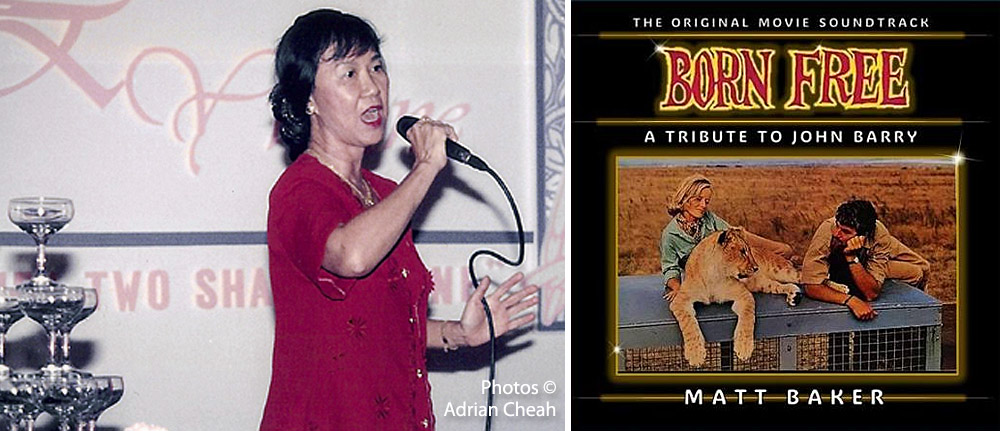
At the time, I was puzzled by her choice. Why Born Free, a song about a lioness being released into the wilds of Kenya, at a wedding? Why a song of freedom, of untamed spirit, of wide horizons and unbounded life?
Only now, as I write this tribute after her passing, do I begin to understand what those lyrics may have meant to her and to me. Perhaps it was her message, one she could convey only through the language that came most naturally to her: music. Perhaps the song was her way of planting a small seed of truth in my heart: "Marriage is a bond, but it is not a chain. Live bravely. Live fully. Do not lose yourself. Be free."
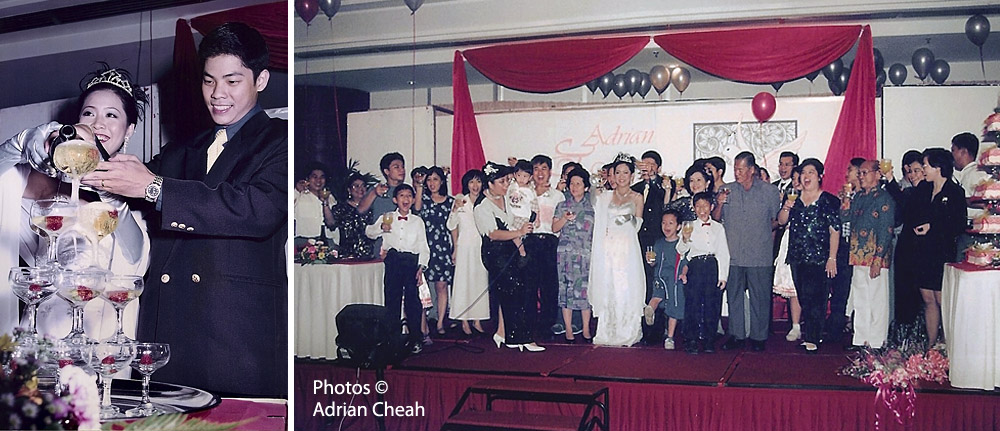
If so, it was the most loving treasure she could have offered. Listening to Born Free now, the lyrics speak to me in a way they never did before, reminding me to honour freedom, embrace life fully, and cherish each unbounded moment.
A Life of Generosity
To speak of Auntie Suan See is to speak of generosity in its unselfish form. She gave without calculation, without hesitation, and never with expectation of anything in return.
Once, she gave my daughter Jean several vintage kebayas that she had lovingly cared for and preserved in pristine condition, truly priceless heirlooms to be passed down and cherished. On another occasion, she placed in my hands a pair of her own kim sua (gold-thread) embroidered Nyonya slippers. Knowing that Jean wore the same shoe size, she wanted them to find a new home where they would be loved.
Knowing my passion for cooking, she also shared with me recipes she had perfected over decades. I still keep the photocopy of her handwritten recipe book, its pages filled with dishes that must have held a special place in her heart. “You have to deep-fry the inchi kabin three times,” she reminded me. “First on high heat to seal in the juices, then on low heat to cook it through, and finally on high heat again to crisp it up. That’s how you keep it crispy on the outside, yet moist and tender inside.”
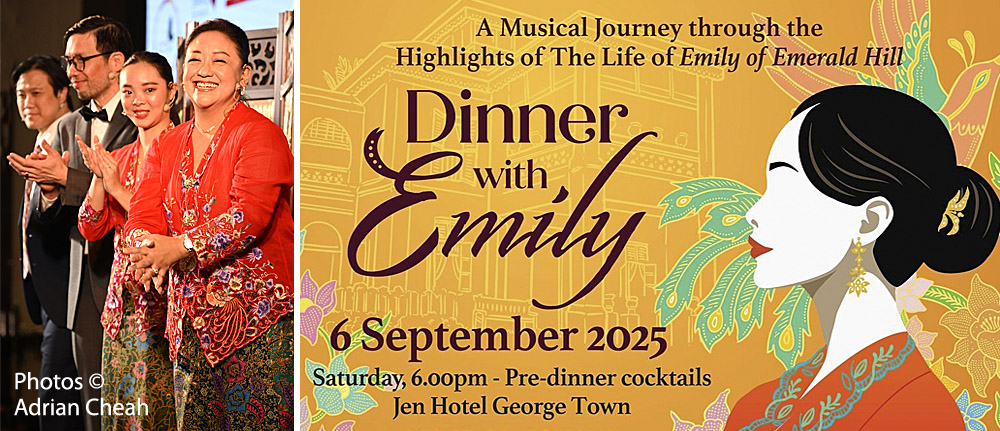
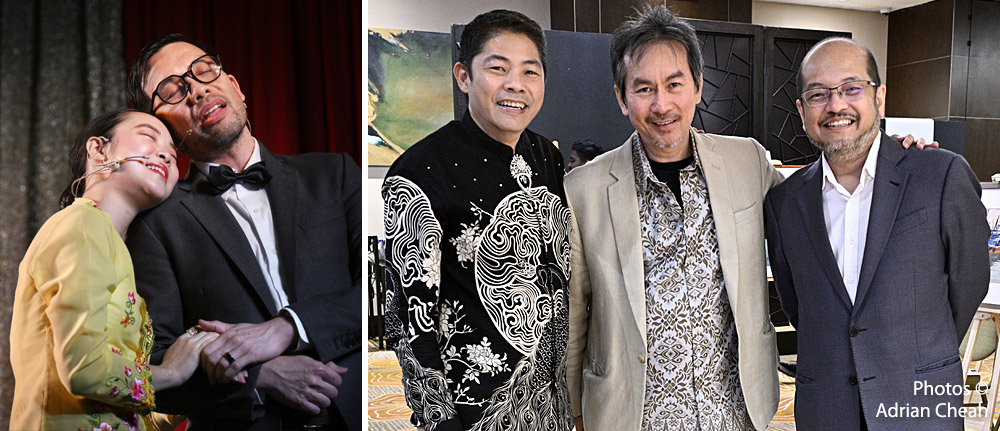
6 September 2025: "Dinner with Emily", the first staging in Penang of the musical adaptation of Emily of Emerald Hill, brought together food, theatre, and music. Many thanks to Auntie Suan See for hosting us, and to her son, Winfred Khoo, whose vision helped bring the production to Penang. Right photograph, from left: Adrian Cheah, Winfred Khoo, and Lee Khai.
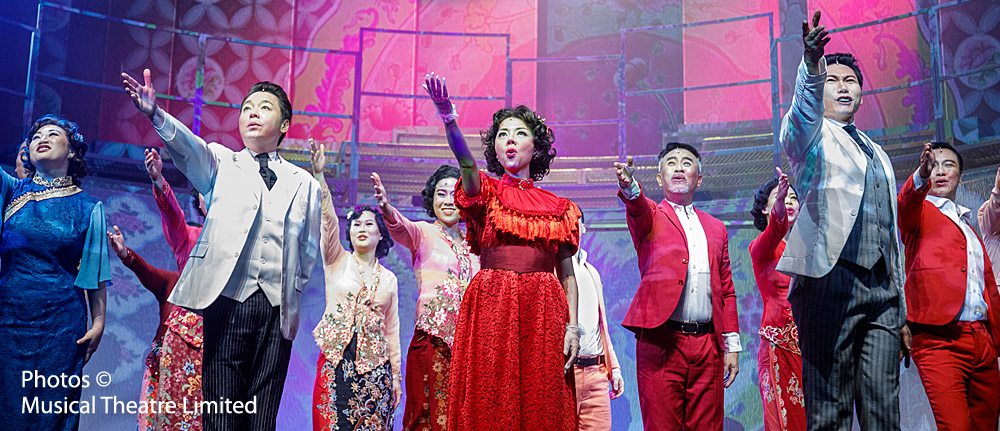
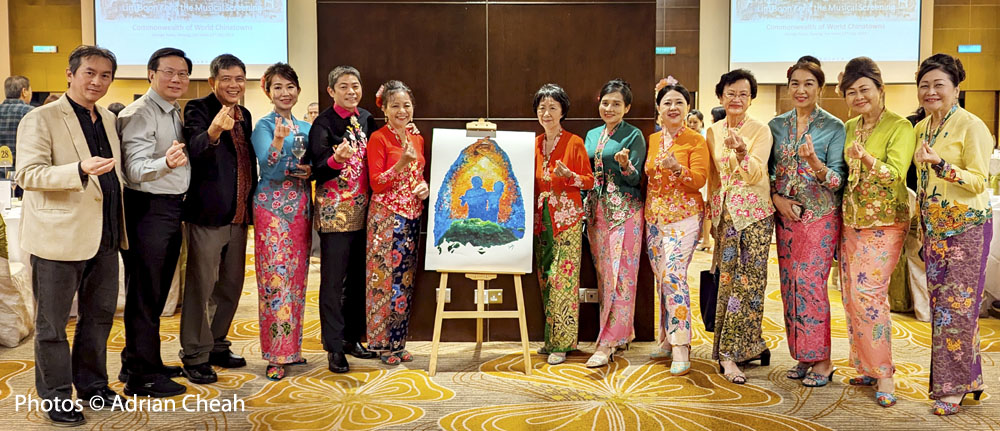
14 July 2024: A screening of "Lim Boon Keng – The Musical", thoughtfully paired with a Penang–Singapore people-to-people friendship dinner. Bringing together culture, history, and fine dining, the evening celebrated the enduring ties between the two communities. The screening and dinner were organised by the Commonwealth of World Chinatowns under the leadership of Winfred Khoo.
Over the years, she welcomed me into her world, sharing with me dinners, plays, art exhibitions, and countless gatherings.
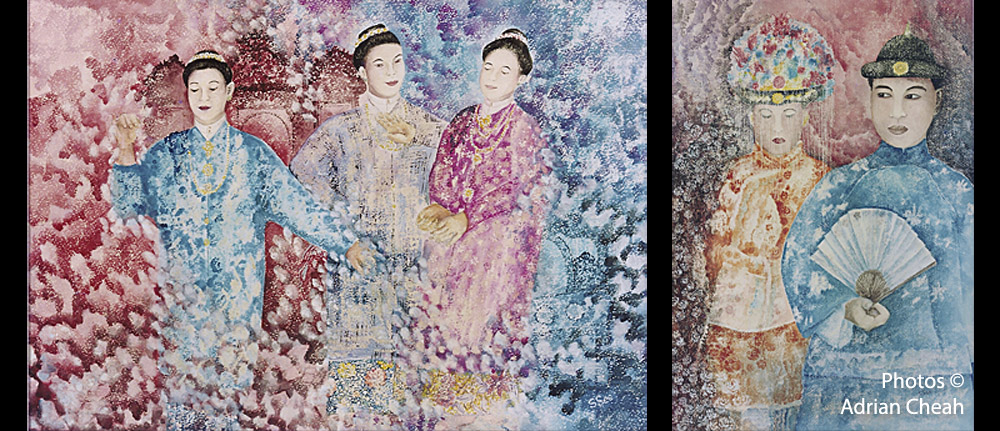
Even her paintings became an extension of her generosity. She painted with joy and imagination, creating works that she often gifted to support charitable causes.
Auntie Suan See approached every challenge with patience, guiding new dancers in Nyonya choreography, teaching the intricate techniques of sewing traditional kebayas, and sharing her knowledge freely so that others could learn, grow, and create alongside her. Everything she gave carried a little piece of her love. And that may well be one of the greatest graces that defined her life.
Cultural Architect: The Birth of Nyonya Dance
Her generosity extended far beyond individuals. It spilled into her community, her culture, and her arts. To me, she was one of the most significant cultural figures of the State Chinese (Penang) Association (SCPA), though she carried this distinction lightly, almost shyly. She belonged among the remarkable individuals who shaped the Chinese Peranakan journey here in Penang, including Dato’ Sri Khoo Keat Siew, Cikgu Mohd Bahroodin Ahmad, May Lim, Sylvia Lee Goh, Dato' Chuah Theam Teng, Michael Cheah, Lim Swee Kim, Yap Seong Kee, Lim Bian Yam, Pearly Kee, Peter Soon, and Dato’ Lillian Tong.
After retiring from teaching in 1988, Auntie Suan See suddenly found herself with both time and energy, and a determination to put them to good use. She joined the Senior Citizens’ Association, Penang, as well as the SCPA, and very quickly took on leadership roles.
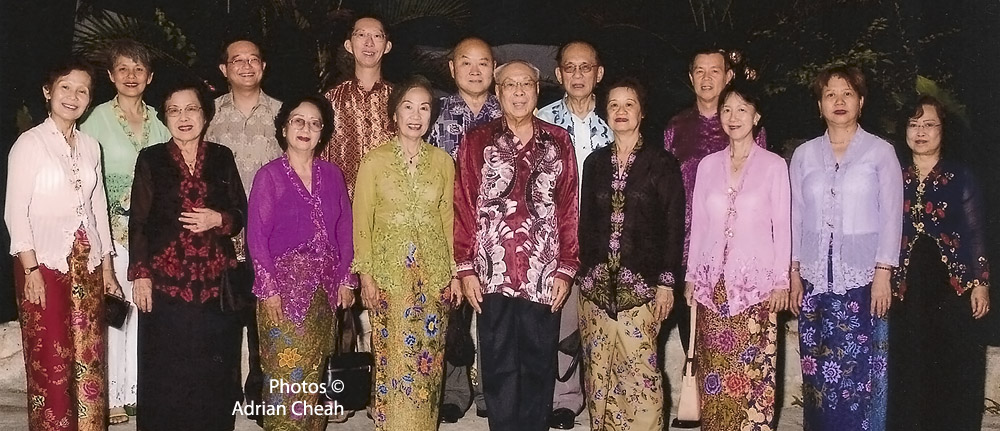
Ladies' Circle Management Committee, 2004–2005.
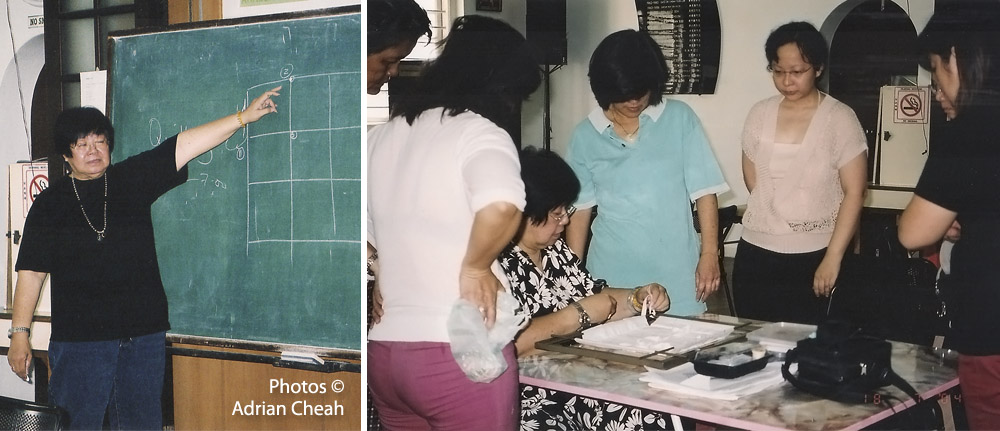
May Lim teaching the intricate art of beading kasut manek during a Ladies' Circle workshop. Through decades of dedication, she has helped preserve this treasured Peranakan craft, inspiring and nurturing hundreds of students locally and around the world.
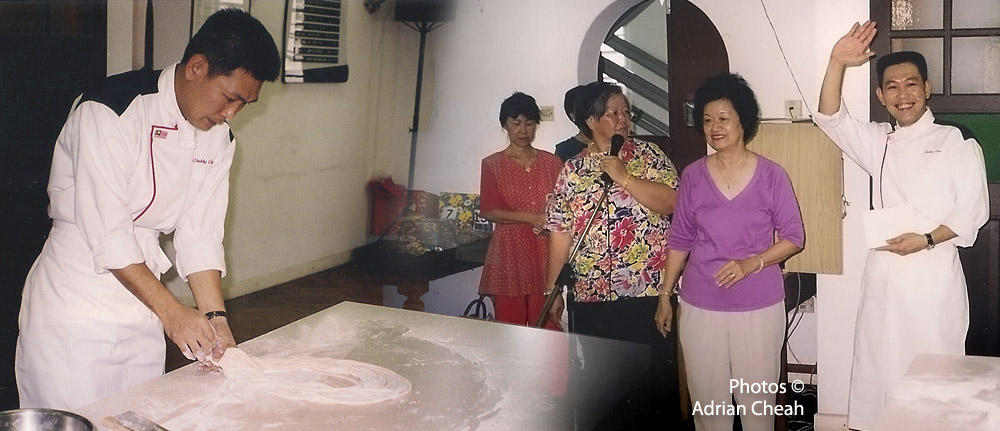
2002: Chef Chen conducting a noodle-making class for members of the Ladies' Circle.
That same year, she became Chairperson of the SCPA Ladies’ Circle. Although the Ladies’ Circle had long been dormant, she set out to revive it. Under her leadership, the group came alive again: she organised cooking classes and invited guests to conduct demonstrations, held workshops on sewing beaded slippers and kebayas, started a folk-dancing group, and later formed a Nyonya dance troupe specifically for the first-ever Baba Convention organised by Khoo Keat Siew in Penang in 1988. From that inaugural gathering onward, Baba Nyonya associations across Southeast Asia have continued to hold the convention annually to celebrate all things Peranakan.
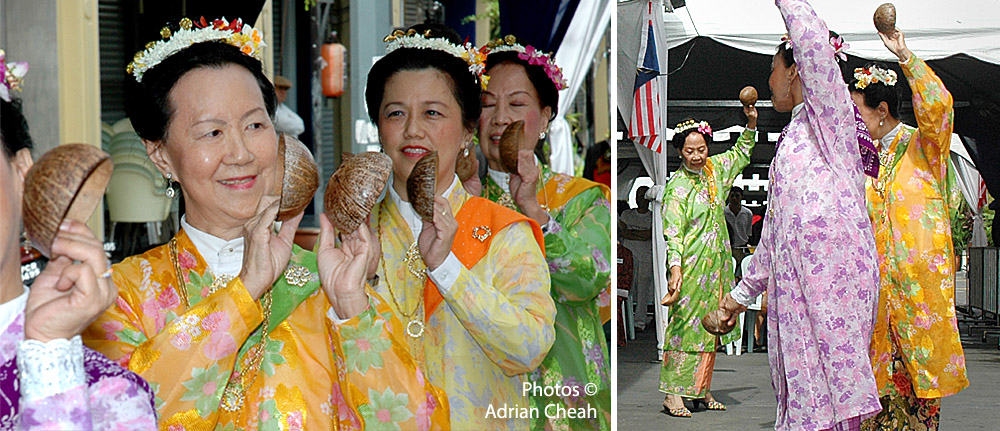
It was in that remarkable year that she created what would become her enduring legacy: the Nyonya stage dance tradition as we know it today. While Peranakan culture had long embraced musical traditions such as Dondang Sayang and Keroncong, and audiences were already familiar with staged Malay dance traditions such as Ronggeng, there was no established repertoire of choreographed Nyonya dances created specifically for the stage. Auntie Suan See changed that. Drawing on her training in Malay, Chinese, and folk dance, she built everything from the ground up—selecting the music, crafting the steps, shaping the aesthetic, and teaching every move herself. There was no template to follow; she was creating the language as she went. She began with a small group of four or five dancers, guiding them with patience and elegance, always dancing beside them to model poise, timing, and grace.
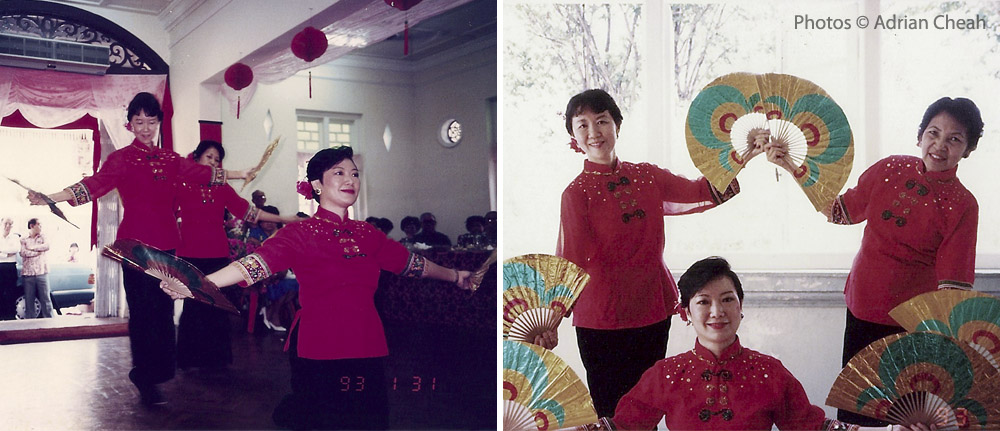
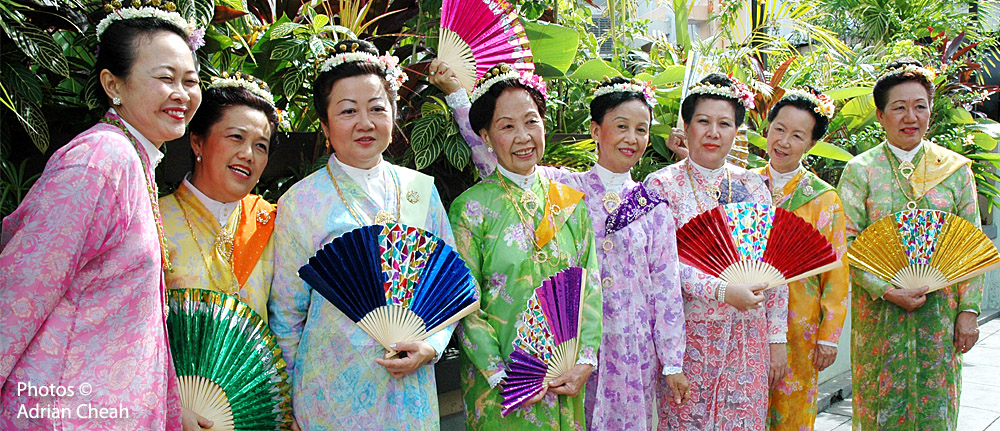
1993: Auntie Suan See and her Nyonya dancers performing the fan dance at the SCPA premises.
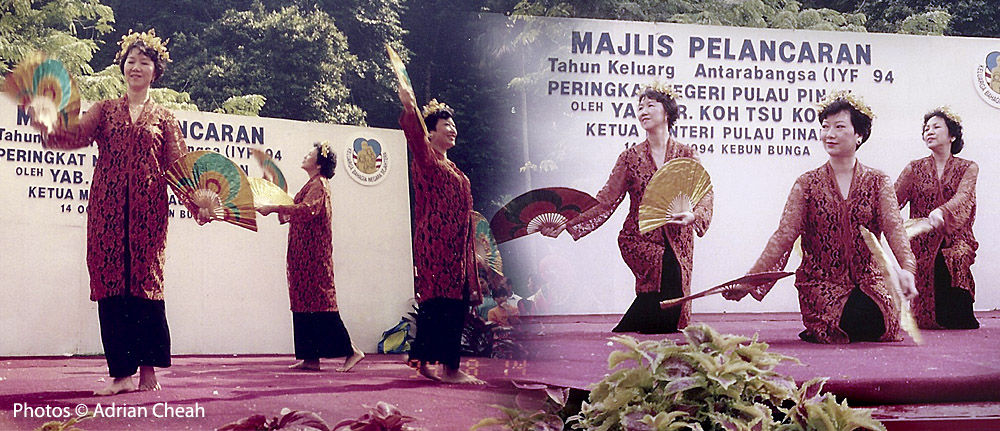
1994: Auntie Suan See and her dancers performing at the Majlis Pelancaran Tahun Keluarga Antarabangsa (International Year of the Family 1994) at the Penang Botanic Gardens, bringing Peranakan culture to a public celebration of family and community.
Her creative process was intuitive but disciplined. She could begin with a melody or with a movement sequence, but she preferred working with the music first. “If I have the music", she explained, “I know how long each section lasts, and I can choreograph to finish exactly with the piece". In this way, each dance became a conversation between rhythm and gesture, structure and improvisation.
What she created was something neither wholly Malay nor wholly Chinese. Her dances blended the softness of one tradition with the precision of another, forming a vocabulary that felt both new and deeply rooted. The music she chose was an intricate mix of Chinese and Malay tunes collected over years, each matched brilliantly to the choreography it inspired. For the 1988 convention, she choreographed the fan, umbrella, and handkerchief dances, set to beloved tunes such as “Nona Nona” and “Dayung Sampan”, dances that continue to be performed to this day.
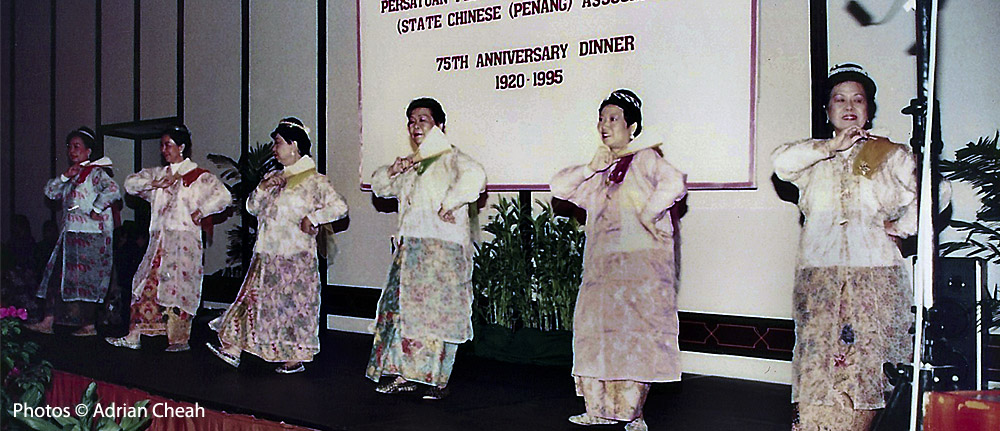
1994: Six Nyonyas performing the fan dance at the SCPA 75th Anniversary Dinner.
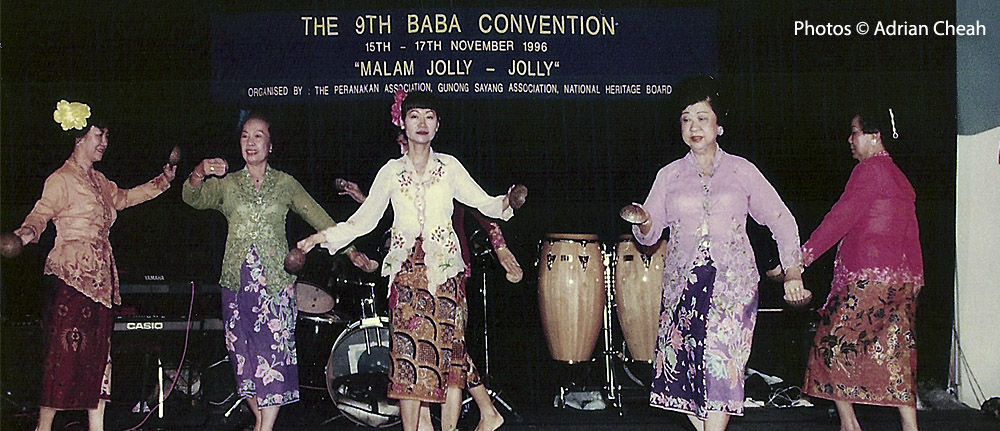
1996: Auntie Suan See and her Nyonya dance troupe performing the "Coconut Dance" at the 9th Baba Convention in Singapore.
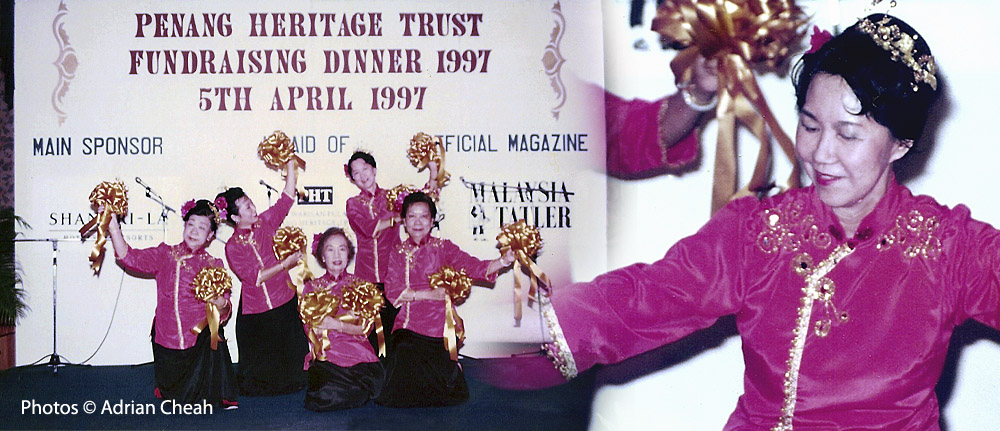
1997: Performing at the Penang Heritage Trust Fundraising Dinner.
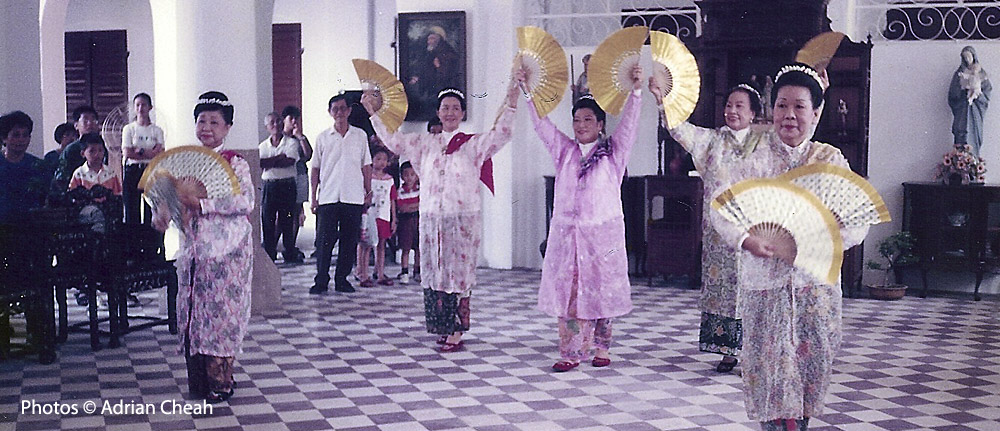
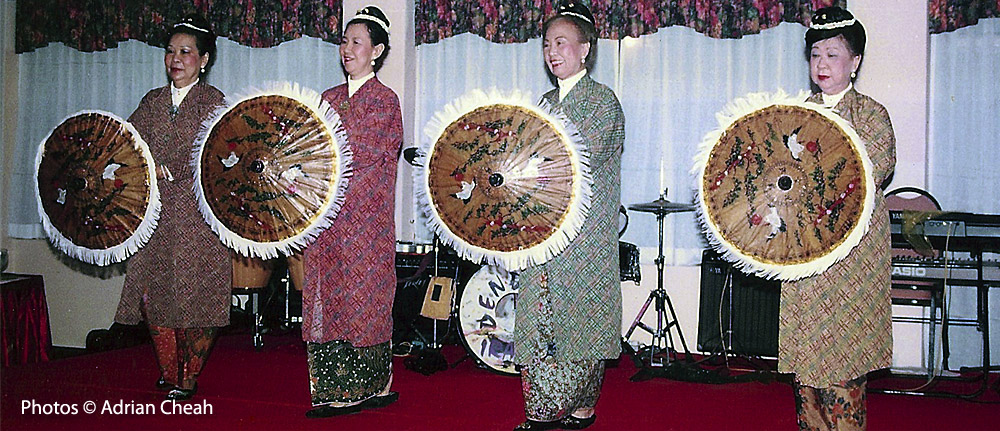
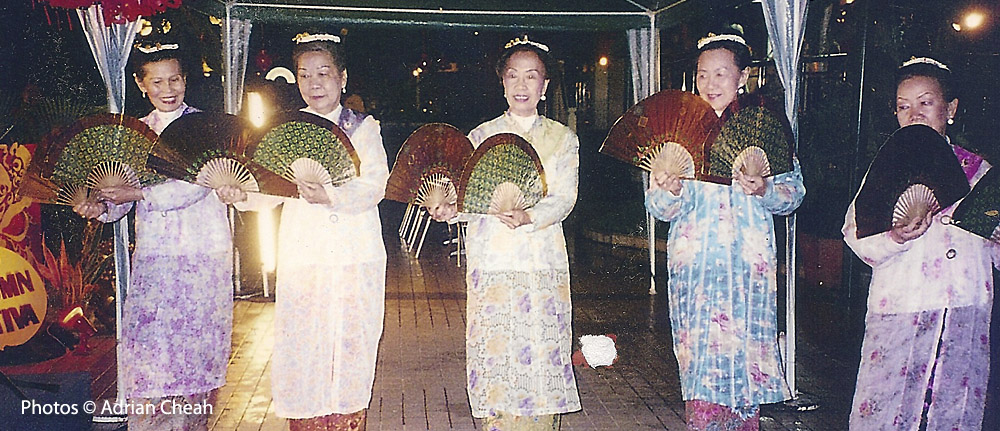
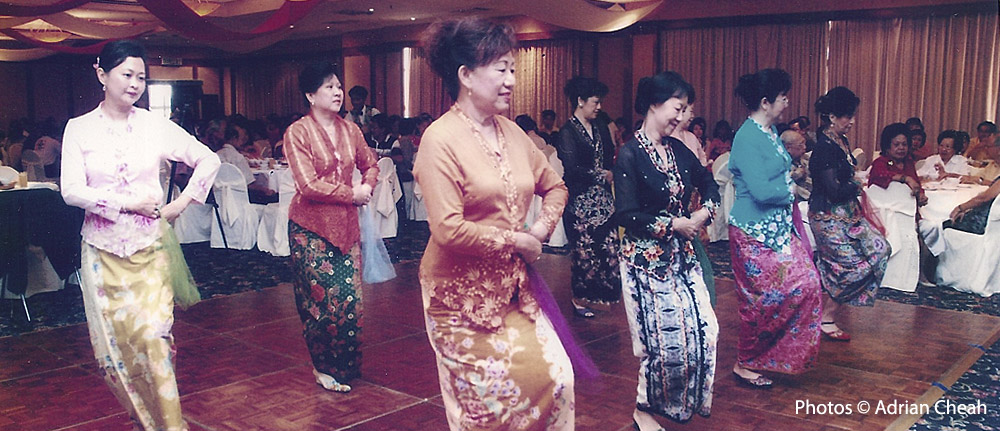
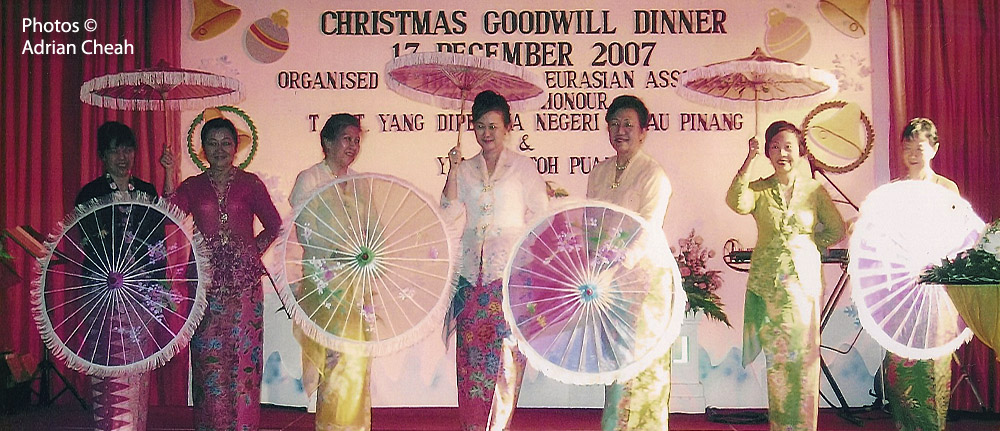
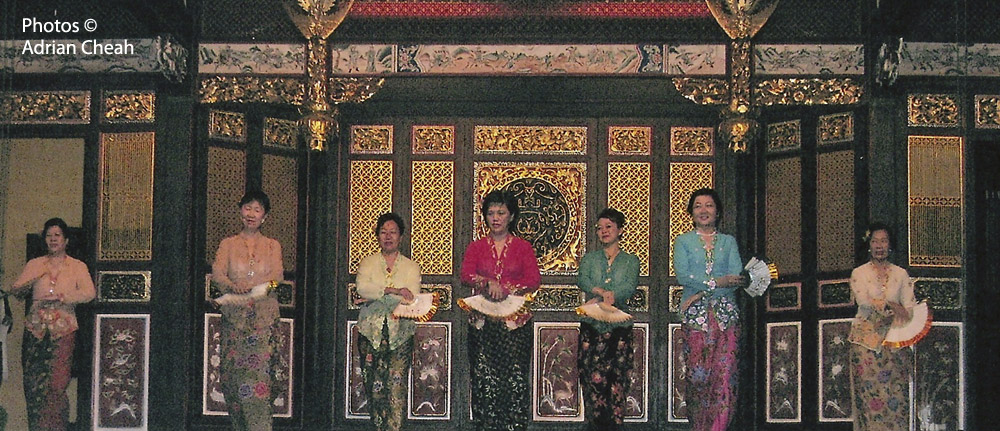
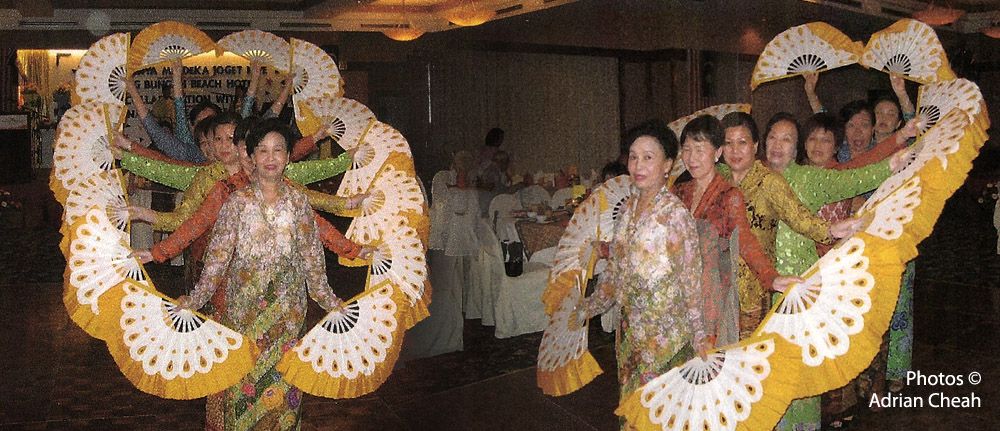
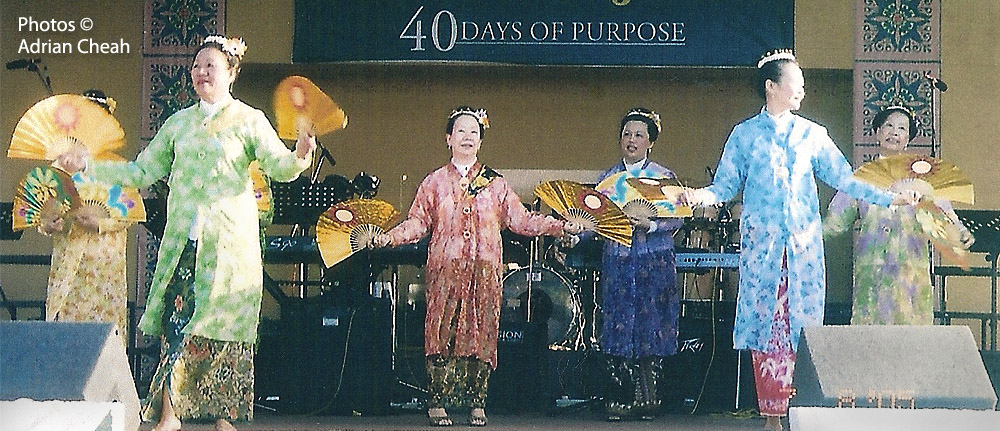
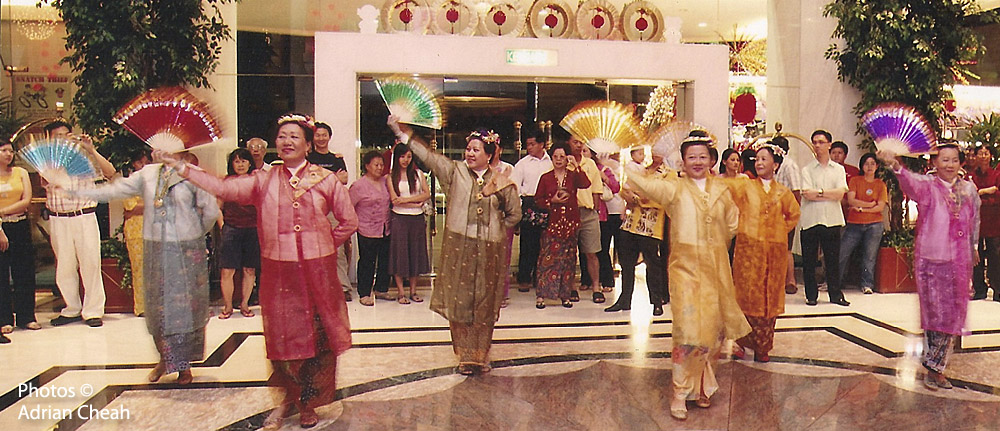
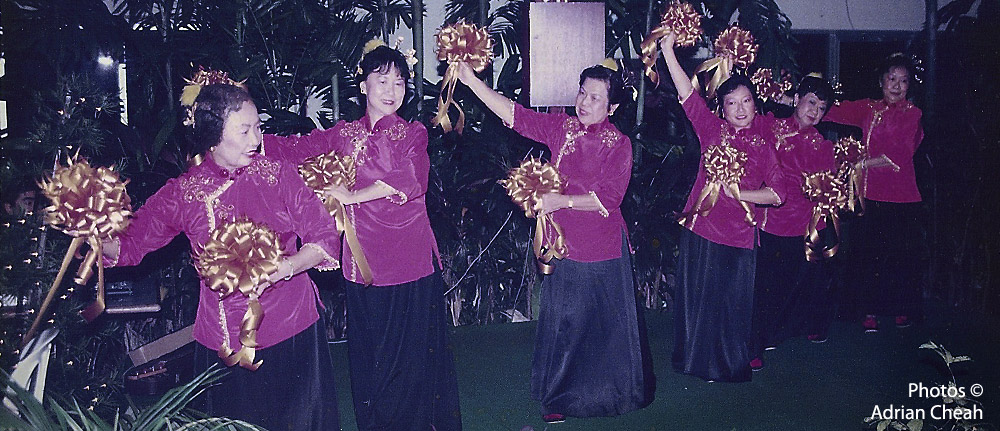
Over the next three decades, her troupe performed at conventions, weddings (including mine), birthdays, charity events, and community gatherings. She never accepted payment—at most she requested a table at the dinner. She expressed this belief simply: “Once you monetise anything, I think passion and love will go out".
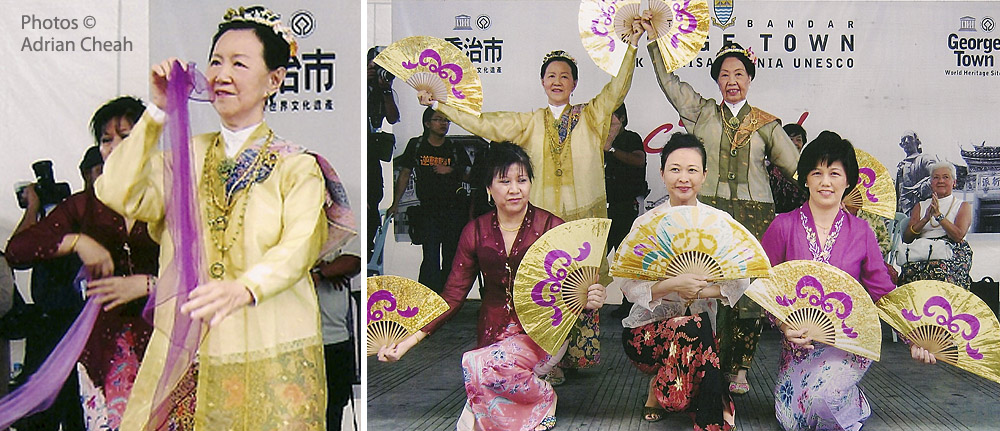
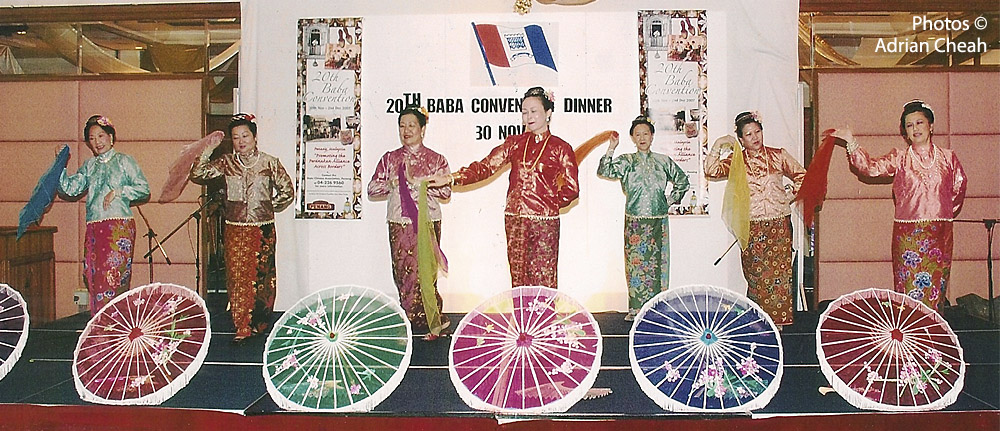
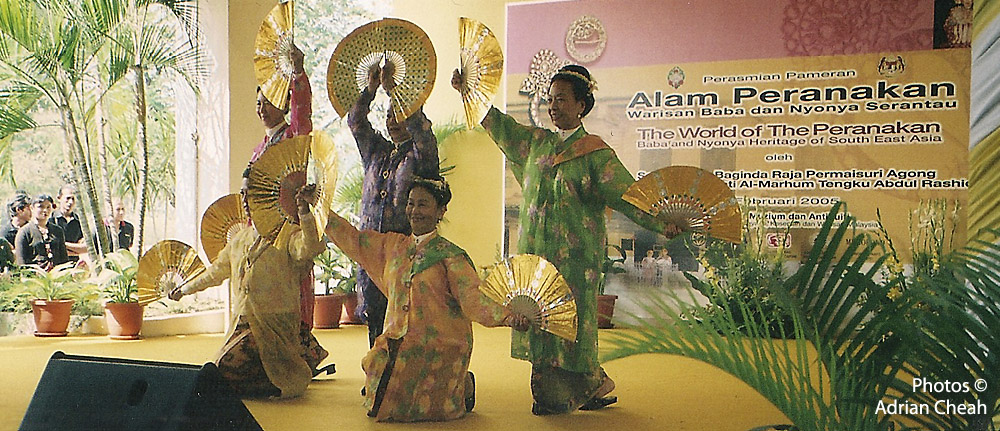
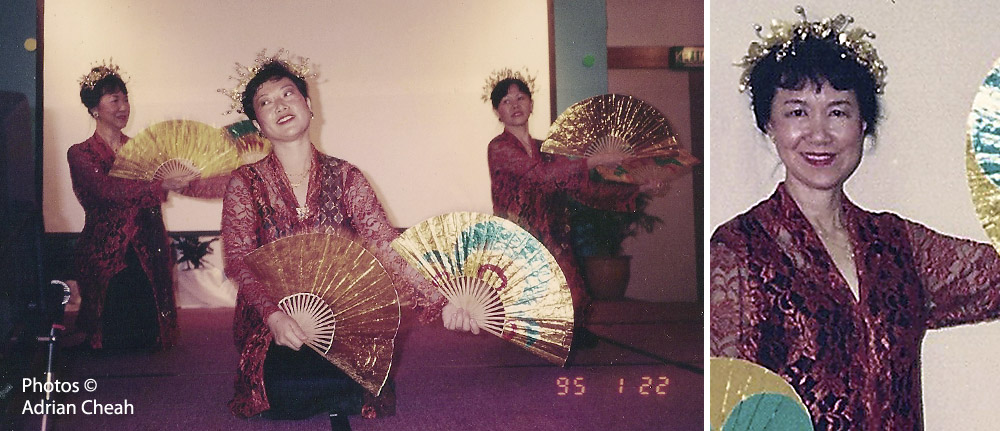
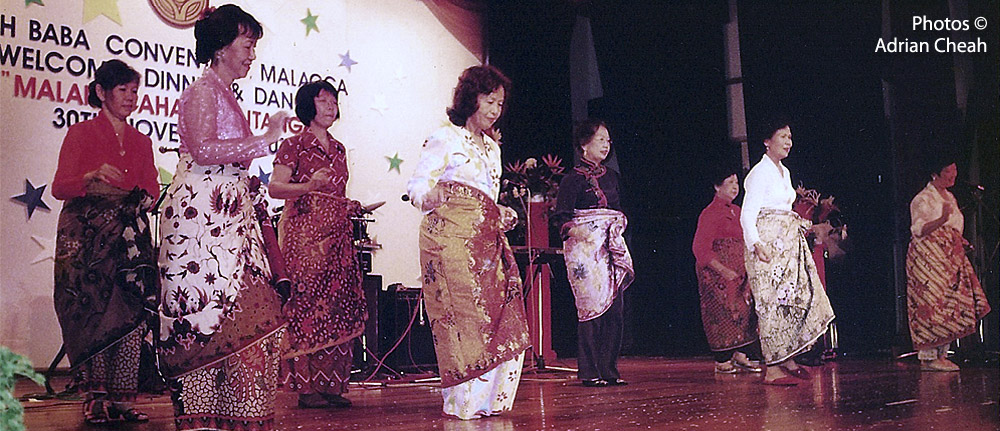
To her, the dancers were collaborators, not subordinates. She nurtured them, encouraged them, and ensured that the culture and elegance of Peranakan dance were preserved and passed on.
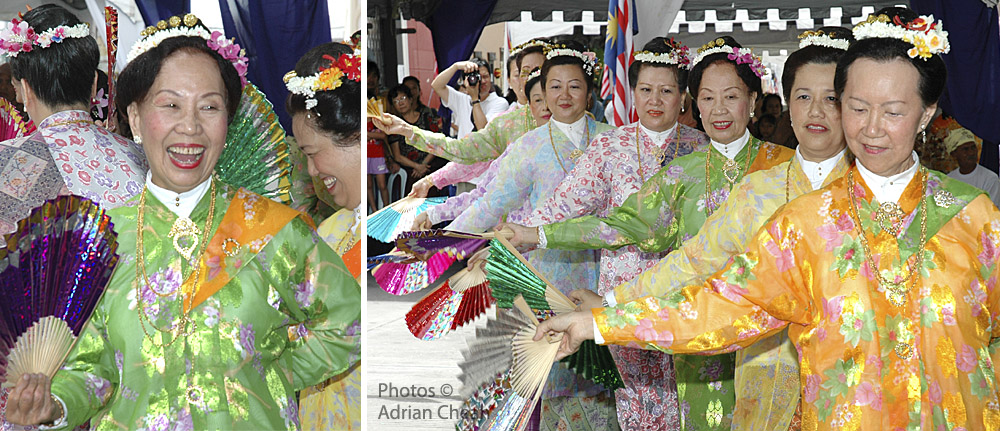
Despite her decades of dedication, she lamented to me how little of this work had been formally recorded or remembered. There were no archives, no documentary, no systematic effort to document the dances she created. The Nyonya dancers aged, some passed away, new members were recruited, and still the tradition remained unarchived. “The SCPA is always so busy with other matters", she noted softly. “They forget about the dances". Her disappointment was never bitter, yet undeniably real.
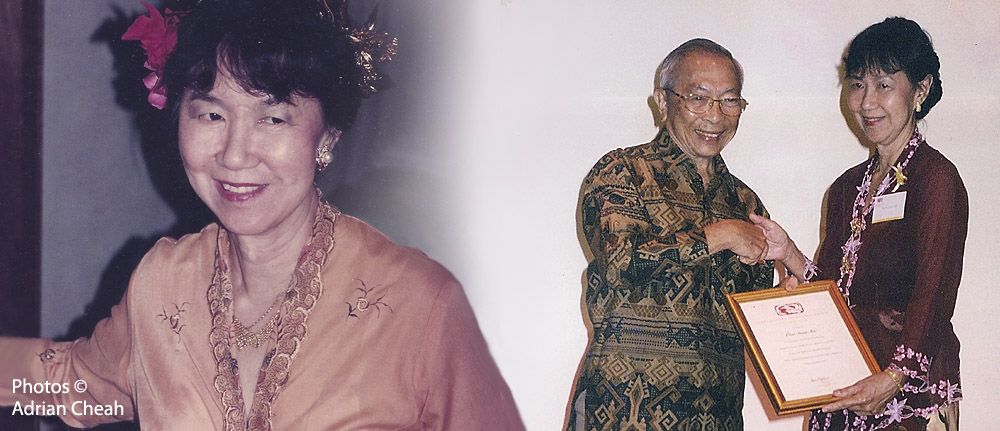
Even so, her contributions did not go entirely unrecognised. In 2002, she was honoured as one of the most active members of the Peranakan community and received a book prize from the Singapore Peranakan Association at the Baba Convention (photograph above).
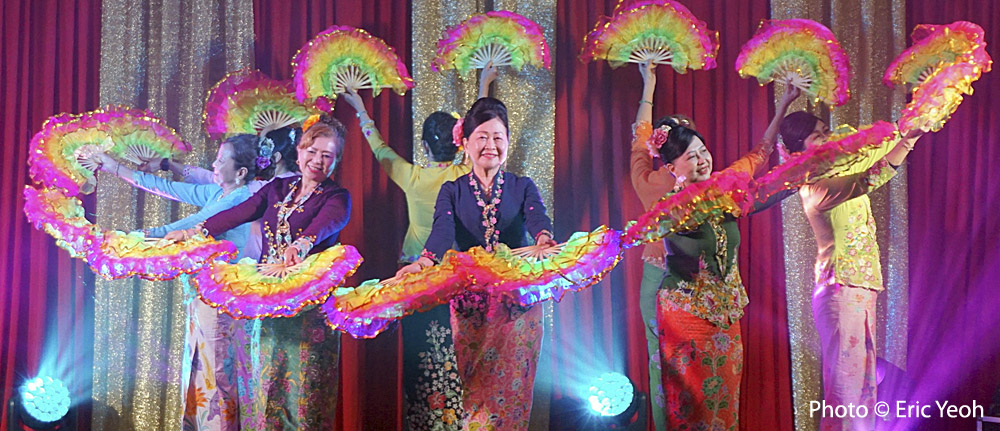
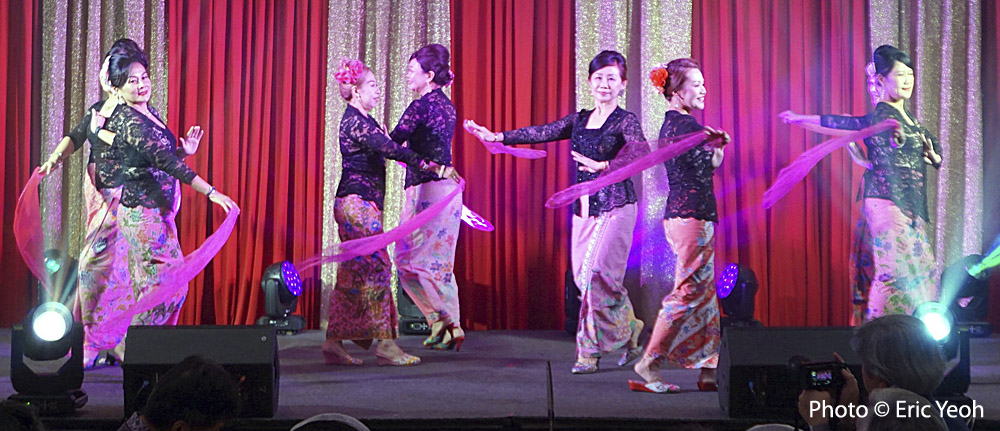
6 September 2025: The Sayang Sayang took centre stage before the performance of "Dinner with Emily".
Thankfully, her work did not disappear. Two of her most devoted protégés, Dato’ Lillian Tong and her sister Melinda Song, took up the mantle. Together, they continue to promote and choreograph the Nyonya dances they inherited from Auntie Suan See, carrying her vision forward with dedication and flair. They later led the Nyonya dance troupe, the Sayang Sayang dancers, named in honour of Suan See’s initials, “SS”, onto the international stage, performing in China and beyond.
A Life of Art and Heritage
Art was not simply a pursuit for Auntie Suan See; it was another language through which she explored colour, form, imagination, and emotion. Her love for drawing and painting began at a very young age, nurtured by her mother and encouraged by a primary school art teacher who urged her never to stop. She carried that advice with her for the rest of her life, allowing her passion to deepen across the decades.
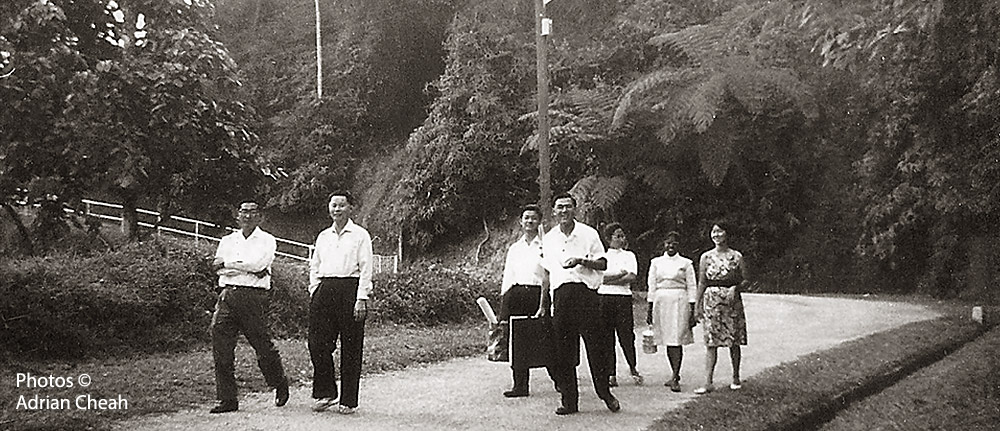
She underwent formal training at the Specialist Teachers’ Training Institute and became deeply involved in the development of art education in Penang. In 1963, she co-founded an art appreciation group that evolved into the Penang Teachers’ Art Circle (PTAC), creating a platform where art educators could exchange ideas, techniques, and approaches to teaching visual arts.
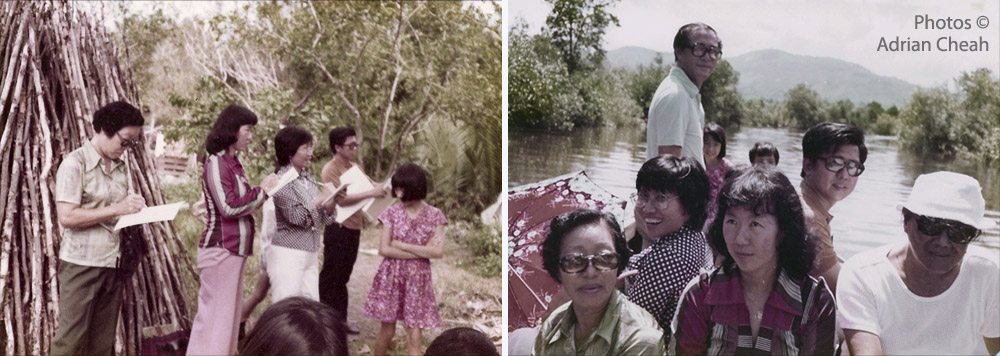
Auntie Suan See with fellow teachers on art excursions organised by PTAC. She also actively participated in its other activities, including art talks, sharing sessions, technical workshops, and exhibitions.
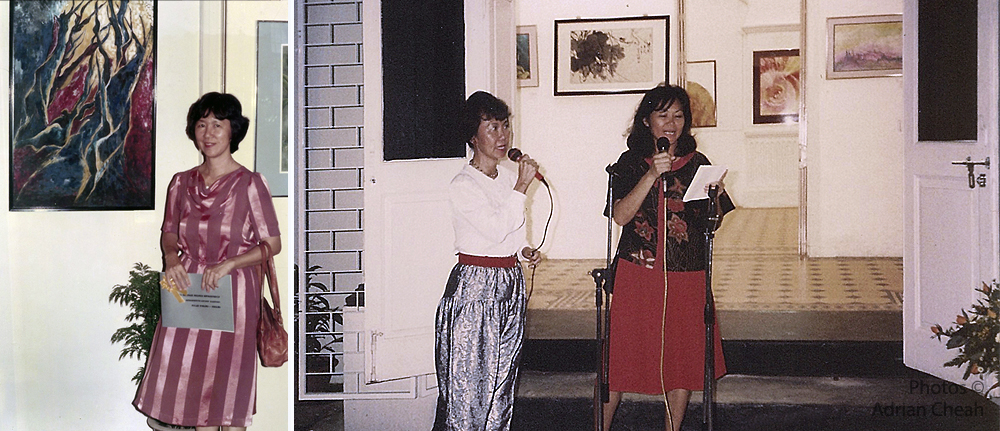
Left: 17 July 1986—Auntie Suan See with her artwork at the Retrospective Art Exhibition, Penang State Museum & Art Gallery.
Right: On 12 March 1994, Auntie Suan See participated in the International Women’s Day (IWD) celebration at the Conservatory of Fine Arts, Penang, a notable cultural event honouring women in the arts.
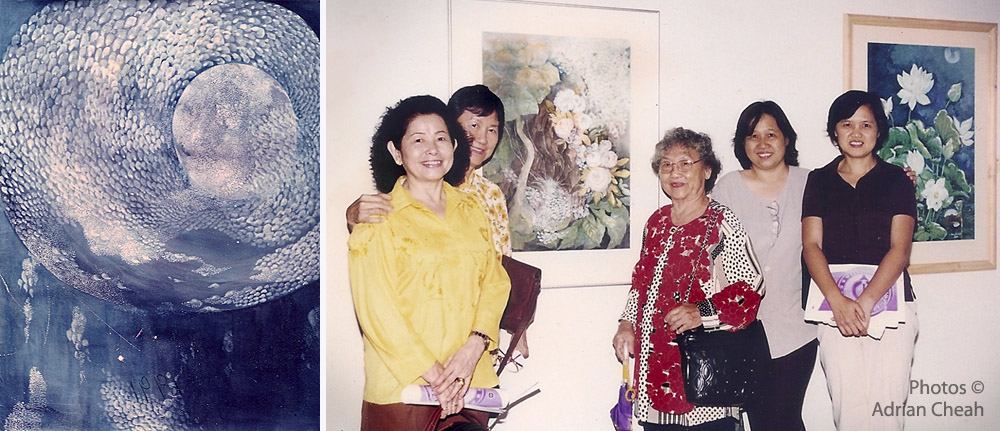
Left: One of Auntie Suan See’s masterpieces, "Lunar Phenomena", purchased by Dr Choong Sim Poey.
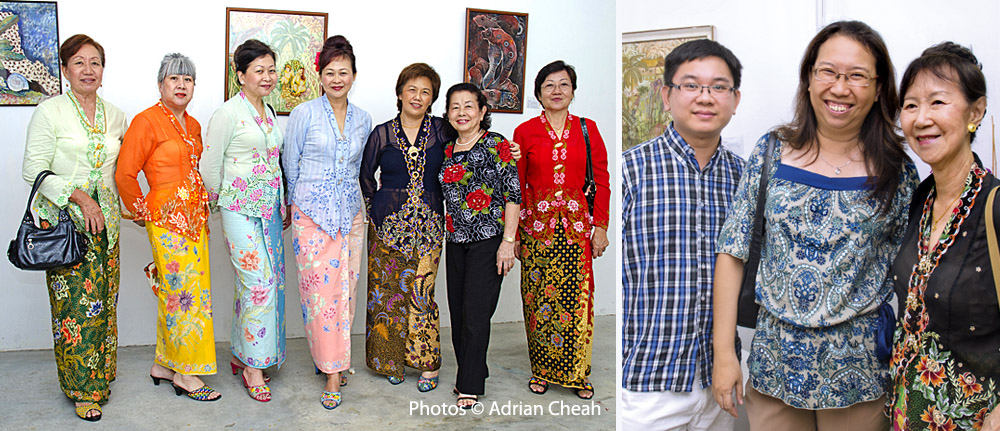
Right: At the Penang Art Society Art Exhibition, 2000. Mum (far left) was always there to support her.
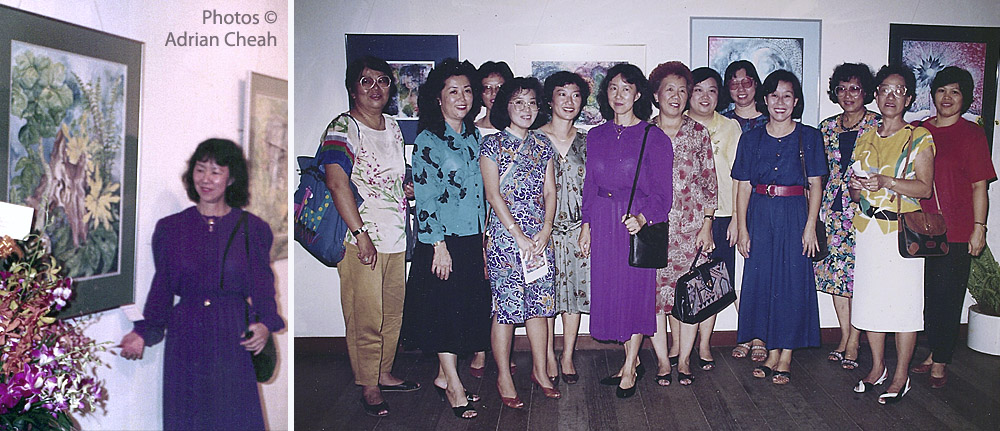
21 July 1991: Auntie Suan See with friends at her joint art exhibition with Siew Inn at the Penang State Museum & Art Gallery.
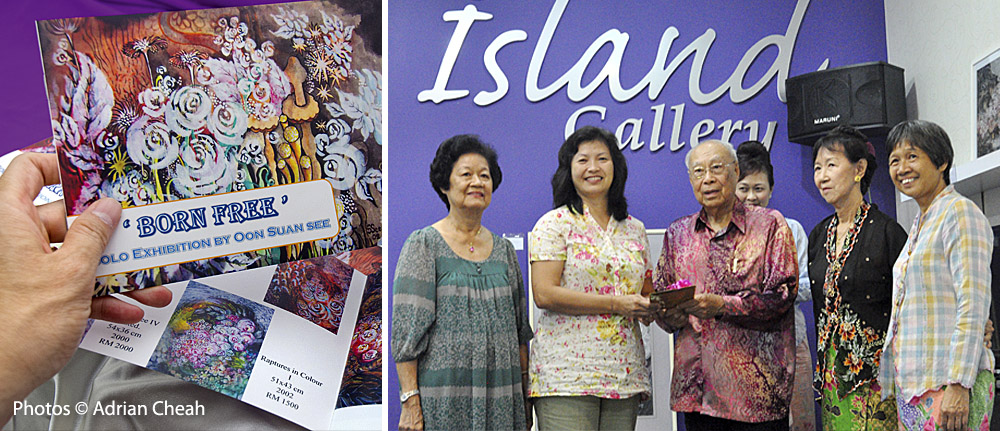
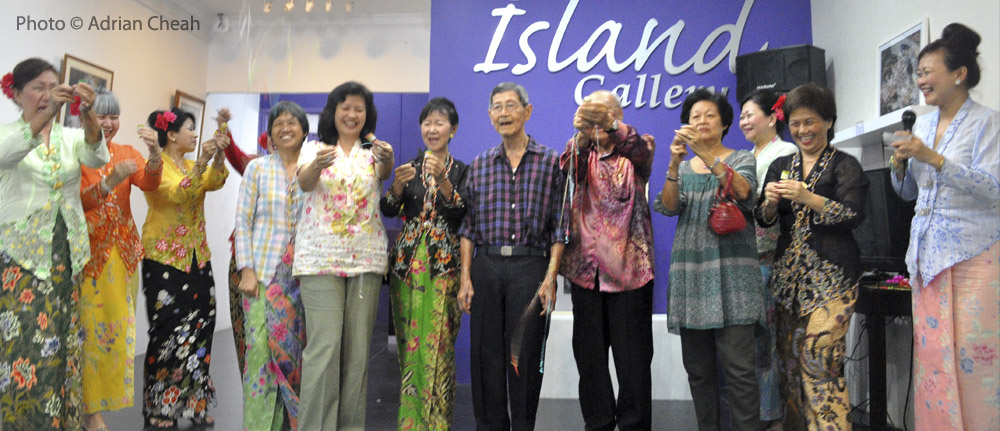
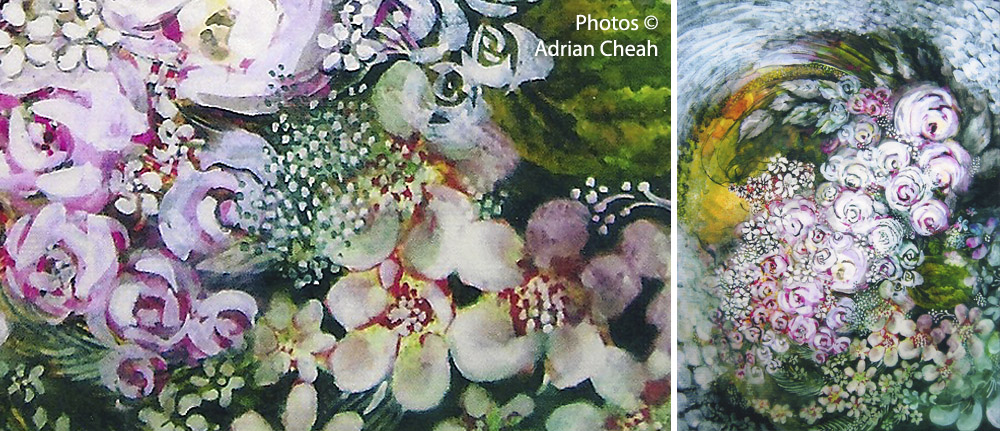
She continued to participate in exhibitions annually and, in November 2013, held her first solo exhibition, encouraged by Mei Fong of Island Gallery. Dato’ Seri Khoo Keat Siew officiated the opening. Entitled "Born Free", it beautifully reflected the harmony between her art and her life, celebrating the same spirit of freedom.
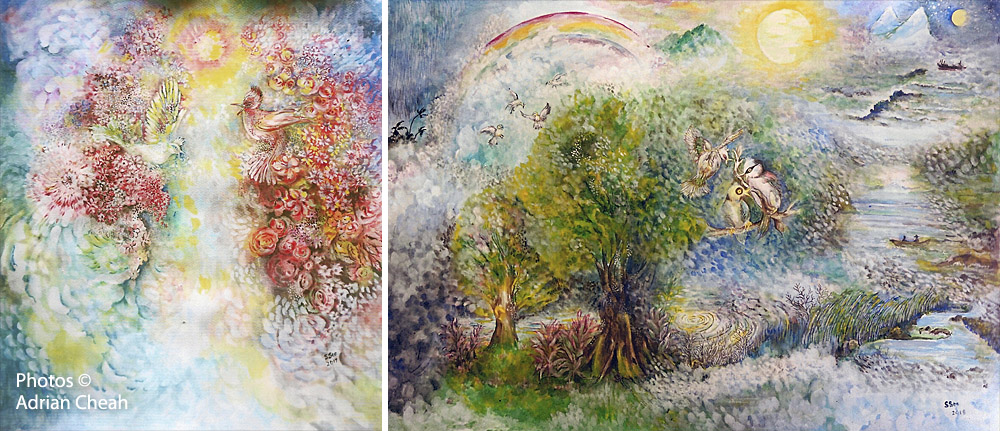
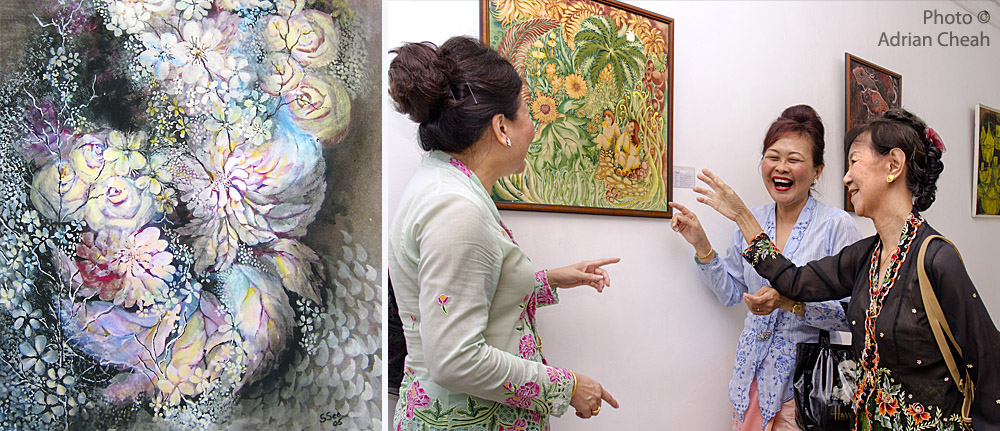
Her subjects ranged from the surreal explorations of her subconscious to the delicate beauty of flowers, especially roses, which became a recurring theme in her oils, watercolour and gouache paintings.
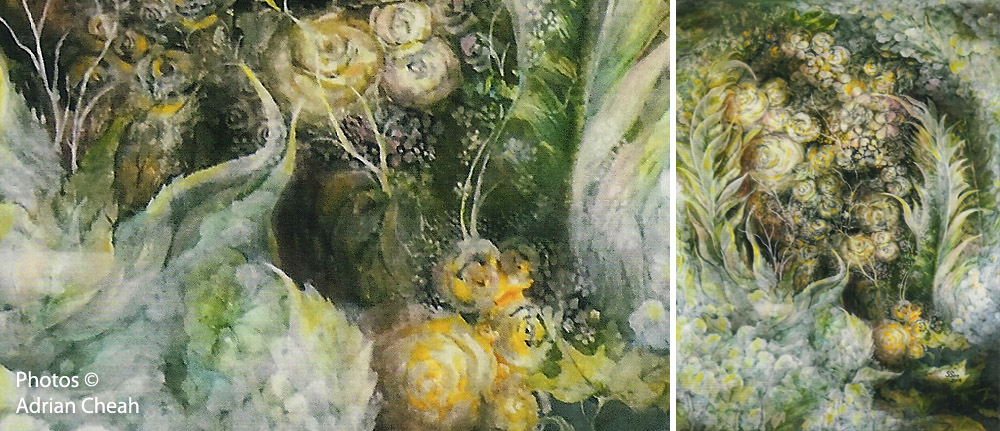
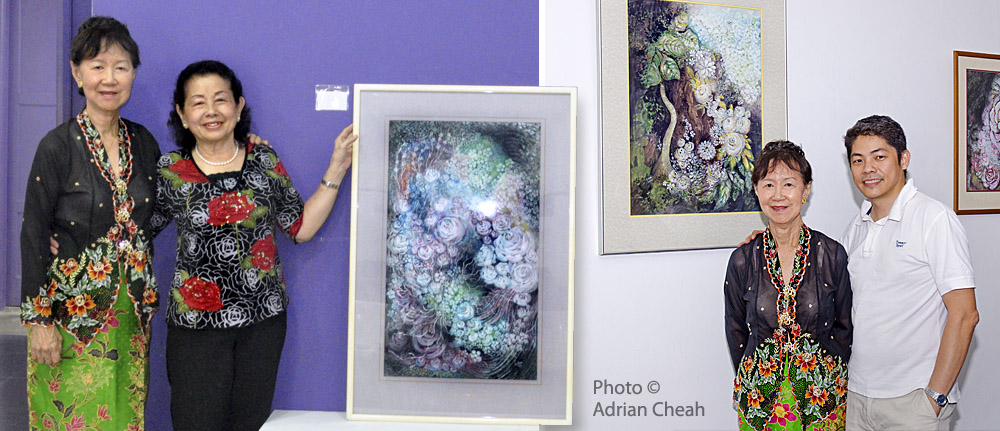
Left: Mum with Auntie Suan See. Right: Auntie Suan See and I. Looking back, I wish I had commissioned her or bought one of her masterpieces, something that would have kept a piece of her creativity and warmth in my home.
In April 2025, I shared with Auntie Suan See a portrait I had painted of my mum for her 91st birthday. She congratulated me, praising my capture of both likeness and spirit. In that simple, encouraging gesture, I felt the essence of who she was—generous, observant, and always ready to nurture the talents of those around her.
Beyond her personal practice, she taught generations of students in Penang, sharing her knowledge of art, music, and dance.
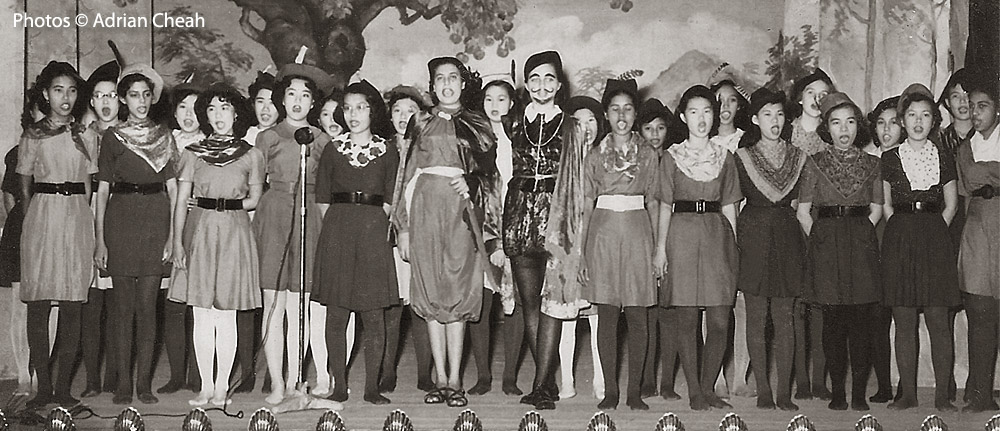
One of Auntie Suan See's early appearances on stage, during a theatrical performance at Convent Pulau Tikus, circa 1963–1964.
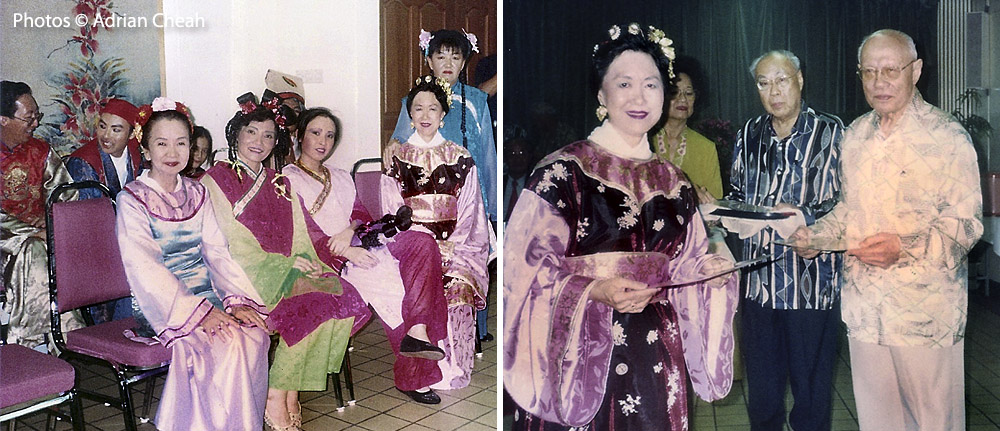
Auntie Suan See took part in Sam Pek Eng Tai (The Butterfly Lovers), a Bangsawan production organised by SCPA, Persatuan Artis Bangsawan Pulau Pinang (PERAWAN), and Penang Heritage Trust (PHT). The classic Chinese star-crossed love story was reimagined through Penang’s unique multicultural lens, blending Malay theatre traditions, Baba Nyonya language, dance, song, and music. Directed by Cikgu Mohd Bahroodin Ahmad, the production marked an important milestone in the revival of Bangsawan and the celebration of Straits Chinese heritage. It was staged during the YTL Arts Festival in June 2000 and again for the Baba Convention in December 2000.
Right: Auntie Suan See receiving a certificate of appreciation from Tun Dr. Haji Hamdan Sheikh Tahir, Governor of Penang, in recognition of her contribution to the production.
Her curiosity and openness even led her to immerse herself in a Malay patois for the dramatic performance of Sam Pek Eng Tai in 2000, a challenge she called “eye-opening.” Auntie Suan See’s ability to cross disciplines, cultures, and languages, combined with a lifelong devotion to her art, was as remarkable as it was inspiring.
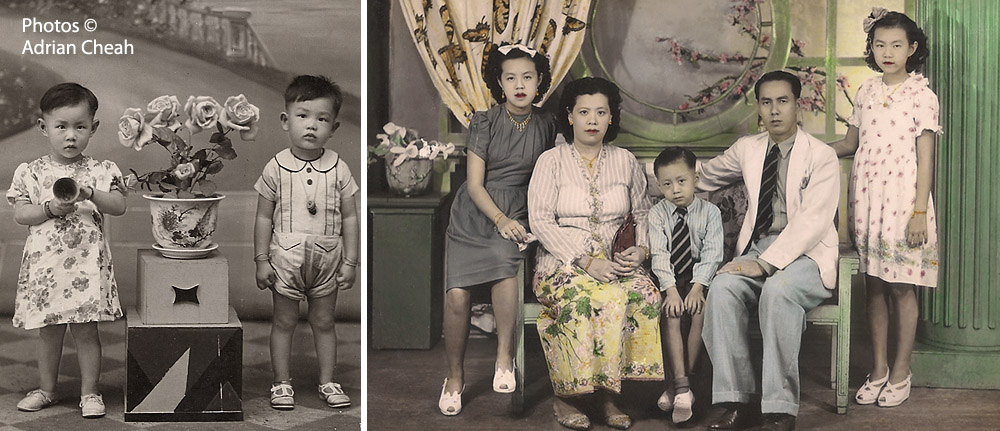
Cherished family photographs from Auntie Suan See's childhood: left, with her brother; right, with her parents and siblings.
Born in Penang in 1937 to Oon Hun Seng and Teoh Chooi Phek, Auntie Suan See grew up in a home steeped in the textures and rhythms of Peranakan life. Her parents wore sarong at home; her mother donned the thay sah and th’ng sah; her grandmother cooked the dishes whose aromas defined the shape of her childhood.
“When I was growing up in a vibrant Chinese Peranakan home, I took many things for granted", she once reflected. “It was only when I started my own family that I realised how lucky I was to be born into such a rich culture.”
That awareness became the foundation behind her lifelong dedication to preserving and celebrating her heritage. She lived her culture fully, naturally, gracefully. And by living it, sharing it, she passed it on.
The Evergreeners
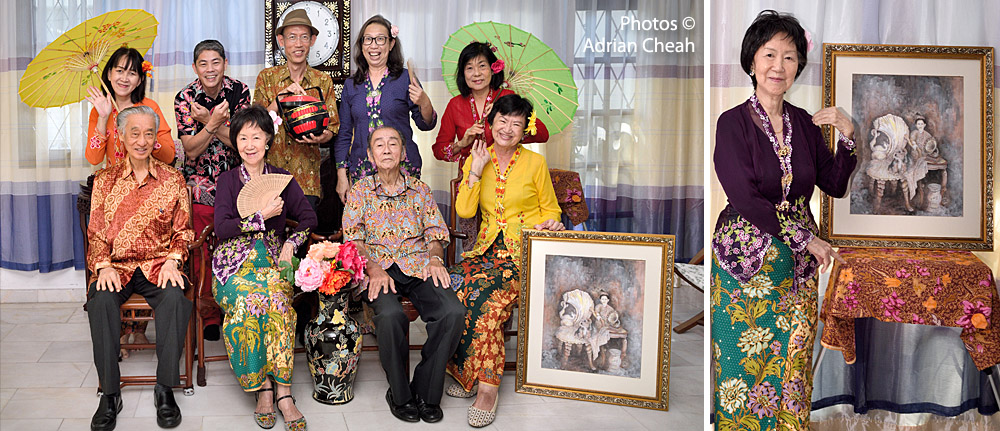
Imagine my surprise (and pure horror) when I was invited to join The Evergreeners, a choir group whose members must have been completely unaware that, when push came to shove, I could not sing to save my dear life.
Of course, I could cook, paint, art direct, design books, curate museums, photograph, and even take on hard labour if required. But sing? Definitely not. Singing was the one talent that had somehow escaped me. Yet when the invitation came from Auntie Suan See, how could I possibly say no?
Thankfully, Helen Yeo, our musical director, is a saint. She endures my enthusiastic attempts at singing with remarkable patience and, to her credit, has never once laughed at my questionable vocal contributions. Or perhaps she is simply too polite to tell me the truth!
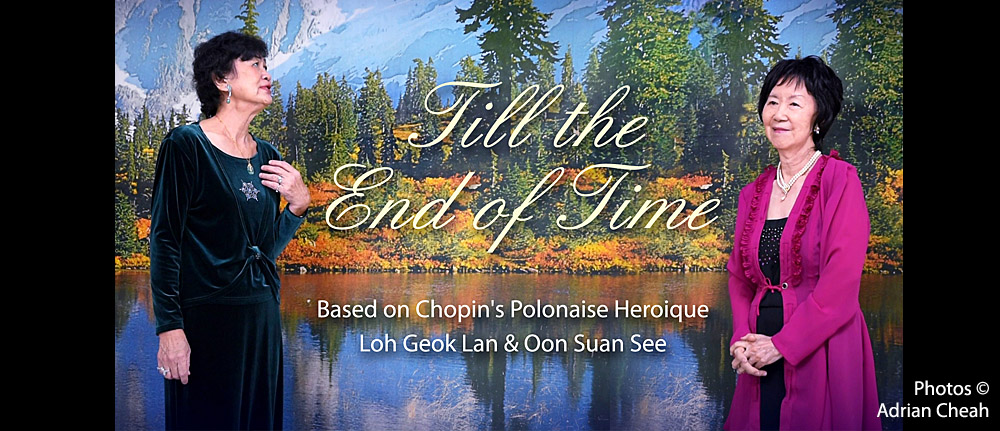
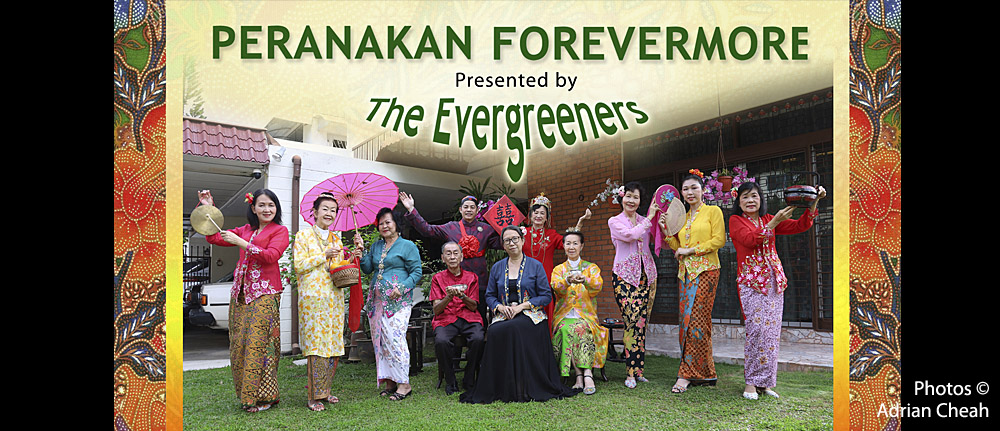
Founded after the Covid-19 pandemic, the Evergreeners was created as a space for like-minded people to gather, reconnect, and celebrate life through music. Many of its members came from the former SCPA Choir, which had been disbanded (but that is another story waiting to be told).
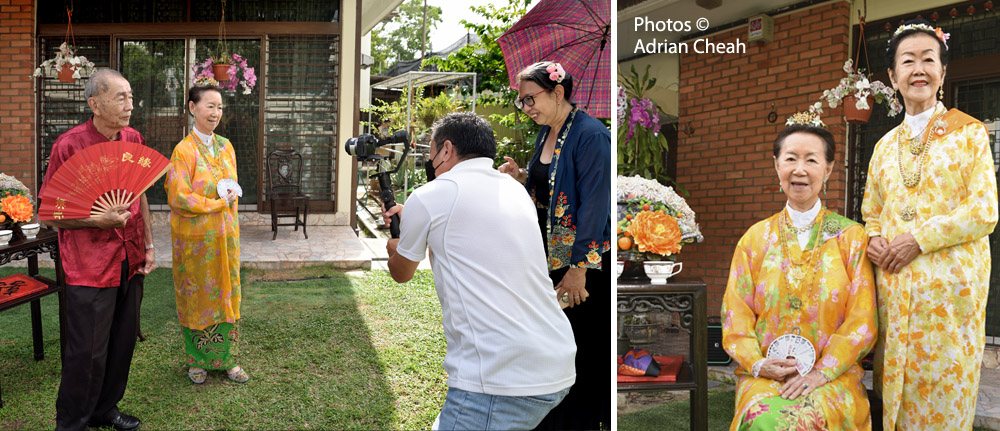
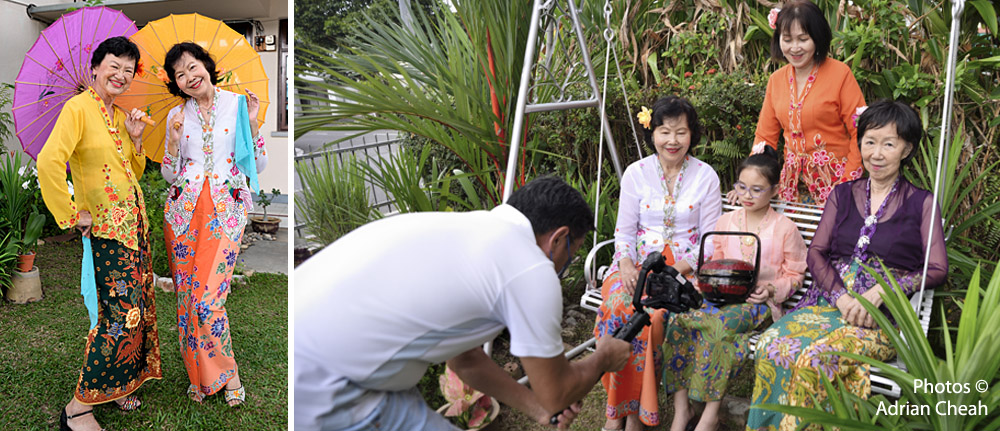
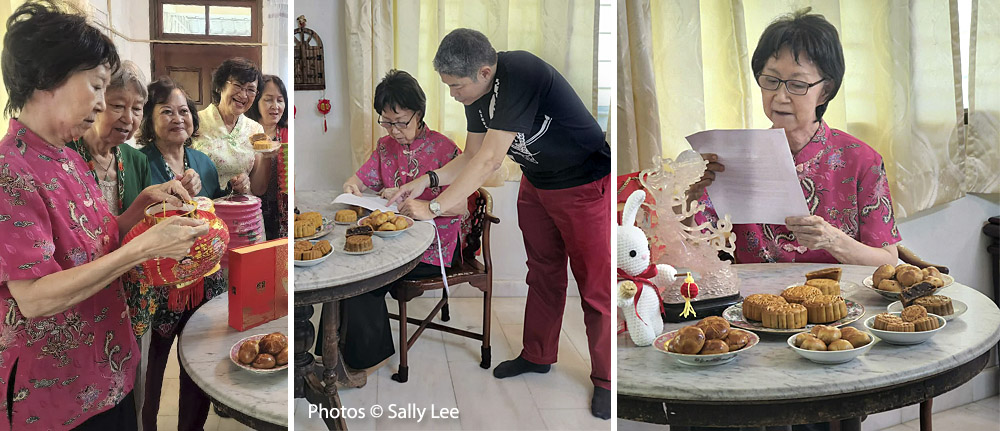
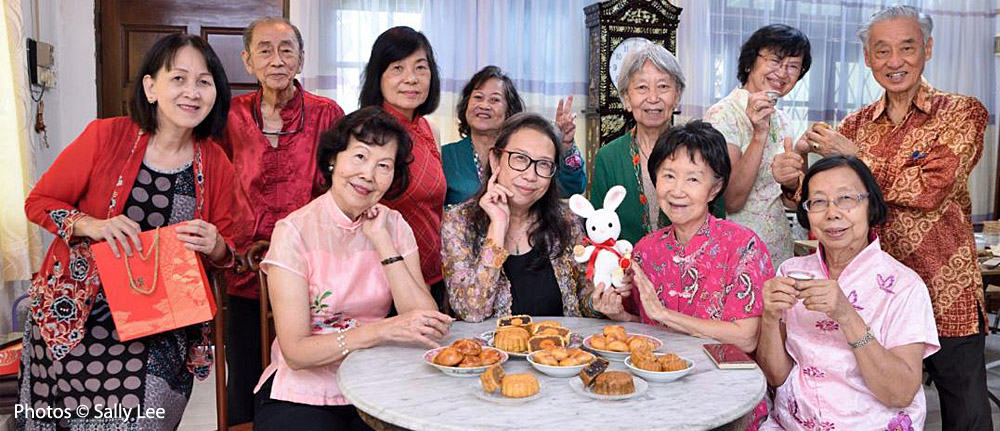
This is no ordinary singing group. We soon discovered that we were not just a choir but a creative collective. Under the banner of the Evergreeners, we began producing videos and skits that combined music, storytelling, humour, and our shared love for Chinese Peranakan culture. Today, we continue to create and share these productions with audiences both near and far.
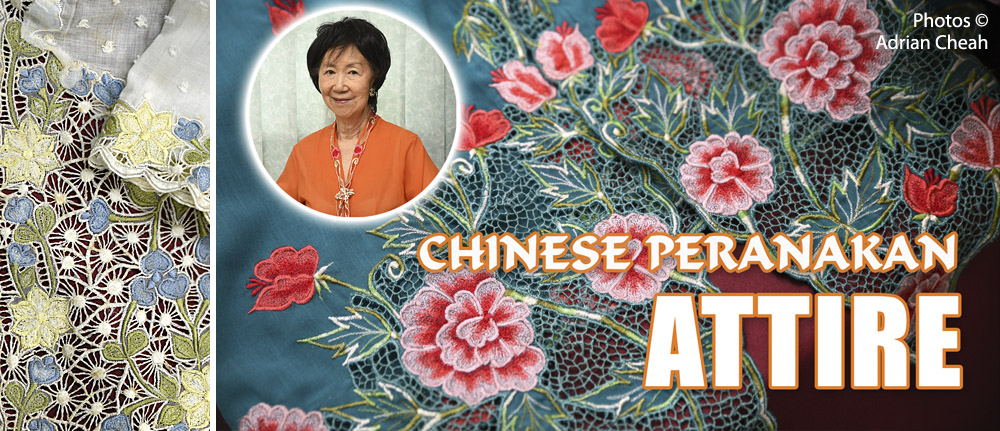
The videos were initially produced for Music from All Corners, an international online initiative by music educators from around the world that sought to bring cheer, connection, and hope during the pandemic. The Evergreeners contributed our own blend of music, storytelling, humour, and Baba Nyonya culture to this global celebration.
Singing may not have been my strongest contribution, but give me a camera, a storyboard, or DaVinci Resolve, and I knew exactly what to do. I happily took on the roles of art director, videographer, and editor. Together, we transformed simple ideas into productions filled with laughter, creativity, and plenty of unforgettable moments.
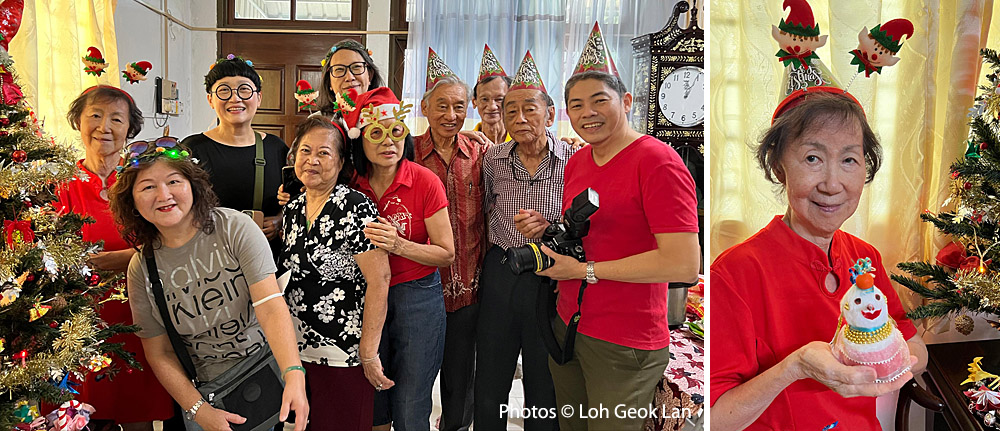
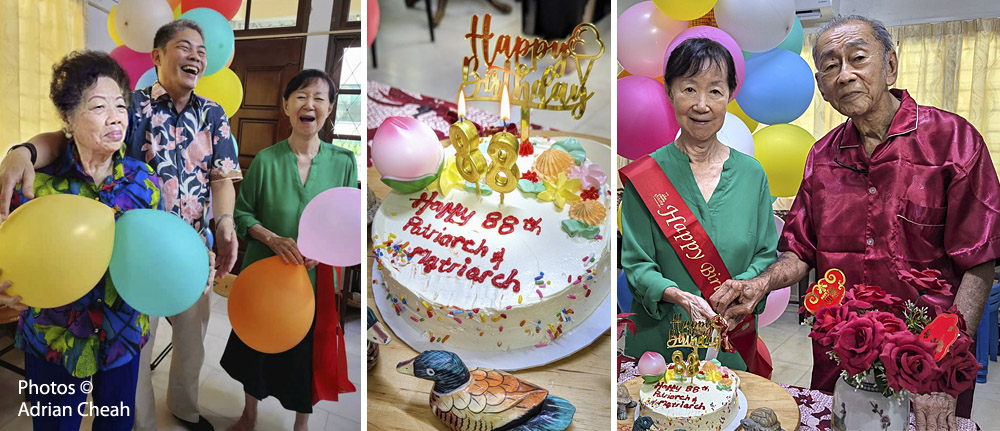
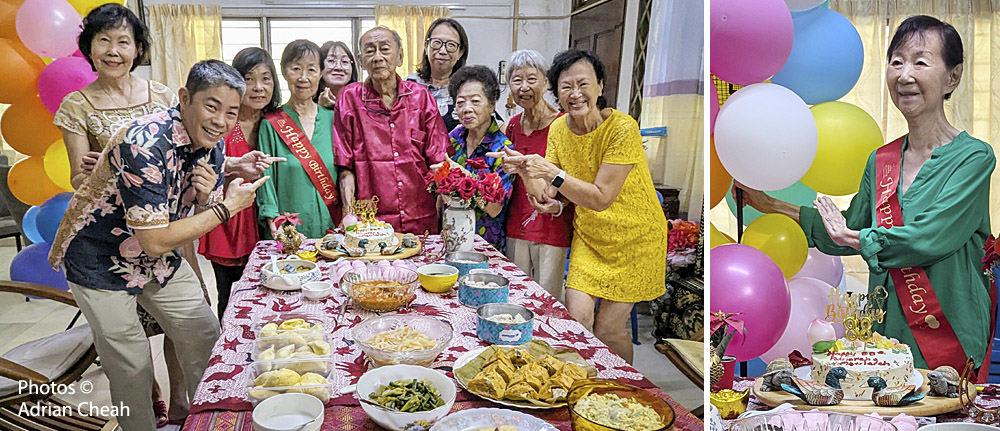
We celebrated birthdays, shared meals, rehearsed endlessly, and laughed even more. The Evergreeners became less about perfect notes and more about perfect friendships. The joy was never in singing flawlessly; it was in singing together.
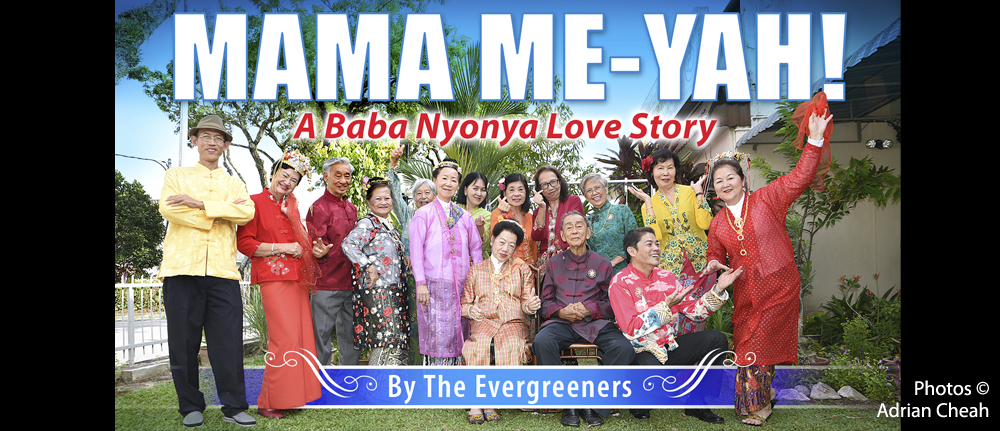
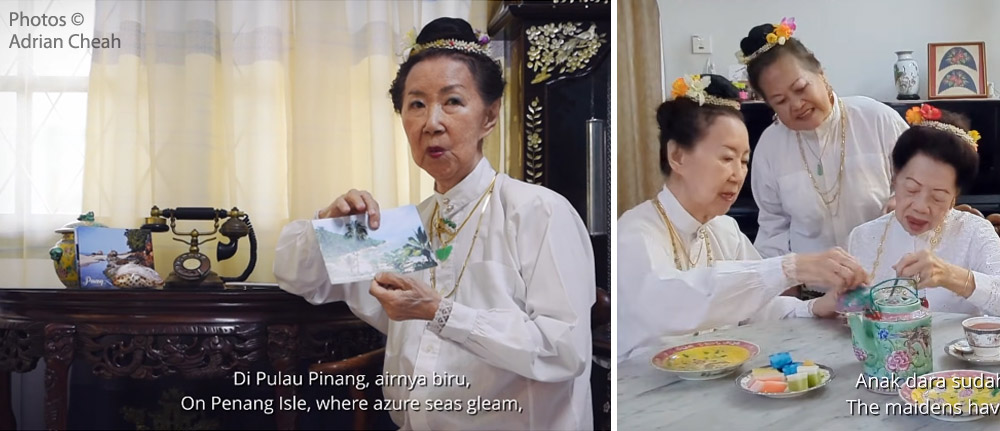
One of our proudest creations was "Mama Me-Yah!", a Baba Nyonya love story musical, released in 2024. It became our most viewed production on YouTube, surpassing 26,000 views, proof that perhaps even a choir with one questionable singer could still create a little magic.
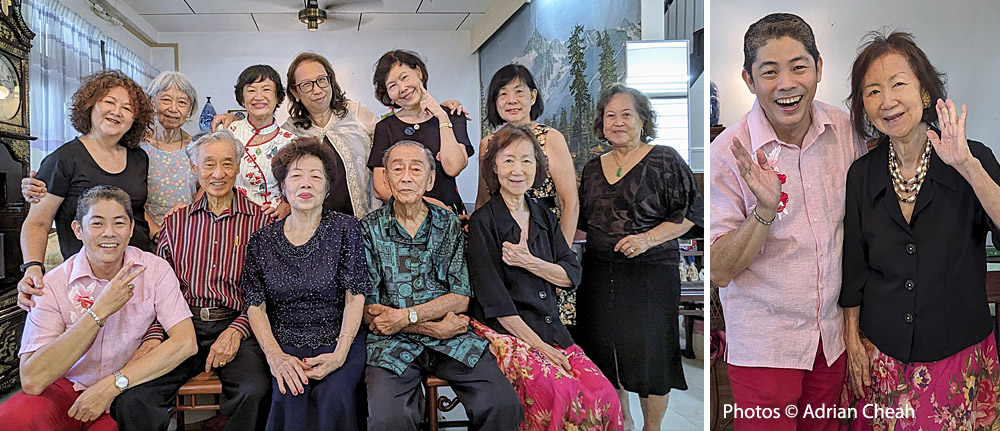
And that, perhaps, was Auntie Suan See’s greatest gift: bringing people together, encouraging them to try something new, and reminding us that life is meant to be celebrated, whether or not we always hit the right notes.
A Life Remembered
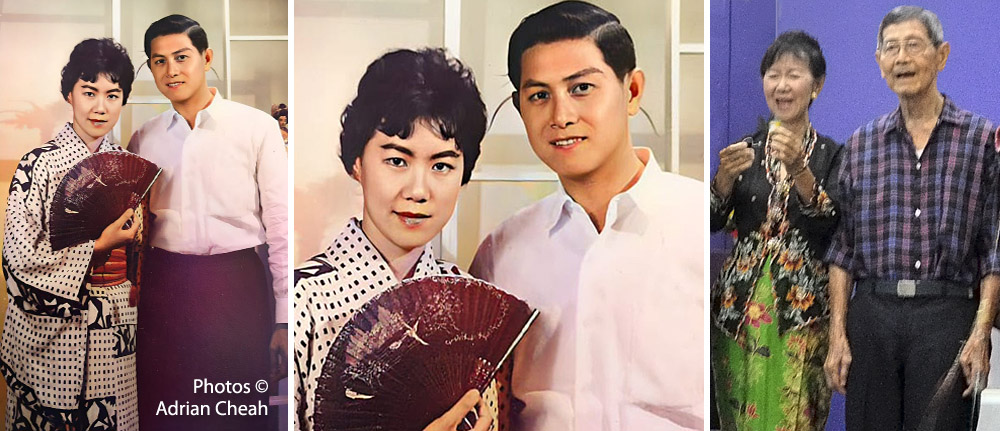
The dashing Albert Khoo Ewe Hock swept her off her feet, and together they shared a life filled with love, companionship, and family.
Behind the artist, educator, and cultural custodian was a woman deeply rooted in family. She shared many years of life’s journey with her husband, Albert, whose presence formed an important chapter of her story. As a mother to Alfred and Winfred, and a grandmother to Chung Lee and Chung Keat, she continued to nurture the next generations with the same warmth, patience, and generosity she extended to everyone around her. Today, one can only imagine the pride she would have felt watching over her four great-grandchildren and seeing the family she nurtured continue to grow.
For me, her life was not defined by the public accolades she earned or the historical milestones she set, although those are undeniably significant. Her life was defined by the kindness she extended to others, the doors she opened for those who followed, and the light she shared wherever she went.
She was the kind of person who made you feel seen.
She was the kind of person who remembered details.
She was the kind of person who believed beauty was meant to be shared.
In many ways, she danced through life, even when she was not on stage. And so I return to that memory of her at my wedding, singing “Born Free.” Her voice was powerful and sincere. Her eyes shone with affection. The room was utterly captivated. And there I was, my younger self listening without yet understanding.
Today, I hear the message clearly. It was her blessing. Her philosophy. A reminder that life, marriage, culture, and art are meant to be lived with an open heart, an unafraid spirit, and a willingness to step into the light.
A Tender Farewell
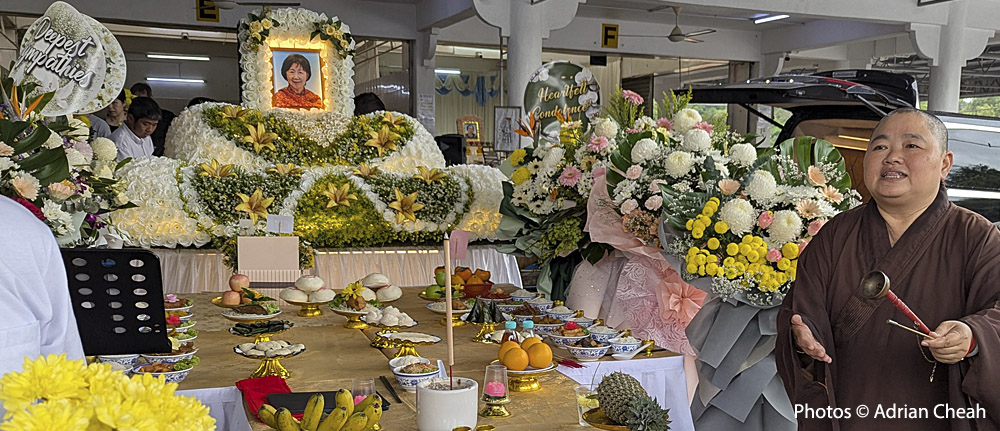
And yet, as much as she gave in life, her departure reminded us of the gravity of absence. Auntie Suan See passed away on 5 November 2025, at precisely 2:11 pm. The news settled over me with such great sorrow. Three days later, at 11 am, her funeral was held.
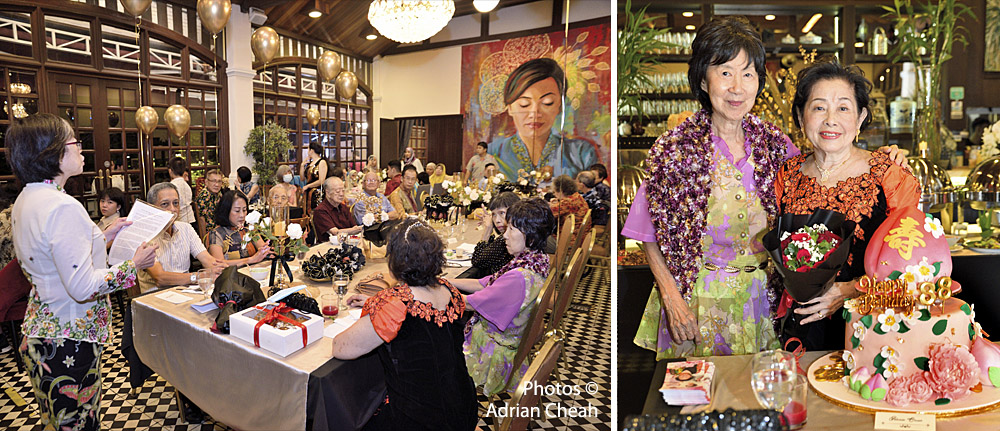
In 2022, Mum celebrated her 88th birthday surrounded by family and friends she held dear. Seated beside her was Auntie Suan See, sharing in the laughter and joy of the occasion. Looking at these photographs today, they capture more than a happy celebration; they preserve a friendship that had spanned the decades. Three years later, one would return to bid the other a final farewell.
At the wake at Mount Erskine Funeral Parlour, Mum, 91, stood at her casket, her gaze locked on her dear friend, whose eyes were now closed forever. She lingered there, suspended in stillness, whispering her goodbyes in a language only the heart fully understands. I stood a short distance away, providing them a space all their own, watching the weight of decades of friendship and respect, the countless shared memories of laughter, support, and lives lived side by side, now distilled into this fragile, tender farewell.
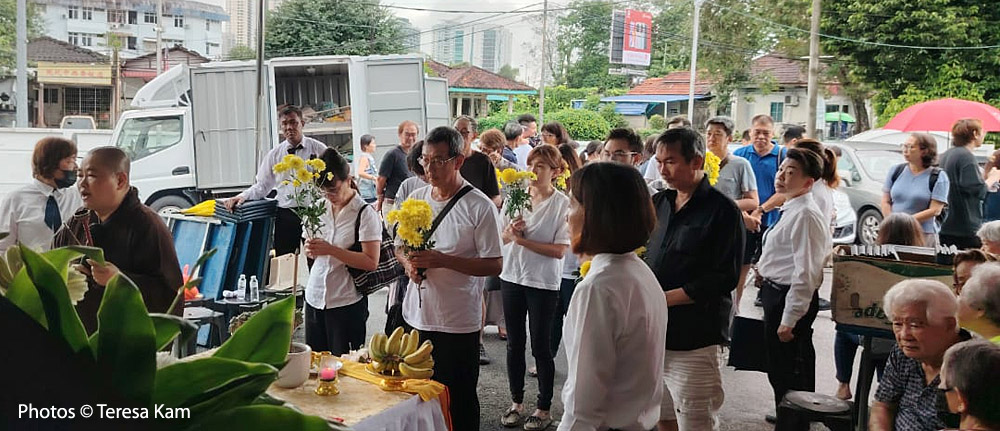
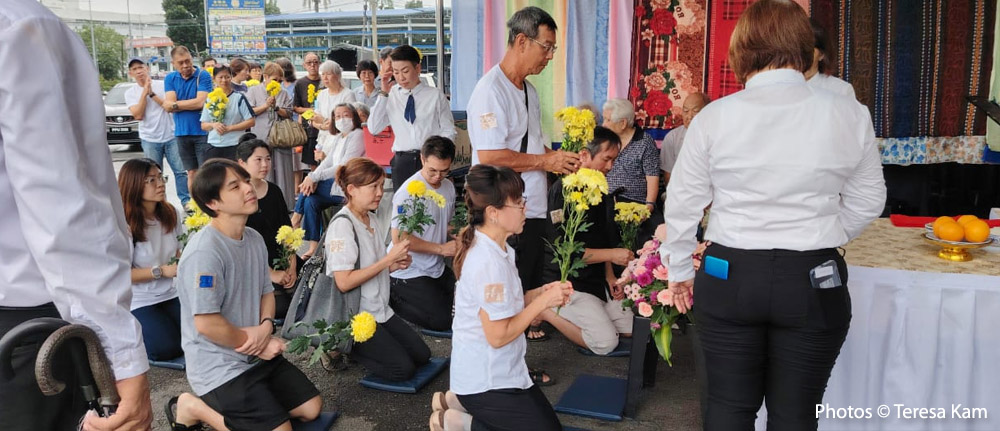
The gathering was modest, far fewer than one might have expected for someone whose influence so many lives. Yet this, in its own way, felt fitting. Auntie Suan See had never sought attention; she had never demanded it. Soft-spoken and "lemah-lembut", never raising her voice, she left a mark on those she loved that would endure long after the curtain falls. She was cremated, her earthly presence gone, yet the light of her spirit remains vivid in all of us who loved her.
Born Free.
-------------------------------------
Written by Adrian Cheah
Photographs by Adrian Cheah, the Oon Suan See Collection, and contributors
© Adrian Cheah. All rights reserved.
18 June 2026
Postscript: In August 2022, Auntie Suan See entrusted me with a collection of photographs and shared with me the story of her remarkable journey. I scanned those photographs and recorded our conversation, never imagining that one day they would become part of this tribute.