Glorious food

Penang food © Adrian Cheah

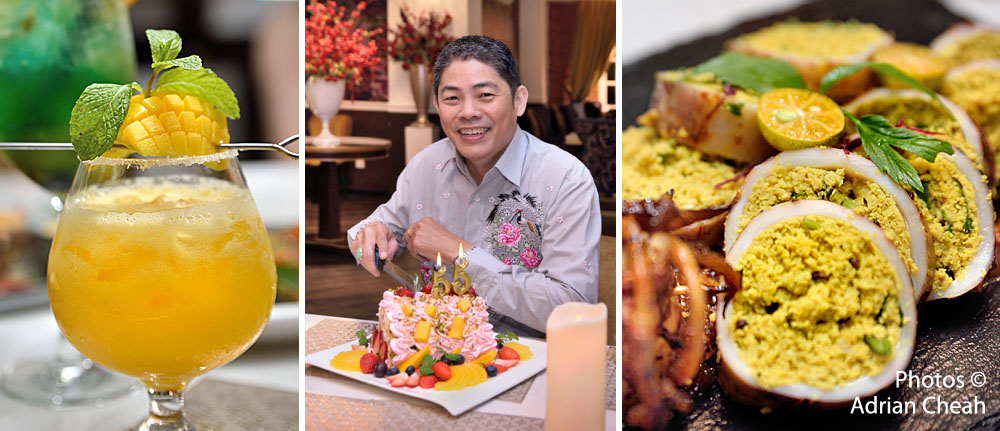
Having a reputation as a food paradise, be it haute cuisine, or cuisine bourgeoise (hawker fare), Penang offers a heady and exotic mix of delicious cuisine to choose from.

In a word, Penang food is both famous and fabulous. When people mention Penang food, they are more often than not referring to hawker food and coffee shop dining. It is true that some of the hype is overblown but it cannot be denied that Penang is home to many uniquely delicious chow. Ironically, hawkers in other states or towns have been known to pull the crowd by simply advertising their food as hailing from Penang, regardless of its authenticity or quality. Then there are the Penang hawkers who advertise their cuisine as specialties from another state, like Johor bak kut teh, Ipoh chicken and bean sprouts or laksa Kedah. In short, an infinite variety of dishes are yours to savour – all you need to do is pick and choose.

Penang food © Adrian Cheah

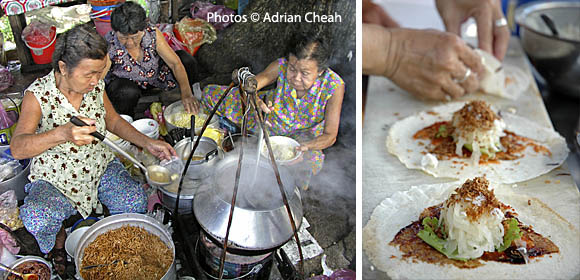
Penang hawker food can be broken down roughly into several varieties, with each being attributable to Penang's multi-cultural character: Nyonya, Chinese, vegetarian, Indian, Malay, Hakka-styled Western, seafood and desserts. Hybrids are also known to exist, and some famous examples are Malay-style chicken rice and char koay teow, and Chinese satay and nasi lemak. The prices are cheap and reasonable.

Penang food © Adrian Cheah

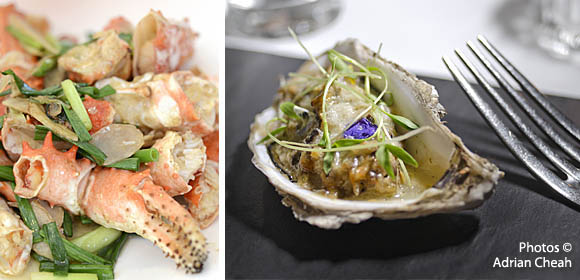
With fishing being a major economic activity on the island, Penang is naturally a haven for seafood, and a handful of restaurants have already achieved legendary status among locals and foreigners. Tucked away in remote corners, these eateries are not easy to find without local guidance but are definitely worth the extra effort to seek out.

Penang food © Adrian Cheah

Desserts play a major role in Penang gastronomy. There are as many varieties as there are races in Penang! To mention a few would do injustice to the rest, so you would just have to let your nose and eyes be your guide. A word of warning though – most local desserts tend to be sweet and rich, as coconut milk, flour and sugar are the main ingredients.

Penang food © Adrian Cheah

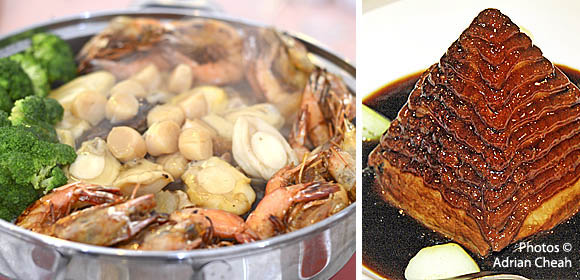
Thanks to early Chinese migrants, Chinese cuisine ranges from Cantonese to Teochew to Hokkien to Hainanese to Szechuan cooking. There's also Penang Nyonya food, which is a combination of Chinese, Malay and some Thai. The Penang variety of Nyonya food, apparently, is different from the Malaccan or even Singaporean versions. For a touch of luxury, try a five or ten-course Chinese meal at one of the restaurants or hotels in town.

Penang food © Adrian Cheah

Indian cuisine goes by two names generally – banana leaf rice and nasi kandar. Both are hot and savoury with rice being the main staple, and a menu from north Indian tandoori and nan bread, to South Indian rice and chapati.

Nasi kandar is famously popular with Penangites, and many restaurants selling it are well known not only to those on the island but those in other states as well. It is quite common to find people from other states detouring to Penang just to stop for a meal of nasi kandar before continuing on their journey elsewhere...

Indulge! Savour!

---------------------------------------------------------
Written and photographed by Adrian Cheah © All rights reserved
Updated: 6 March 2019


Inventive roti canai sarang burung in Balik Pulau

Roti Canai Sarang Burung © Adrian Cheah

Being a popular dish among Penangites and Malaysians at large, roti canai or roti paratha is a flaky, moreish flatbread enjoyed any time of the day. Made with flour, water, salt, a little sugar and fat, the mixture is kneaded into a dough and allowed to rest. It is then divided and rolled into palm-size balls. The rested dough ball is stretched; held at a corner, it is then flung in the air onto the oiled work surface twice or thrice, stretching it paper thin before folding to obtain a layered texture.

Continue Reading

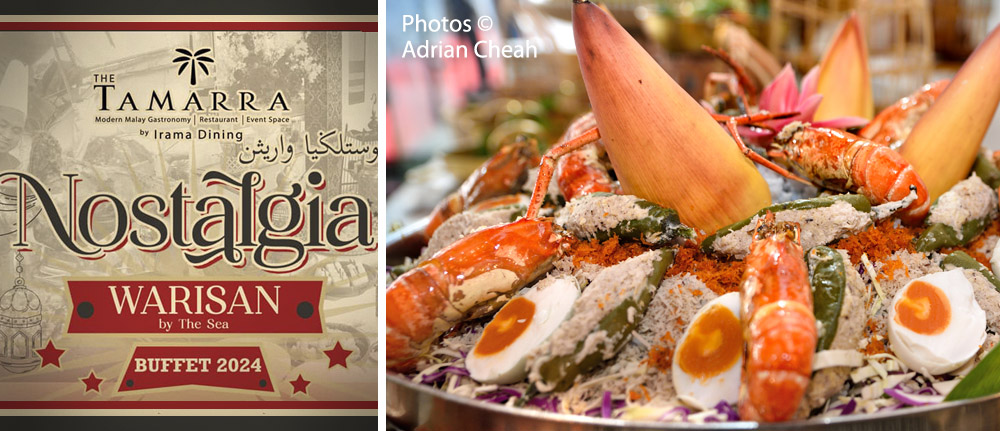
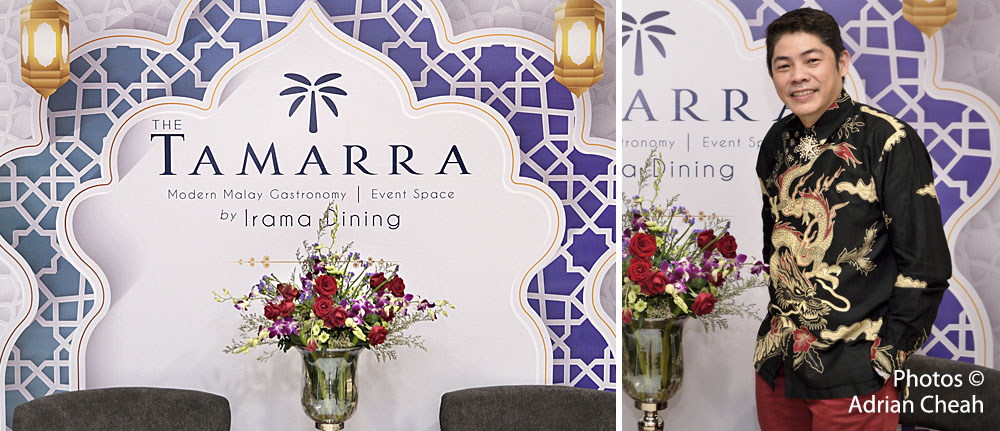
Irama Dining, the rhythm of a fresh and modern dining experience

Irama Dining © Adrian Cheah

Penang is truly a food paradise that has an extensive culinary scene, offering diverse delights from various cuisines, including delicious Malay fare. Irama Dining stands out as a culinary revelation for me. It brilliantly blends the bold, aromatic Malay cooking style with the vibrant flavours of local herbs and spices. The presentation of dishes is impeccable, complemented by the understated elegance of the dining space.

Continue Reading

Traditional Malay cooking at Lagenda Café in the heart of George Town

Lagenda Café © Adrian Cheah

The key signature in traditional Malay cuisine is definitely the generous use of local herbs, spices and belacan (shrimp paste). Santan (coconut milk) is a common addition to impart a creamy texture to Malay dishes. In Penang and the northern states of Malaysia, Malay cooking has further integrated Thai flavours. Meats and seafood are usually marinated with a special blend of herbs and spices before being cooked. Vegetables are often stir-fried and some eaten raw, always with sambal belacan. I love Malay dishes because of their strong, spicy and aromatic oomph. For an authentic Malay feast, visit Lagenda Café.

Continue Reading

Nasi lemak – a parcel of Malaysian goodness

Nasi lemak © Adrian Cheah

A favourite breakfast dish for most Malaysians is Nasi Lemak – something which transcends the often-tenuous ethnic boundaries in this multi-racial country, as Malays, Indians and Chinese, all love it!

Continue Reading

Roti Jala (net crepes) are simply irresistible with curry chicken and potatoes

Roti Jala © Adrian Cheah

If you are a tourist in Penang during Ramadhan, you have to add the Ramadhan bazaar to your list of must-see places. The month-long Ramadhan bazaar (opens from 3:30 – 7:30 pm) offers a wide variety of Malay specialities and it is a wonderful market to scout for delicious treats. Roti Jala is something I will usually buy among many others.

Continue Reading

Fanning the flames of satay

Satay © Adrian Cheah

Satay is an example of how Penang cuisine was greatly influenced by the Arabs who came here to trade from the Middle East. Some say that this dish has Turkish roots. Be that as it may, satay has been available in Malaysia for many years already and is synonymous with Malay cuisine.

Continue Reading

Spongy Kuih Bahulu recipe

Kuih Bahulu © Adrian Cheah

Kuih Bahulu (also known as Kuih Baulu or Kuih Bolu) is a perennial favourite among Malaysians of all ages. In Hokkien, it is called Kay Nui Koh. It is a mini light and fluffy sponge cake made from eggs, flour and sugar. It has a slightly crusty outer layer with a soft and fluffy inside, quite similar in taste and texture to a French Madeleine. However, when compared to many western cakes, Kuih Bahulu is much lighter in texture and has a subtle sweetness.

Continue Reading

Lemang: an insight into tradition, taste and timelessness

Lemang © Adrian Cheah

In Penang and across Malaysia the lemang is available all year round. Nonetheless, it has become a special dish during the Hari Raya celebrations – Hari Raya Aidilfitri (Eid al-Fitr) and Hari Raya Aidiladha (Eid al-Adha). Although its preparation seems simple enough, cooking lemang requires an open area with ample ventilation – which is why most people just prefer to buy lemang rather than attempt to make it themselves.

Continue Reading

Make your own ketupat daun palas (glutinous rice wrapped in palm leaves)

Ketupat © Adrian Cheah

The most popular types of ketupat found in Malaysia are ketupat nasi (made with plain rice) and ketupat daun palas (made with glutinous rice). While both varieties are wrapped in palm leaves and then boiled, they use different types of leaves: ketupat nasi is typically wrapped in young coconut leaves (daun kelapa muda), whereas ketupat daun palas is enclosed in Licuala palm leaves (daun palas). It is said that ketupat daun palas originated from the northern states – Penang, Kedah and Perlis – while ketupat nasi is more popular in Perak.

Continue Reading

A pre-birthday luncheon at Auntie Gaik Lean Old School Eatery

Auntie Gaik Lean; photo © Adrian Cheah

“The only reward of virtue is virtue; the only way to have a friend is to be one.” —Ralph Waldo Emerson, Friendship, Essays: First Series (1841)

So often, people say they want good friends, yet forget the underlying truth that friendship begins inwardly. It requires generosity of spirit, self-awareness, and the ability to show up without expectation. When insecurity, entitlement, or self-interest takes centre stage, genuine friendships struggle to take root. Emerson’s words remind us that friendship is not something to be acquired, but something to be practised.

Continue Reading

Pomelo kerabu, tu ka chor, inchi kabin and more at Sifu Nyonya Cuisine

Sifu Nyonya Cuisine © Adrian Cheah

Sifu Nyonya Cuisine, located at Jalan Pintal Tali, offers an authentic Nyonya dining experience. At the culinary helm of the restaurant is 71-year-old Madam Beh Geok Wah, whose culinary prowess is showcased through a menu featuring over 40 dishes. Some recipes are cherished heirlooms passed down through generations, ensuring that the essence of Nyonya cooking is preserved with every flavourful bite.

Continue Reading

Reinventing kuih kapit (love letters)

kuih kapit © Adrian Cheah

"Perhaps imagination is only intelligence having fun" – George Scialabba

The "love letter", more commonly known as kuih kapit (a paper-thin crispy, fan-shaped biscuit), is an essential feature during Chinese New Year. However, when a classic item like kuih kapit becomes deeply entrenched in tradition, introducing a daring innovation to reinvent it can evoke mixed reactions – either embraced with enthusiasm for its novelty or met with scepticism and disapproval.

Continue Reading