Glorious food

Penang food © Adrian Cheah

Having a reputation as a food paradise, be it haute cuisine, or cuisine bourgeoise (hawker fare), Penang offers a heady and exotic mix of delicious cuisine to choose from.

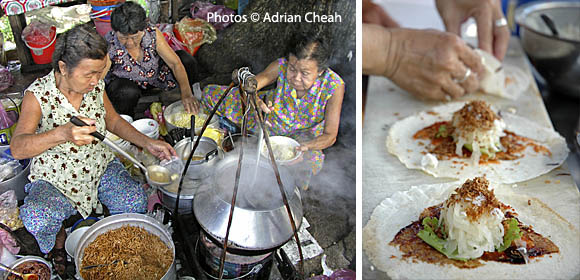
In a word, Penang food is both famous and fabulous. When people mention Penang food, they are more often than not referring to hawker food and coffee shop dining. It is true that some of the hype is overblown but it cannot be denied that Penang is home to many uniquely delicious chow. Ironically, hawkers in other states or towns have been known to pull the crowd by simply advertising their food as hailing from Penang, regardless of its authenticity or quality. Then there are the Penang hawkers who advertise their cuisine as specialties from another state, like Johor bak kut teh, Ipoh chicken and bean sprouts or laksa Kedah. In short, an infinite variety of dishes are yours to savour – all you need to do is pick and choose.

Penang food © Adrian Cheah

Penang hawker food can be broken down roughly into several varieties, with each being attributable to Penang's multi-cultural character: Nyonya, Chinese, vegetarian, Indian, Malay, Hakka-styled Western, seafood and desserts. Hybrids are also known to exist, and some famous examples are Malay-style chicken rice and char koay teow, and Chinese satay and nasi lemak. The prices are cheap and reasonable.

Penang food © Adrian Cheah

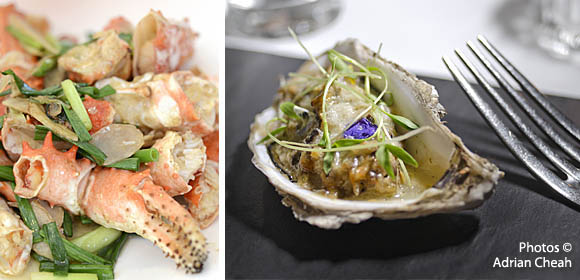
With fishing being a major economic activity on the island, Penang is naturally a haven for seafood, and a handful of restaurants have already achieved legendary status among locals and foreigners. Tucked away in remote corners, these eateries are not easy to find without local guidance but are definitely worth the extra effort to seek out.

Penang food © Adrian Cheah

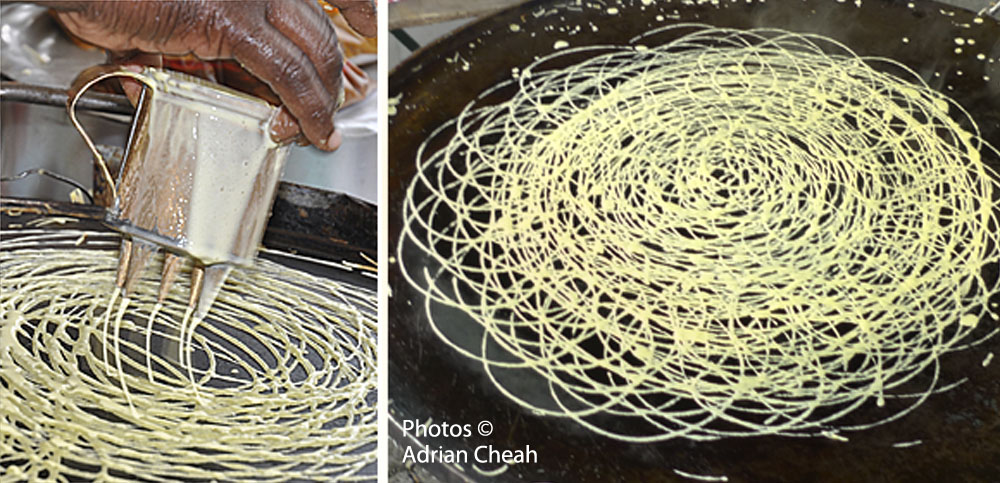
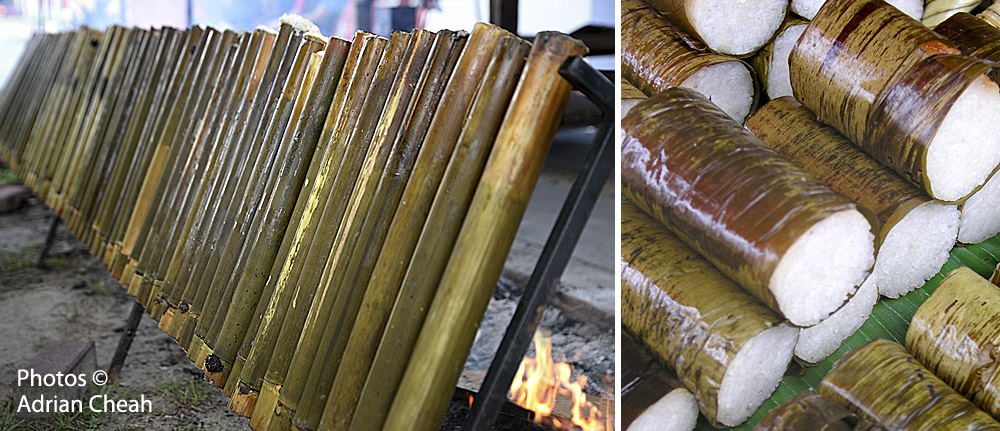
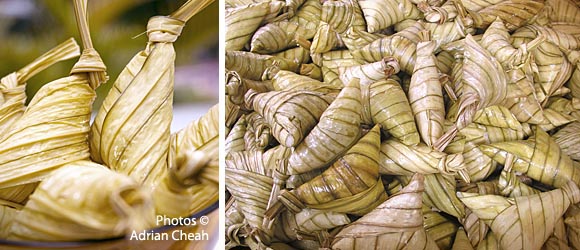
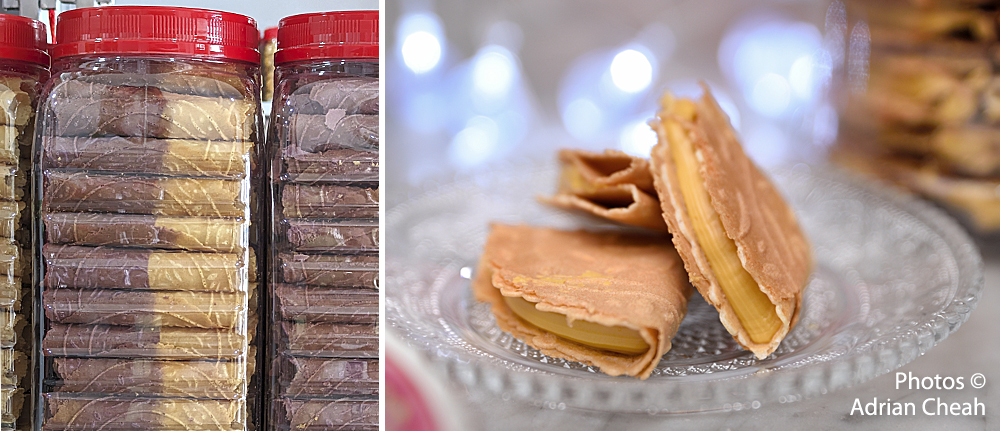
Desserts play a major role in Penang gastronomy. There are as many varieties as there are races in Penang! To mention a few would do injustice to the rest, so you would just have to let your nose and eyes be your guide. A word of warning though – most local desserts tend to be sweet and rich, as coconut milk, flour and sugar are the main ingredients.

Penang food © Adrian Cheah

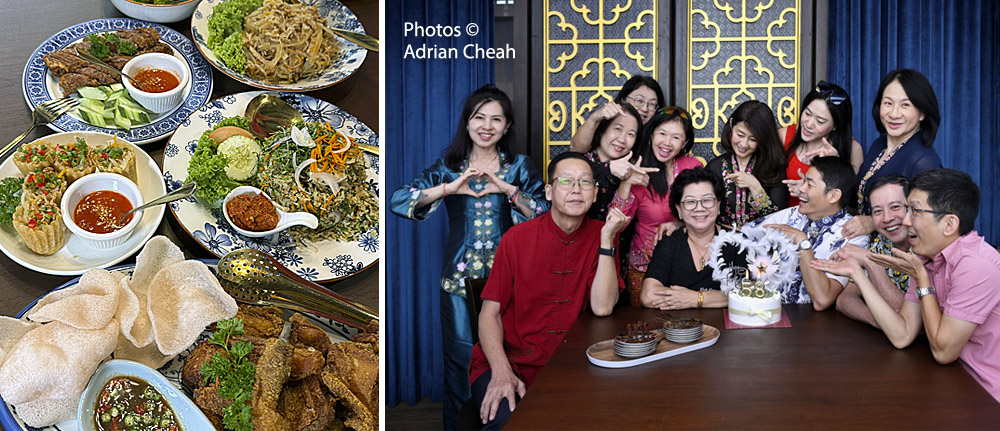
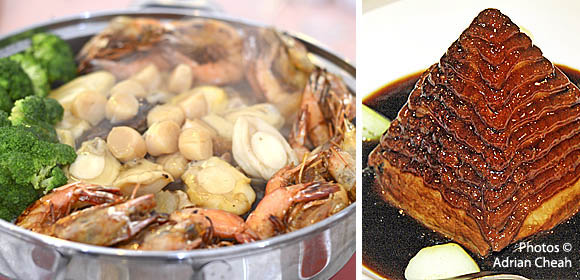
Thanks to early Chinese migrants, Chinese cuisine ranges from Cantonese to Teochew to Hokkien to Hainanese to Szechuan cooking. There's also Penang Nyonya food, which is a combination of Chinese, Malay and some Thai. The Penang variety of Nyonya food, apparently, is different from the Malaccan or even Singaporean versions. For a touch of luxury, try a five or ten-course Chinese meal at one of the restaurants or hotels in town.

Penang food © Adrian Cheah

Indian cuisine goes by two names generally – banana leaf rice and nasi kandar. Both are hot and savoury with rice being the main staple, and a menu from north Indian tandoori and nan bread, to South Indian rice and chapati.

Nasi kandar is famously popular with Penangites, and many restaurants selling it are well known not only to those on the island but those in other states as well. It is quite common to find people from other states detouring to Penang just to stop for a meal of nasi kandar before continuing on their journey elsewhere...

Indulge! Savour!

---------------------------------------------------------
Written and photographed by Adrian Cheah © All rights reserved
Updated: 6 March 2019


Lotuss Nyonya Kitchen – where maximalist style meets maximum flavours

Lotuss Nyonya Kitchen © Adrian Cheah

A rendezvous with friends should always set the stage for a fun-filled outing. However, as true-blue Penangites, our palates demand nothing less than something seriously ho-chiak (delicious in Hokkien), the kind that commands attention above all else. This must be closely followed by the thrifty wisdom of value for money. Moreover, if an attractive ambience is coupled with warm friendly service, the escapade would indeed be a memorable one. Lotuss Nyonya Kitchen, located in the heart of George Town, seems to have it all.

Continue Reading

Auntie Gaik Lean Old School Eatery – Chinese Peranakan cuisine cooked with love

Auntie Gaik Lean © Adrian Cheah

Born into a Chinese Peranakan family, I often find my culinary cravings leaning towards other cuisines – whether it is Chinese, Thai, Italian, Japanese, Vietnamese, Continental, Mexican, Indian or Malay – when dining out, unless I am hosting guests from abroad who crave for Nyonya cuisine. Sometimes when time allows, I will gladly roll up my sleeves and prepare a Nyonya feast to ensure that they depart Penang with a lasting impression of the vibrant and unique flavours that define Nyonya cuisine.

Continue Reading

The colourful bubur cha cha and pengat – almost similar yet different

bubur cha cha and pengat © Adrian Cheah

In Malay, “bubur” means “porridge”. As "cha cha" is a homophonic with the Hokkien "che che" (meaning "abundance"), it is a dish synonymous with unity and happiness in abundance. Although there are various theories, there is no one definitive consensus on its origin or what the name of the dish actually means.

Continue Reading

Richard Rivalee brings you delicious pork-free Nyonya cuisine

Richard Rivalee Nyonya Cuisine © Adrian Cheah

I truly believe that if one desires to live a purpose driven life, one has to wear one's heart on one's sleeve and allow passion to fuel the journey. One such brave man I know is Richard Rivalee, always smiling and bubbling with gaiety.

Continue Reading

Savour the titillating essence of Nyonya cooking at Nyonya Breeze Desire

Nyonya Breeze © Adrian Cheah

Penang is synonymous with Nyonya cuisine and many locals would have Chinese Peranakan parentage. This means they would have tasted exquisite Nyonya cooking prepared by their grandmothers, mothers and aunties, and for some, even uncles. With this in mind, it would be quite impossible to please their palate simply because they would always compare similar dishes served elsewhere to those prepared at home. Any Nyonya restaurants that intends to out-gun grandma's recipes would be engaged in a challenging endeavour.

Continue Reading

The vibrant and colourful Nyonya kerabu bee hoon

kerabu bee hoon © Adrian Cheah

When it comes to good food, the only one you have to really satisfy is yourself. When it comes to cooking (without deviating too far from the recipe), you can add whatever you like to your dish and omit all the ingredients that do not tickle your taste buds.

Continue Reading

Tips on making really good Seri Muka

Seri Muka © Adrian Cheah

Seri Muka (literally means "radiant face" in Malay) or Kuih Salat is a dainty sweet cake that consists of two layers. The base is made from glutinous rice which is topped with a green custard layer, scented and coloured with pandan juice. Santan (coconut milk) is a key ingredient as it imparts the “lemak” (rich) taste to the glutinous rice as well as the custard layer.

Continue Reading

Springy Nyonya Kuih Talam

Kuih Talam © Adrian Cheah

Kuih Talam, a classic Nyonya cake, is still popular in Penang today. Its two signature colours are green and white. The sweetened green base layer is perfumed with pandan (screw pine) juice while the top white layer has a "lemak" (rich) indulgence of santan (coconut milk) that is mildly salty. It is dangerously addictive and a slice is never enough. Maybe that is why nowadays, Kuih Talam is cut and packed in two or three pieces. I also notice that the pieces are much smaller than what they used to be when I was growing up.

Continue Reading

Bee Koh Moy, a healthy bowl of goodness

Bee Koh Moy © Adrian Cheah

In Penang, Bee Koh Moy (Hokkien for black glutinous rice porridge, Bubur Pulut Hitam in Malay) is often served topped with fresh coconut milk. The yin-yang-looking combination of mildly sweetened black rice porridge drizzled with a slightly salty creamy white coconut milk sauce is a scrumptious treat. The rich and creamy dish, perfumed with aromatic pandan (screw pine) leaves, can be served warm or chilled. This offering is usually enjoyed for breakfast, at tea time or as a dessert after a meal; it is best savoured in small portions as it is hearty and filling.

Continue Reading

Learn how to make authentic Nyonya Jiu Hu Char

Jiu Hu Char © Adrian Cheah

“Jiu hu” is Hokkien for “cuttlefish” and “char” means “fry”. Thus, Jiu Hu Char means “fried cuttlefish”. Although the shredded cuttlefish is the star ingredient (providing a potent umami flavour), there is more in that dish than just cuttlefish. The ingredients for this popular Nyonya offering consist of jiu hu si (dried shredded cuttlefish), yambean, carrots, cabbage, pork belly, mushrooms, onions and garlic.

Continue Reading

Colourful onde onde ubi keledek recipe from Madam Lily Wong

Onde onde © Adrian Cheah

Nyonya kuih are colourful Asian sweet cakes that are popularly served for breakfast and afternoon tea and as snacks any time of the day. The selections are many and varied, available at morning markets and food courts throughout Penang.  One such type is the explosively delicious onde onde. 

Continue Reading

Savoury Or Kuih (steamed yam cake) recipe from Lily Wong

Or kuih (yam cake) © Adrian Cheah

"Yam", as it is often known in Penang, actually refers to taro. While "yam" encompasses various plant species in the Dioscorea genus with edible tubers, Or Kuih specifically uses taro. For local authenticity, I'll stick with "yam". Or Kuih, a steamed yam cake, is a lovely local delicacy topped with aromatic shallot oil, fried dried shrimps, crispy shallots, spring onions and diced chillies. Traditionally served with chilli sauce or "tnee cniau" (sweet sauce) on the side, this dish embodies comfort food. A perfect slice of yam cake should be aromatic and tender, with yam chunks that melt in the mouth.

Continue Reading