Traditional and avant-garde Asian cuisine at Maple Palace
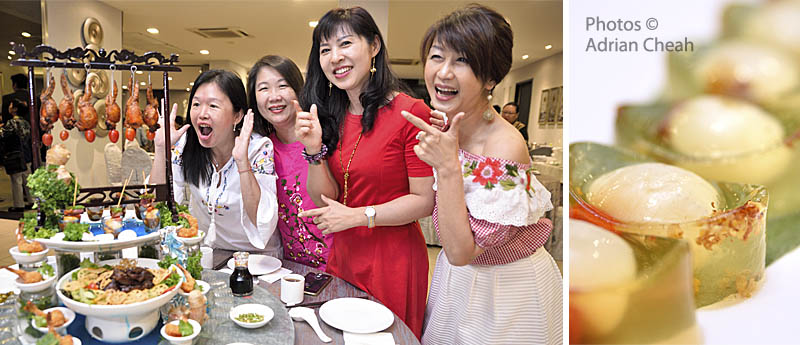
Chinese New Year celebrations which last for 15 days offer an ideal time for family reunions as well as to catch up with old friends. When my classmates from Han Chiang High School decided to have a mini class reunion, Maple Palace was our top choice. The restaurant serves mouth-watering cuisine that is both traditional and avant-garde at the same time. It also offers festive Chinese New Year dishes synonymous with good luck and prosperity. On top of that, the quality of the delicacies at Maple Palace has been consistent throughout my visits in the past.
Continue Reading
Half Acre Restaurant, Taiwanese flavours in Penang

When you talk about Taiwanese food, fried stinky tafu, scallion pancakes, oyster vermicelli, minced pork rice and pearl milk tea come to mind. However, at Half Acre Restaurant, you will not find any of these popular Taiwanese street food. On the other hand, you would be treated to strong Taiwanese flavours that are aggressively herbal with deeply umami.
Continue Reading
Sea cucumbers – back to nature cures

Marine life in Malaysian waters is full of many natural wonders. Among them is the humble sea cucumber. Locally, it is known as "gamat" in Malay and 'hai som' in Hokkien. It is scientifically called holothurians, a class of the phylum echinodermata.
Continue Reading
Delightful bowl-shaped appam at Singgah Sebentar

The appam (also known as palappam) or apom (in Penang) is an Indian pancake made with a fermented rice flour and coconut milk batter. The contrast of textures in this dish is alluring. The pancake - with a crispy fringe and is with a spongy, soft fluffy rice cake centre – exudes a distinct yeasty aroma. The crispy fringe reminds me of kuih kapit.
Continue Reading
The murtabak – a hearty meal all by itself

Hameediyah Restaurant in Campbell Street serves good murtabak. Established in 1907, this is one of the oldest Indian Muslim restaurants in Penang.
Continue Reading
Pann – treat of the real thing

Literally translated from Tamil, 'otthu kadai' – that quaint little wooden roadside shop specking the streets of George Town – means "small shop".
The 'otthu kadai' is a pretty interesting emporium – tiny, compact and mottled with a collection of different things. Each of these small convenience shops is a veritable miniature open-air mart selling an exhaustive range of items in an incredibly confined space.
Continue Reading
Roti canai, good for breakfast, lunch, tea, dinner, supper and any time in between

Yes, this is how popular roti canai is in Penang, available all day long at almost every street corner. This simple flatbread is adored by both young and old, men and women of all races in the country.
Continue Reading
"Roti! Roti!", the lure of the breadman

The 'roti man' or bread vendor is quite a common sight in Penang. They are usually on their rounds in the mornings and from tea time, plying their stock-in-trade in a road contraption that resembles a hybrid between a motorcycle and a 'meat safe'.
Continue Reading
Auntie Gaik Lean Old School Eatery – Chinese Peranakan cuisine cooked with love

Born into a Chinese Peranakan family, I often find my culinary cravings leaning towards other cuisines – whether it is Chinese, Thai, Italian, Japanese, Vietnamese, Continental, Mexican, Indian or Malay – when dining out, unless I am hosting guests from abroad who crave for Nyonya cuisine. Sometimes when time allows, I will gladly roll up my sleeves and prepare a Nyonya feast to ensure that they depart Penang with a lasting impression of the vibrant and unique flavours that define Nyonya cuisine.
Continue Reading
Learn how to make authentic Nyonya Jiu Hu Char
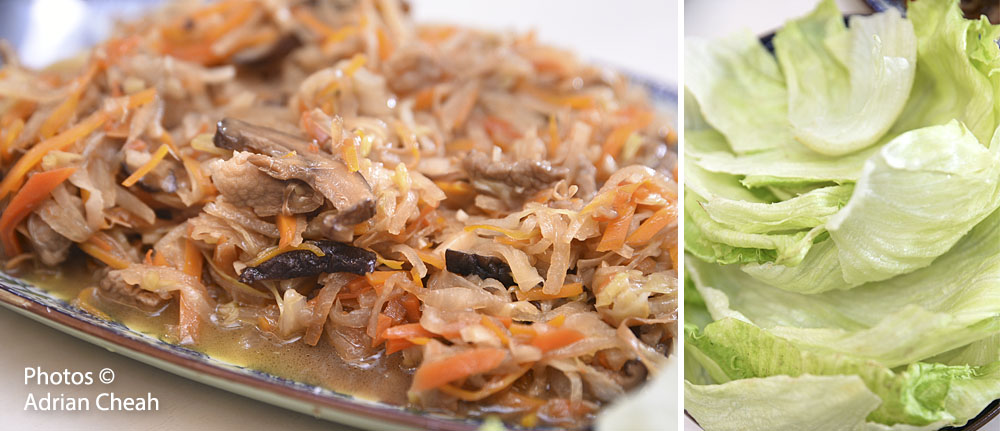
“Jiu hu” is Hokkien for “cuttlefish” and “char” means “fry”. Thus, Jiu Hu Char means “fried cuttlefish”. Although the shredded cuttlefish is the star ingredient (providing a potent umami flavour), there is more in that dish than just cuttlefish. The ingredients for this popular Nyonya offering consist of jiu hu si (dried shredded cuttlefish), yambean, carrots, cabbage, pork belly, mushrooms, onions and garlic.
Continue Reading