The Hungry Ghosts Roam The Streets Of George Town
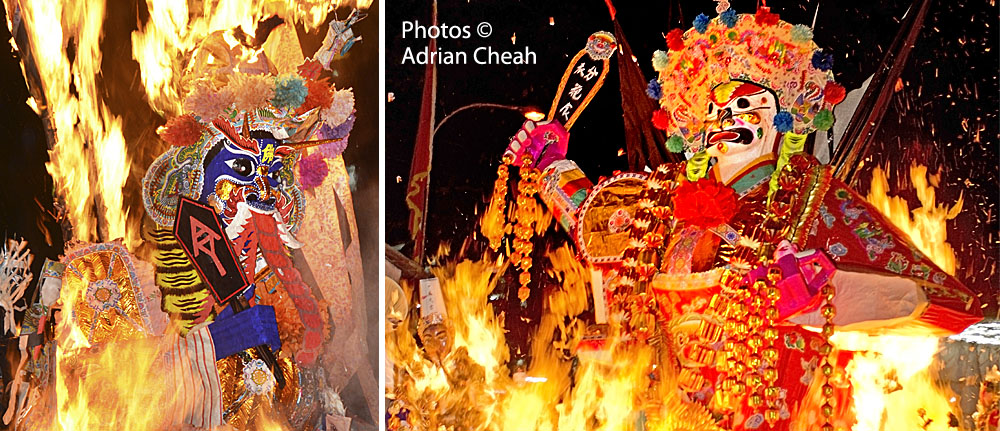
Every year, as the seventh lunar month approaches, the streets of George Town take on an otherworldly character. For a time, the city seems to belong not only to the living, but also to the "hungry ghosts" said to descend from the underworld in search of food, offerings and perhaps a little earthly attention. Known locally as Phor Thor, the Hungry Ghost Festival is far more than a single day of ritual or remembrance. Its observances unfold throughout the seventh lunar month, weaving their way through the communities of Penang and across Malaysia, and into neighbouring Singapore and Phuket, where Chinese traditions have likewise taken root. It is a season when the veil between this world and the next seems, if only for a while, remarkably thin.
Continue Reading
Echoes of history: "Lim Boon Keng – The Musical" at Jen Hotel

On Sunday, 14 July 2024, I had the pleasure of attending an enchanting evening at the Grand Ballroom of Jen Hotel. The occasion was the screening of "Lim Boon Keng – The Musical", thoughtfully paired with a Penang-Singapore people-to-people friendship dinner. The event combined cultural celebration, historical reflection and fine dining, creating a charming evening.
Continue Reading
Merdeka – the National Day of Malaysia
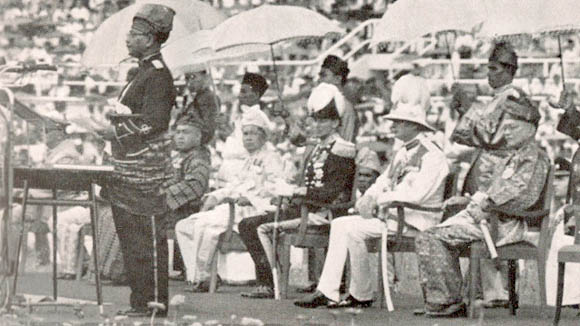
In 1956, the then Prime Minister of Malaysia Tunku Abdul Rahman Putra Al-Haj led a delegation to London to hold talks with the British Government concerning independence for Malaya.
The Malayan delegation, comprising four representatives of the Malay Rulers and four Alliance representatives, convinced the British Government to set a date for independence: 31 August 1957.
Continue Reading
Tides of candlelight adoration at St Anne's Feast

One of the largest and most extraordinary religious mass gatherings in Southeast Asia is the St Anne Novena and Feast in the town of Bukit Mertajam in Penang.
Continue Reading
Dinner with Emily: A Chinese Peranakan Musical of Love, Loss and Legacy
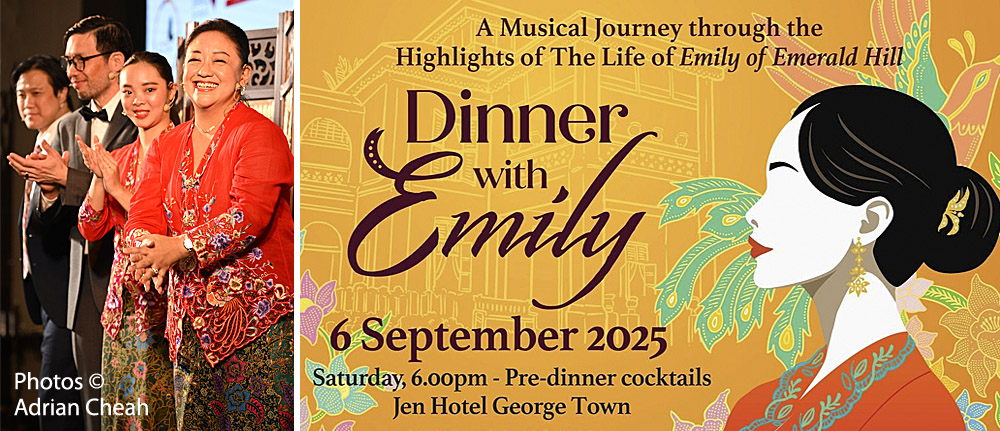
On Saturday, 6 September 2025, I had the privilege of attending "Dinner with Emily" at JEN Penang Georgetown by Shangri-La. This was the first time the musical adaptation of Emily of Emerald Hill was performed in Penang, bringing together food, theatre and music in a joyous celebration of Chinese Peranakan culture.
Continue Reading
The Bak Chang Festival in Penang

Wrapped in bamboo leaves and steamed, traditional Bak Chang is a glutinous rice dumpling seasoned with dark soy sauce. Its fillings often include pork belly, shiitake mushrooms, dried prawns, salted egg yolk and chestnuts, while simpler versions may contain only white beans and a slice of pork belly.
Continue Reading
Penang Dragon Boat Festival – race of the ancients

About 100 years ago, large clans of sea-faring migrants from China settled along the foreshores of Penang island, building pier houses on the fringes of George Town.
Many of these humble coastal plank settlements, like the old Bang Liaw jetty in Weld Quay, still exist today, housing scores of fisher-folk families just as they did many decades before.
During the early period, every year on the fifth day of the fifth moon of the lunar calendar, the settlers would push out to sea lengthy specially built boats for a passionate day of racing. It was one of the great traditions they had proudly brought along from China.
Continue Reading
The journey of faith – the Haj

Introduction
Hari Raya Haji (or Hari Raya Korban) falls on the 10th day of Zulhijah, the last month of the Muslim calendar. It is a major Islamic festival and of particular significance for pilgrims who have returned from performing the Haj or umrah (pilgrimage) in Mecca. It may not be as grand as Hari Raya Aidil Fitri (or Hari Raya Puasa) in terms of joyous celebrations, but is important nonetheless for Muslims the world over.
Continue Reading
Celebrating Vesak (or Wesak) Day in Penang

"Thousands of candles can be lighted from a single candle, and the life of the candle will not be shortened. Happiness never decreases by being shared."—Buddha.
Vesak Day falls on the full moon of the lunar month of Vesākha (either in April, May or June). Also known as Buddha Purnima, it is considered as a holy celebration for the Buddhists as the day commemorates Gautama Buddha's birth, enlightenment (nirvāna) and death (parinirvāna).
Continue Reading
Pausing for Reflection on Holy Vesak Day
As 21st century Malaysia hurtles deeper into the recesses of globalisation, an urban rat-race and the 'kiasu' syndrome, does Buddhist culture still bear relevance in preserving traditional values?
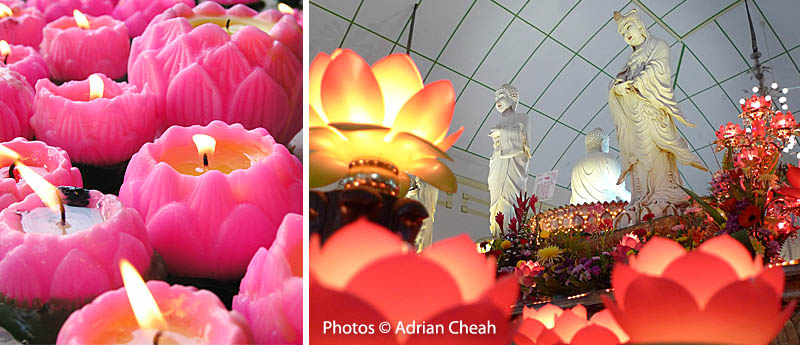
The beggar readily sees a bare floor as a place for a good sleep. The rich man, on the other hand, will have nothing else but the softest bed in a 5-star hotel.
Both men, poor and rich, have one similar need - to sleep. But they have completely different levels of craving, different heights of desire.
Continue Reading